

How Can Students Prepare for International Science Olympiads?
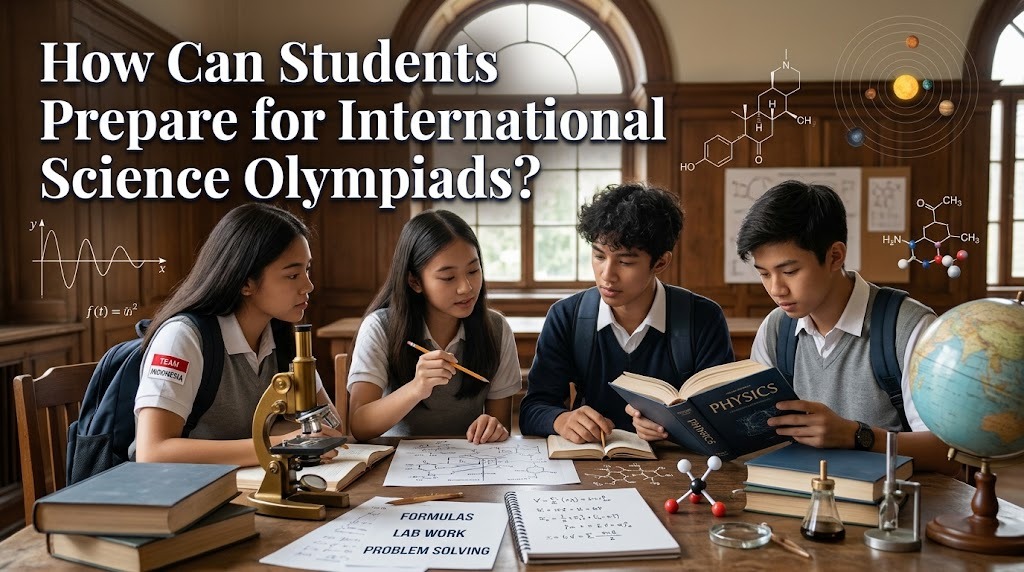
International Science Olympiads give talented students an opportunity to demonstrate their knowledge and compete with participants from different countries. These competitions usually cover scientific subjects such as mathematics, physics, chemistry, biology, and informatics. Preparing for an international Olympiad requires more than memorizing formulas or studying textbooks. Students need a strong understanding of fundamental concepts, consistent practice, problem-solving abilities, and effective preparation strategies. With proper guidance and discipline, students can improve their academic skills and become more confident when facing challenging competition questions.
UNDERSTAND THE COMPETITION FORMAT AND REQUIREMENTS
The first step in preparing for an international Science Olympiad is understanding the competition's rules and structure. Each Olympiad has its own subject coverage, question format, schedule, and selection process. Some competitions focus on theoretical problems, while others include laboratory experiments, practical investigations, or programming tasks. Students should review official syllabuses, previous examination papers, and competition guidelines to understand what they need to study. Knowing the requirements early helps them create a more focused preparation plan.
MASTER THE FUNDAMENTAL SCIENTIFIC CONCEPTS
A strong foundation in scientific knowledge is essential for solving advanced Olympiad problems. Students should understand basic theories, formulas, definitions, and principles before moving on to more complicated topics. For example, physics students need to understand mechanics and energy, while biology participants should master cell structures, genetics, and biological systems. Learning concepts deeply is more useful than memorizing information without understanding how it works. Once the fundamentals are clear, students can apply their knowledge to unfamiliar and complex questions.
PRACTICE WITH PREVIOUS OLYMPIAD QUESTIONS
Previous competition questions provide valuable insight into the difficulty and style of international Olympiads. By working through these problems, students can become familiar with different question patterns and learn how scientific concepts are applied. They should not focus only on obtaining the correct answers but also examine the reasoning behind each solution. Reviewing mistakes helps identify weak areas that require additional attention. Regular practice also improves accuracy and builds confidence when approaching challenging problems.
DEVELOP ADVANCED PROBLEM-SOLVING SKILLS
International Science Olympiads often include problems that cannot be solved through simple memorization. Students need to analyze information, identify relevant principles, and choose suitable methods to reach logical conclusions. Breaking complex questions into smaller steps can make them easier to understand. Students should also practice comparing different solution methods and checking whether their answers are reasonable. Developing these skills helps participants handle unfamiliar problems more effectively.
CREATE A CONSISTENT STUDY SCHEDULE
Consistent preparation is more effective than studying intensively only a few days before a competition. Students can create a weekly schedule that divides study time among different topics, practice questions, and review sessions. Difficult subjects may require more attention, while familiar topics can be maintained through regular exercises. A realistic schedule should also include breaks, school responsibilities, and sufficient sleep. Maintaining a balanced routine helps students stay focused and avoid unnecessary exhaustion.
JOIN OLYMPIAD TRAINING AND STUDY GROUPS
Joining a structured training program can help students prepare for more advanced competition material. Teachers, mentors, and experienced trainers can explain difficult concepts, provide learning resources, and evaluate student progress. Study groups also allow participants to discuss challenging questions and compare different approaches. Explaining a solution to another student can strengthen understanding and improve communication skills. However, students should choose reliable training resources that match the requirements of their intended competition.
IMPROVE EXPERIMENTAL AND PRACTICAL SKILLS
Some international Science Olympiads require participants to complete laboratory experiments or practical investigations. Students should learn how to use scientific equipment, follow experimental procedures, record observations, and interpret results. They also need to understand measurement accuracy, experimental variables, and laboratory safety. Practicing these activities helps students connect theoretical knowledge with real scientific applications. Practical preparation is particularly important for competitions that include laboratory-based examinations.
STRENGTHEN ENGLISH AND SCIENTIFIC COMMUNICATION
English proficiency can be useful because many international competitions provide instructions, questions, and scientific materials in English. Students should become familiar with subject-specific vocabulary and practice understanding complex written explanations. They can improve their skills by reading scientific articles, reviewing English textbooks, and solving questions written in the competition's language. Clear scientific communication is also important when participants need to explain methods, describe experimental results, or present conclusions. Strong language skills help students understand instructions and express their reasoning more accurately.
TAKE MOCK TESTS AND EVALUATE PROGRESS
Mock tests help students understand their preparation level before the actual competition. They can simulate examination conditions by using time limits and questions with a similar level of difficulty. After completing each test, students should review their answers and identify recurring mistakes. Tracking performance over time can reveal improvements and highlight topics that still need attention. This evaluation process allows students to adjust their study plans based on actual results rather than assumptions.
MAINTAIN PHYSICAL AND MENTAL WELL-BEING
Preparing for an international competition can be demanding, so students need to maintain their physical and mental well-being. Getting enough sleep, eating balanced meals, staying hydrated, and exercising regularly can support concentration and learning. Students should also take short breaks during long study sessions to prevent excessive fatigue. Managing stress is equally important because anxiety can make it difficult to think clearly during examinations. A balanced routine helps students remain healthy and maintain consistent preparation.
CONCLUSION
Preparing for international Science Olympiads requires strong scientific foundations, consistent practice, effective problem-solving strategies, and careful time management. Students should understand the competition format, review previous questions, join appropriate training programs, and develop practical skills when required. Improving English proficiency and maintaining physical and mental well-being can also support their preparation. Most importantly, students should evaluate their progress regularly and learn from mistakes. With discipline, curiosity, and proper guidance, they can strengthen their abilities and approach international competitions with greater confidence.
Recent Posts

Bagaimana Sistem SKS pada Program Kuliah... 22.11.2026/49 View

How Does Technology Make Daily Evaluation... 21.11.2026/76 View

Apa Strategi Menghadapi Kesenjangan antara Kompetensi... 21.11.2026/78 View

Mengapa Inventaris Aset Penting bagi Kelancaran... 21.11.2026/74 View

When Should Musicians Join a Record... 21.11.2026/78 View
