

How Can Students Prepare for the MAPSI Competition?
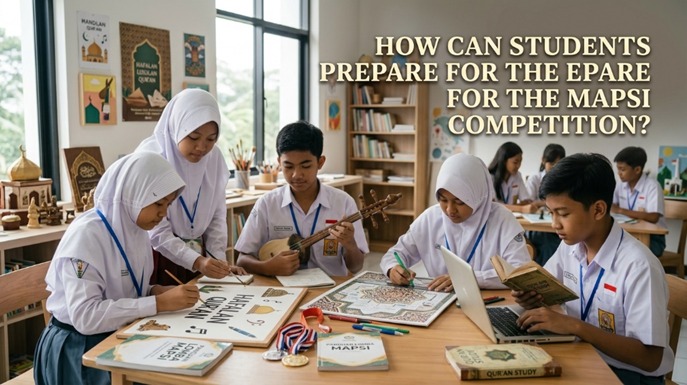
The MAPSI Competition is an educational event that gives students opportunities to demonstrate their knowledge, skills, and creativity in Islamic religious education and arts. Students can participate in various categories, such as Quran recitation, Islamic public speaking, calligraphy, religious knowledge, and traditional Islamic performances. Each category requires different abilities and preparation strategies.
Preparing for MAPSI is not only about practicing before the competition. Students also need to understand the rules, manage their time, improve their confidence, and maintain a positive attitude. Good preparation helps students perform at their best and gain valuable learning experiences, whether they win an award or not.
1. UNDERSTAND THE COMPETITION CATEGORIES
The first step is to understand the available MAPSI competition categories. Each category has different requirements, skills, and assessment criteria. For example, students who choose Quran recitation need to focus on pronunciation and tajwid, while participants in Islamic public speaking must develop their communication skills. Understanding these differences helps students choose a category that matches their interests and abilities.
Students should also read the official competition guidelines carefully. These guidelines usually explain participant requirements, competition procedures, assessment standards, and technical rules. Knowing the rules from the beginning helps students avoid mistakes and prepare more effectively.
2. CHOOSE A CATEGORY THAT MATCHES YOUR TALENTS
Students should select a competition category based on their interests, abilities, and experience. Those who enjoy reading the Quran may choose Quran recitation or memorization. Students with artistic interests can explore Islamic calligraphy, religious songs, or traditional performances. Meanwhile, those who enjoy speaking in front of an audience may consider the Khitabah category.
Choosing the right category can make the preparation process more enjoyable. Students should not select a category only because it seems popular or has a higher chance of winning. The best choice is a category that allows students to develop their natural abilities while encouraging them to learn new skills.
3. CREATE A REGULAR PRACTICE SCHEDULE
Consistent practice is one of the most important factors in preparing for MAPSI. Students should create a realistic schedule that includes enough time for training, studying, and resting. Practicing for a short period every day can be more effective than studying intensively only a few days before the competition. A clear schedule also helps students monitor their progress.
Each practice session should have a specific goal. For example, Quran recitation participants can focus on improving tajwid, while public speaking participants can practice pronunciation and speech delivery. Regular and structured practice helps students improve their performance gradually and build stronger preparation habits.
4. ASK TEACHERS OR COACHES FOR GUIDANCE
Teachers and coaches can provide valuable support during MAPSI preparation. They can explain competition materials, demonstrate correct techniques, and identify areas that need improvement. Students should actively ask questions whenever they find something difficult to understand. Guidance from experienced people can help students avoid repeated mistakes.
Feedback should be treated as an opportunity to improve rather than as criticism. Students can record their progress and apply suggestions during their next practice sessions. Good guidance combined with personal effort can make preparation more focused and effective.
5. IMPROVE KNOWLEDGE AND TECHNICAL SKILLS
Every MAPSI category requires specific knowledge and technical abilities. Students participating in Islamic religious knowledge competitions should review relevant learning materials and understand important concepts. Quran recitation participants need to study pronunciation, tajwid, and reading fluency. Meanwhile, calligraphy participants should practice Arabic letter forms, proportions, and composition.
Students should use reliable learning resources and follow the guidance of their teachers. They can also practice using examples or materials that match the official competition requirements. Understanding the subject and mastering the required techniques are essential for delivering a strong performance.
6. PRACTICE PERFORMING IN FRONT OF AN AUDIENCE
Some MAPSI categories require students to perform in front of judges and other participants. Therefore, practicing in front of an audience can help students become more comfortable and confident. They can start by performing in front of family members, classmates, or teachers. This experience helps them become familiar with the pressure of public performance.
Students should also practice controlling their voice, facial expressions, body movements, and speaking pace when relevant to their category. Recording practice sessions can help them evaluate their strengths and weaknesses. The more familiar students become with performing in public, the better prepared they may feel during the actual competition.
7. LEARN FROM PREVIOUS COMPETITIONS
Watching previous MAPSI performances can provide useful examples of good preparation and presentation. Students may observe how experienced participants organize their performances, manage their time, and demonstrate their skills. These examples can help them understand what a successful performance may look like. However, students should use them as learning references rather than copying other participants completely.
If possible, students can also discuss previous competition experiences with teachers or former participants. They may learn about common challenges, technical requirements, and useful practice methods. Learning from previous experiences helps students prepare more carefully and avoid preventable mistakes.
8. MAINTAIN PHYSICAL AND MENTAL HEALTH
Preparation for a competition requires both physical and mental readiness. Students should get enough sleep, eat nutritious food, drink sufficient water, and take breaks between practice sessions. Good physical health helps maintain concentration and energy during preparation. Students should avoid practicing excessively because it may cause fatigue and reduce performance quality.
Mental preparation is equally important. Students can manage nervousness through deep breathing, positive thinking, and regular practice. They should remember that the competition is also an opportunity to learn and gain experience. A healthy body and a calm mind help students perform more confidently and comfortably.
9. PREPARE ALL COMPETITION REQUIREMENTS
Students should check all requirements before the competition day. These may include registration documents, participant identification, equipment, costumes, musical instruments, or other materials depending on the selected category. The exact requirements should always follow the official instructions from the organizer. Preparing everything in advance can prevent unnecessary problems.
Students should also confirm the competition schedule, location, arrival time, and technical procedures. It is better to arrive early so they have enough time to prepare and become familiar with the environment. Being organized helps students feel calmer and avoid last-minute confusion.
10. BUILD SPORTSMANSHIP AND A POSITIVE ATTITUDE
Winning is a great achievement, but it should not be the only purpose of participating in MAPSI. Students need to respect judges, teachers, organizers, and fellow participants. They should follow the rules, compete honestly, and appreciate the abilities of others. These behaviors demonstrate good character and sportsmanship.
Students should also be ready to accept any competition result. If they win, they should remain humble and grateful. If they do not win, they can evaluate their performance and use the experience to improve. A positive attitude and strong sportsmanship are important achievements beyond medals and awards.
CONCLUSION
Preparing for the MAPSI Competition requires careful planning, consistent practice, proper guidance, and a positive attitude. Students should understand the competition categories, choose activities that match their talents, improve their skills, and prepare themselves physically and mentally. They should also learn the official rules and make sure all competition requirements are ready before the event.
Most importantly, students should treat MAPSI as a valuable learning experience rather than simply a competition to win. With discipline, confidence, support from teachers, and continuous effort, students can develop their talents and deliver their best performances.
Recent Posts

How Does Technology Make Daily Evaluation... 21.11.2026/63 View

Apa Strategi Menghadapi Kesenjangan antara Kompetensi... 21.11.2026/64 View

Mengapa Inventaris Aset Penting bagi Kelancaran... 21.11.2026/60 View

When Should Musicians Join a Record... 21.11.2026/59 View

Daily Evaluation or Daily Planning Which... 21.11.2026/67 View
