

How Can Students Request a Replacement for a Lost Academic Transcript?
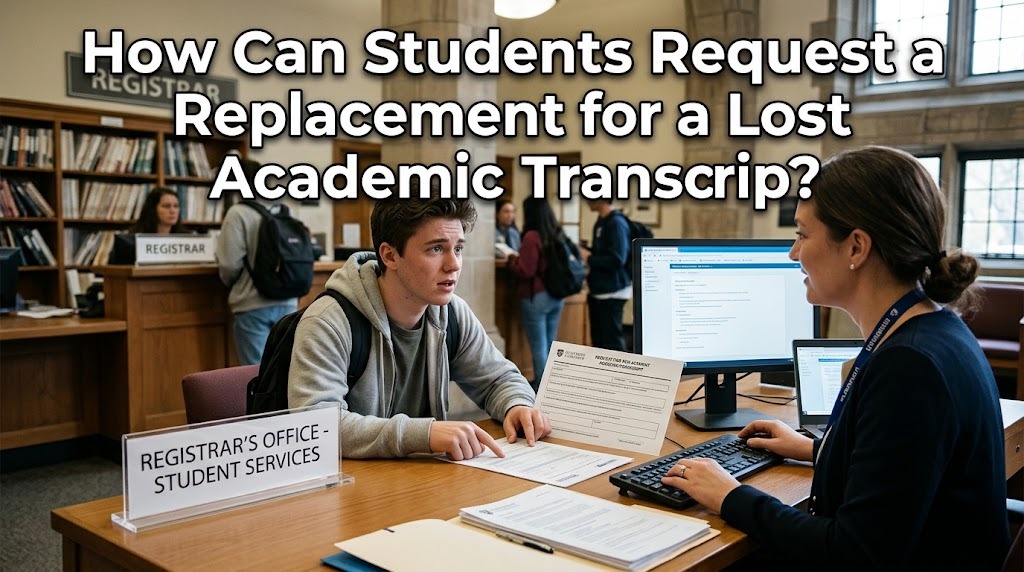
An academic transcript is an important educational document that contains a student's academic history, including course names, grades, credit units, and overall Grade Point Average (GPA). Students and graduates often need this document when applying for jobs, scholarships, further education, or other academic opportunities. However, losing an academic transcript can create difficulties, especially when the document is required for an important application. Fortunately, students can generally request a replacement through their university's academic administration office by following the official procedures.
UNDERSTANDING THE IMPORTANCE OF REPLACING A LOST ACADEMIC TRANSCRIPT
An academic transcript serves as official evidence of a student's educational achievements. It provides detailed information about academic performance and helps institutions verify an individual's educational background. Because of its importance, losing this document should be addressed as soon as possible.
A replacement transcript is useful when students need to complete administrative requirements for employment, postgraduate education, scholarship applications, or university transfers. Without an official academic record, applicants may experience difficulties proving their qualifications. Therefore, requesting a replacement helps ensure that students and graduates can continue using their academic information for important purposes.
CONTACTING THE UNIVERSITY ACADEMIC ADMINISTRATION OFFICE
The first step in replacing a lost academic transcript is contacting the university where the student completed their education. The academic administration office generally manages student records and handles requests for official academic documents. Students can ask whether the university provides replacement services and what requirements must be fulfilled.
Some universities allow requests through online academic systems or official email addresses, while others require students to visit the campus directly. It is important to obtain information from official university channels to avoid following incorrect procedures. Students should also ask about processing times, administrative fees, and document collection methods before submitting their requests.
PREPARING THE REQUIRED DOCUMENTS FOR A REPLACEMENT REQUEST
After understanding the university's procedures, students should prepare the documents required to support their replacement request. Common requirements may include a copy of an identity card, student identification number, graduation certificate, and an official application letter. These documents help the university identify the applicant and verify their academic records.
Some institutions may also request a written statement explaining the loss of the original transcript. In certain cases, students may need to submit a police loss report or other supporting documents, depending on university regulations. However, these requirements are not universal, so applicants should confirm the latest rules with their respective institutions. Preparing all necessary documents in advance can make the application process more efficient.
SUBMITTING AN OFFICIAL REQUEST FOR A REPLACEMENT TRANSCRIPT
Once all required documents are ready, students can submit an official replacement request according to the university's instructions. The application generally contains personal information, student identification details, study program, graduation year, and an explanation that the original transcript has been lost. Providing accurate information is essential to prevent administrative problems during the verification process.
The university may review the application and compare the submitted information with its internal academic database. If the records are complete and verified, the institution can proceed with issuing a replacement document. Students should keep a copy of their application or proof of submission so they can monitor the progress of their requests. If additional information is needed, they should respond promptly to avoid unnecessary delays.
UNDERSTANDING THE VERIFICATION AND REPLACEMENT PROCESS
Before issuing a replacement transcript, the university generally needs to confirm the applicant's identity and academic history. This process helps ensure that the document is issued to the correct person and contains information consistent with the institution's official records. Verification may involve checking student registration details, course results, graduation status, and previously recorded academic information.
The replacement transcript should contain accurate academic information and appropriate official authentication, such as an authorized signature, institutional stamp, digital signature, or verification code when applicable. Students should ask whether the replacement document has the same official validity as the original. They should also understand whether the university marks the document as a replacement copy according to its administrative policy.
TIPS FOR PREVENTING FUTURE LOSS OF ACADEMIC TRANSCRIPTS
After receiving a replacement transcript, students should take steps to protect the document from being lost or damaged again. One practical method is creating a digital backup by scanning the official document and saving it in a secure storage location. Digital copies can make it easier to access academic information when preparing applications, although some institutions may still require an officially issued transcript.
Students should also keep the original document in a safe and organized place, preferably inside a protective folder. Avoid carrying the original transcript unnecessarily, especially when a verified digital copy or photocopy is sufficient. It is also important to protect digital files with secure passwords and maintain backup copies. These simple practices can help graduates preserve their important academic documents and avoid repeating the replacement process.
CONCLUSION
Losing an academic transcript does not mean that students or graduates cannot obtain their academic records again. They can generally request a replacement by contacting their university, preparing the required documents, submitting an official application, and completing the verification process. However, procedures and requirements may differ between educational institutions. Students should always follow official university instructions and carefully check the replacement document after receiving it. Keeping secure digital backups and protecting printed documents can also prevent similar problems in the future.
Recent Posts

Bagaimana Sistem SKS pada Program Kuliah... 22.11.2026/40 View

How Does Technology Make Daily Evaluation... 21.11.2026/71 View

Apa Strategi Menghadapi Kesenjangan antara Kompetensi... 21.11.2026/73 View

Mengapa Inventaris Aset Penting bagi Kelancaran... 21.11.2026/69 View

When Should Musicians Join a Record... 21.11.2026/73 View
