

How Can Students Review Their Learning Outcomes After Semester Evaluation?
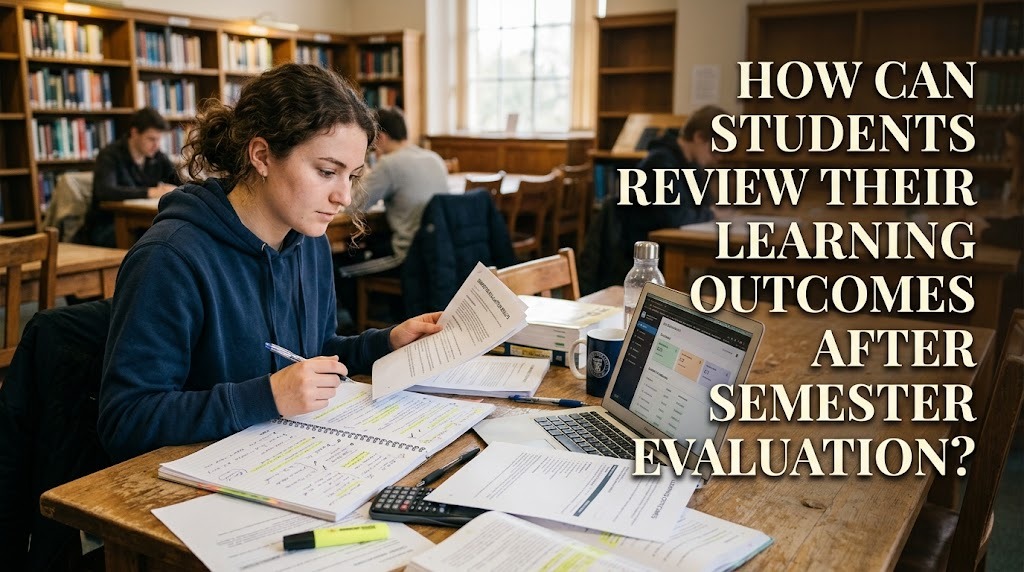
Reviewing learning outcomes after semester evaluation is an important step in improving academic performance and developing effective study habits. Examination results show more than just grades; they can also help students understand their strengths, recognize learning difficulties, and identify areas that require improvement. By evaluating their performance carefully, students can determine whether their study methods have been effective and what changes may be needed for the next semester. This process encourages students to take responsibility for their learning and set realistic academic goals. With consistent reflection and appropriate follow-up actions, students can use semester evaluation as an opportunity to improve their knowledge, skills, and confidence.
ANALYZE EXAMINATION RESULTS CAREFULLY
The first step in reviewing learning outcomes is to examine examination results carefully. Students should look at their scores in each subject and compare them with their previous performance when relevant information is available. This comparison can reveal subjects in which they have improved and areas where their results have declined. However, students should not judge their overall abilities based on a single score because examination performance can be influenced by several factors, including preparation, question difficulty, and test conditions. Understanding these factors provides a more balanced view of academic progress.
Students should also identify patterns across different subjects. For example, low scores in several subjects involving calculations may indicate a need to improve problem-solving skills or practice more frequently. Strong results in reading-based subjects may suggest that their reading and comprehension strategies are effective. These observations help students understand which learning habits are working and which need adjustment. By analyzing results objectively, students can create a more focused plan for future improvement.
IDENTIFY STRENGTHS AND WEAKNESSES
After examining their scores, students should identify the subjects and topics they understand well and those that remain difficult. Recognizing strengths helps students understand which study strategies have contributed to their success. For instance, students who perform well after regularly completing practice exercises may benefit from continuing that habit. They can also use their stronger subjects as examples of how consistent preparation and effective learning techniques support achievement. Understanding personal strengths encourages confidence and provides a useful foundation for further development.
Identifying weaknesses is equally important because it helps students determine where additional effort is needed. Students can review topics they answered incorrectly, concepts they struggled to explain, or assignments they found difficult. They should distinguish between problems caused by a lack of understanding, insufficient practice, poor time management, or examination anxiety. Each problem may require a different solution. By identifying the underlying causes, students can focus on practical improvements rather than simply studying longer without a clear strategy.
REVIEW INCORRECT ANSWERS AND LEARNING MISTAKES
Reviewing incorrect answers is one of the most useful ways to learn from semester evaluation. Students should examine the questions they answered incorrectly and compare their responses with the correct answers or teacher explanations. They should identify whether the mistakes resulted from misunderstanding a concept, misreading a question, forgetting information, or making a calculation error. Understanding why an answer was incorrect is more valuable than simply memorizing the correct response. This process helps students develop stronger reasoning skills and avoid repeating similar mistakes.
Students can keep a learning journal or mistake log to record recurring problems. Each entry can include the topic, the mistake made, the correct approach, and a short explanation of what was learned. Reviewing this record before future tests can help students recognize patterns and monitor improvement. If an explanation remains unclear, they should ask their teacher for additional guidance. Turning mistakes into specific learning goals makes the review process more practical and productive.
ASK TEACHERS FOR FEEDBACK AND GUIDANCE
Teachers can provide valuable information that may not be obvious from examination scores alone. Students should ask for feedback about their understanding of the material, the quality of their answers, and the skills they need to improve. Teachers may explain why certain answers received lower marks and suggest ways to approach similar questions more effectively. This feedback helps students understand the expectations of each subject and identify specific areas for improvement. Asking questions also demonstrates a willingness to learn and take responsibility for academic progress.
Students should approach feedback with an open mind and avoid viewing corrections as personal criticism. Instead, they can write down the teacher's suggestions and turn them into achievable learning targets. For example, a student who struggles with essay questions might practice organizing arguments and supporting them with relevant evidence. Another student who has difficulty solving mathematics problems might benefit from reviewing basic formulas and completing additional exercises. Following teacher guidance consistently can help students improve their understanding and performance in the next semester.
EVALUATE STUDY METHODS AND LEARNING HABITS
Semester evaluation provides an opportunity for students to assess whether their study methods have been effective. They should consider how regularly they reviewed lessons, how much time they spent practicing, and whether they understood the material or relied mainly on memorization. If students studied extensively but achieved disappointing results, they may need to change their approach rather than simply increase their study hours. Active recall, practice questions, spaced repetition, and explaining concepts in their own words can help strengthen understanding. The most effective methods depend on the subject and the individual student's learning needs.
Students should also reflect on their daily habits, including concentration, sleep, time management, and the use of digital devices. Frequent distractions or inconsistent study schedules may reduce the quality of learning. Students can experiment with shorter focused sessions, scheduled breaks, and regular revision to determine what works best for them. Keeping track of study activities and progress makes it easier to evaluate changes over time. By adjusting ineffective habits and maintaining successful ones, students can build a more sustainable learning routine.
SET REALISTIC ACADEMIC GOALS FOR THE NEXT SEMESTER
After reviewing their results and study habits, students should establish clear academic goals for the next semester. Goals should be specific, realistic, and connected to areas that need improvement. For example, a student might aim to complete mathematics practice exercises several times a week or review class notes after every lesson. These goals are more useful than general intentions such as wanting to study harder because they provide clear actions to follow. Students should also consider their existing responsibilities and available study time when setting targets.
Breaking larger goals into smaller steps makes progress easier to manage. Students can create weekly targets, record completed activities, and review their progress at regular intervals. If a goal proves too difficult or does not produce the expected results, they can adjust it based on their experience. It is also important to recognize improvements in understanding and consistency, not only increases in grades. Realistic goals encourage motivation and help students maintain their commitment throughout the semester.
CREATE A PERSONALIZED LEARNING IMPROVEMENT PLAN
A personalized learning improvement plan turns examination results into practical actions. Students can begin by listing their main strengths, weaknesses, and the topics that require further review. They should then decide which resources and strategies will help them address each learning need. For example, students may use textbooks for clarification, practice questions to strengthen problem-solving skills, or study groups to discuss difficult concepts. A clear plan ensures that their efforts are directed toward specific learning objectives.
The plan should also include a realistic schedule and a method for measuring progress. Students can set aside time each week to revisit difficult topics and check their understanding through quizzes or written summaries. Reviewing progress regularly helps them identify whether their strategies are working or require adjustment. They should remain flexible because some subjects may need more time than others. A personalized plan encourages independent learning and helps students prepare more effectively for future assessments.
MAINTAIN MOTIVATION AND MONITOR PROGRESS
Reviewing learning outcomes can sometimes be discouraging, especially when students receive lower scores than expected. However, students should remember that examination results represent performance at a particular point in time and do not determine their future potential. Focusing on improvement rather than comparison with classmates can help maintain motivation. Students should recognize small achievements, such as understanding a difficult topic, completing a study schedule, or making fewer mistakes in practice questions. These improvements show that consistent effort can produce meaningful progress.
Monitoring progress throughout the next semester helps students determine whether their improvement plan is effective. They can compare results from quizzes, assignments, and other assessments while also considering changes in their understanding and confidence. If progress remains limited, they should seek support from teachers, classmates, or appropriate school learning services. Maintaining healthy routines and allowing enough time for rest can also support sustained learning. With patience, regular reflection, and consistent effort, students can gradually improve their academic performance.
CONCLUSION
Students can review their learning outcomes after semester evaluation by analyzing examination results, identifying strengths and weaknesses, reviewing mistakes, and seeking feedback from teachers. They should also evaluate their study habits, set realistic academic goals, and develop a personalized improvement plan. Monitoring progress throughout the next semester helps them determine which strategies are effective and where further adjustments are needed. The purpose of reviewing learning outcomes is not simply to focus on grades but to understand how learning can improve. By using evaluation results as a guide for future action, students can develop stronger study habits, greater independence, and better academic performance.
Recent Posts

Bagaimana Sistem SKS pada Program Kuliah... 22.11.2026/60 View

How Does Technology Make Daily Evaluation... 21.11.2026/87 View

Apa Strategi Menghadapi Kesenjangan antara Kompetensi... 21.11.2026/85 View

Mengapa Inventaris Aset Penting bagi Kelancaran... 21.11.2026/83 View

When Should Musicians Join a Record... 21.11.2026/87 View
