

How Can Students Win the MAPSI Competition?
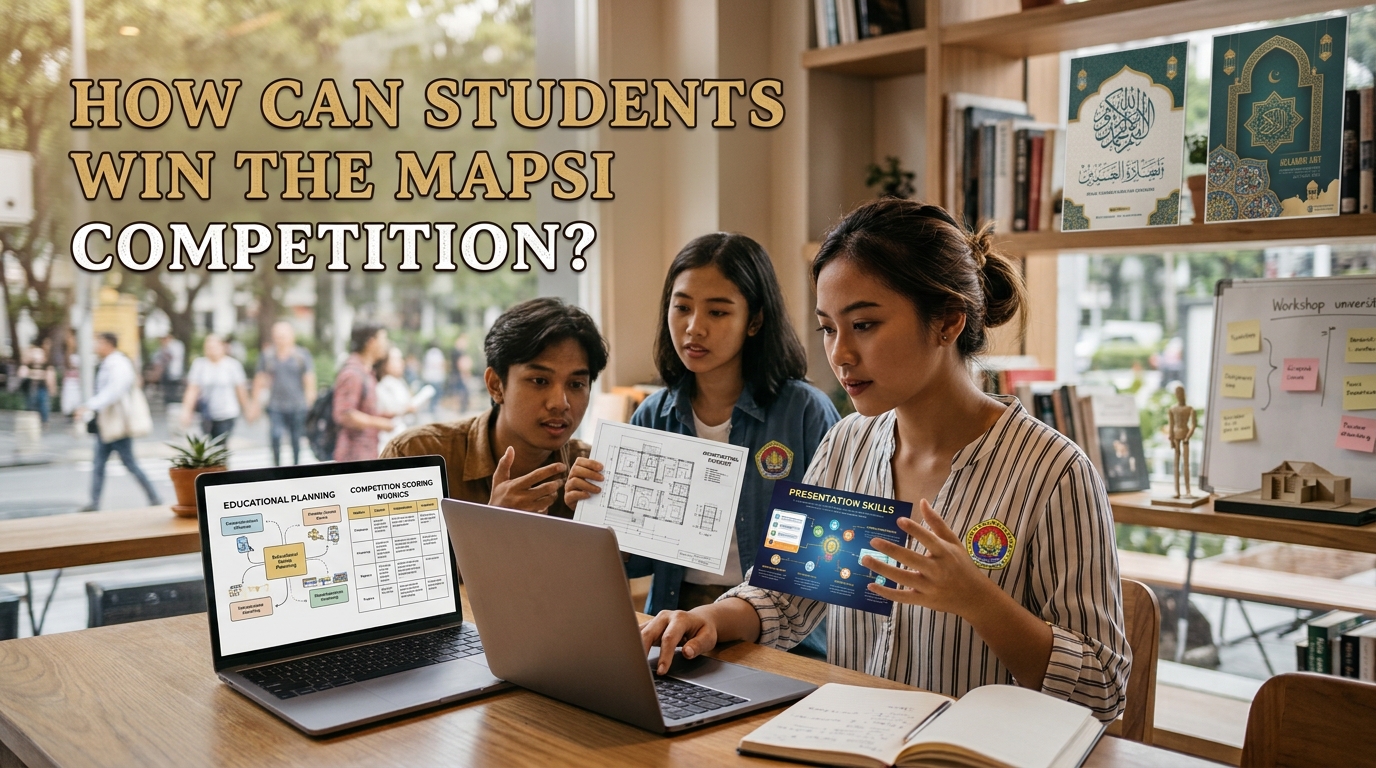
The MAPSI Competition (Islamic Education and Arts Competition) is an opportunity for students to demonstrate their talents, improve their religious knowledge, and develop their creativity. Through various competition categories, students can showcase their abilities in areas such as Quranic recitation, Islamic knowledge, religious performances, and artistic activities.
Winning the MAPSI Competition requires more than natural talent. Students need consistent preparation, a strong understanding of competition rules, effective practice strategies, and mental readiness. They must also understand how judges evaluate each category so they can focus on the most important aspects of their performance.
Whether students are participating for the first time or have previous competition experience, proper preparation can increase their chances of achieving good results. Here are several practical strategies students can follow to perform successfully in the MAPSI Competition.
1. UNDERSTAND THE COMPETITION CATEGORIES AND RULES
The first step toward winning the MAPSI Competition is understanding the available categories and their requirements. Each category has different objectives, technical standards, and judging criteria. For example, Quranic recitation focuses on pronunciation and Tajweed, while Islamic speech competitions emphasize content, communication, and presentation skills.
Students should carefully read the official technical guidelines provided by the organizing committee. Pay attention to assessment criteria, performance duration, required materials, and competition procedures. Understanding the rules from the beginning helps participants prepare more effectively and avoid unnecessary mistakes during the event.
2. CHOOSE A CATEGORY THAT MATCHES YOUR TALENTS
Choosing the right competition category can significantly influence students' preparation and performance. Every student has different interests and abilities, so participants should identify the areas where they feel most comfortable and confident.
For example, students who have strong Quranic reading abilities may consider Quranic recitation, while those who enjoy speaking in public may choose the Khitabah category. Selecting a suitable category allows students to focus their energy on developing their strongest skills. Matching personal talents with competition requirements creates a better foundation for successful participation.
3. PRACTICE CONSISTENTLY AND CREATE A STUDY SCHEDULE
Regular practice is one of the most important factors in preparing for the MAPSI Competition. Students should create a realistic training schedule that allows them to improve their abilities gradually without neglecting their regular school activities.
Practice sessions should focus on the technical requirements of the selected category. For example, Quranic recitation participants can practice Tajweed and fluency, while speech participants can improve their pronunciation, expressions, and delivery. Consistency is more valuable than last-minute preparation because repeated practice helps students develop stronger skills and confidence.
4. MASTER THE COMPETITION MATERIALS
Students need to understand and master the materials required for their chosen MAPSI category. Preparation should include studying relevant religious knowledge, memorizing important passages when necessary, and understanding the technical aspects of the competition.
Participants should avoid relying entirely on memorization without understanding the material. A strong understanding helps them respond more effectively when facing questions or unexpected situations. Mastery of the material also allows students to demonstrate their abilities accurately and confidently in front of the judges.
5. LEARN FROM EXPERIENCED TEACHERS AND MENTORS
Teachers and mentors play an important role in helping students prepare for competitions. They can provide technical guidance, identify mistakes, and recommend appropriate practice methods based on each student's abilities.
Students should actively ask questions and accept constructive feedback during training. For example, a teacher can help correct Quranic pronunciation, improve speech delivery, or evaluate the quality of an artistic performance. Guidance from experienced mentors helps participants understand their weaknesses and develop better preparation strategies.
6. UNDERSTAND THE JUDGING CRITERIA
Knowing how judges evaluate each category can help students focus on the aspects that matter most. Every MAPSI category has specific assessment standards, which may include accuracy, fluency, creativity, presentation, technical ability, and compliance with competition rules.
Students should use these criteria as a preparation checklist. For instance, participants in Quranic recitation should pay attention to Tajweed, pronunciation, and fluency, while those in Islamic speech should focus on content, confidence, and communication. Preparing according to the judging criteria helps students avoid overlooking important performance requirements.
7. DEVELOP SELF-CONFIDENCE AND MENTAL READINESS
Confidence is essential when performing in front of judges and audiences. Even students with excellent abilities may struggle to demonstrate their potential if they feel excessively nervous during the competition.
To improve mental readiness, students can practice in front of family members, classmates, or teachers. They should also learn simple techniques such as taking deep breaths, maintaining positive thoughts, and focusing on their preparation. Mental preparation and self-confidence help students remain calm and perform more consistently under pressure.
8. IMPROVE COMMUNICATION AND PRESENTATION SKILLS
Good presentation skills can make a student's performance more effective and easier for judges to evaluate. Participants should pay attention to their speaking style, body language, facial expressions, and interaction with the audience when these elements are relevant to their competition category.
For categories involving speeches or performances, students should practice delivering their material clearly and naturally. They should avoid speaking too quickly, using unnecessary gestures, or showing a lack of preparation. Clear communication and professional presentation can strengthen the overall quality of their performance.
9. MAINTAIN PHYSICAL HEALTH AND DISCIPLINE
Preparing for MAPSI requires energy, concentration, and consistent effort. Students should maintain healthy habits by getting enough sleep, eating nutritious food, drinking sufficient water, and managing their daily activities properly.
They should also arrive at the competition venue on time and prepare all necessary equipment or materials in advance. These simple habits help prevent unnecessary stress and ensure that students are ready when their competition begins. Physical fitness and personal discipline support better concentration and performance.
10. EVALUATE PRACTICE RESULTS AND IMPROVE WEAKNESSES
Students should regularly evaluate their progress during the preparation period. Evaluation helps participants identify mistakes, measure improvements, and understand which skills still need attention.
One practical method is to record practice performances and review them with teachers or mentors. Students can compare their performance against the competition criteria and make adjustments where necessary. Continuous evaluation and improvement help participants become better prepared and reduce repeated mistakes before the competition.
11. MAINTAIN SPORTSMANSHIP AND A POSITIVE ATTITUDE
Winning is an important goal, but students should also understand the value of fair competition. MAPSI teaches participants to respect judges, follow the rules, appreciate other competitors, and accept the final results gracefully.
A positive attitude helps students remain motivated even when they face difficulties or do not achieve the expected results. They should view every competition as an opportunity to gain experience and learn new things. Good sportsmanship and strong character are valuable achievements that remain important beyond the competition.
COMMON MISTAKES STUDENTS SHOULD AVOID DURING MAPSI
Apart from preparing effectively, students should understand the mistakes that may reduce their chances of performing well. Some problems occur because participants underestimate the competition requirements or prepare without a clear strategy.
Here are several common mistakes to avoid:
- Last-Minute Preparation: Waiting until the final days to practice can reduce performance quality.
- Ignoring Competition Rules: Failing to understand technical requirements may result in avoidable mistakes.
- Lack of Practice: Inconsistent training can affect accuracy, fluency, and confidence.
- Poor Time Management: Spending too much time on one activity can interfere with preparation for other responsibilities.
- Excessive Nervousness: Allowing anxiety to take control can affect concentration and performance.
- Ignoring Feedback: Refusing constructive criticism can prevent students from improving their abilities.
- Underestimating Other Participants: Focusing only on personal achievements can reduce opportunities to learn from others.
By avoiding these mistakes, students can prepare more carefully and approach the competition with a stronger mindset.
CONCLUSION
Winning the MAPSI Competition requires a combination of talent, knowledge, discipline, and consistent preparation. Students should understand the competition rules, choose suitable categories, practice regularly, master the required materials, and learn from experienced teachers.
In addition, developing self-confidence, understanding judging criteria, maintaining physical health, and evaluating practice results can improve overall performance. Students should also remember that sportsmanship, honesty, and positive Islamic values are just as important as competition achievements.
Ultimately, success in MAPSI is not determined by talent alone. It comes from continuous learning, strong preparation, and the willingness to improve. By applying these strategies, students can increase their chances of winning while gaining valuable experiences that support their academic, personal, and religious development.
Recent Posts

How Does Technology Make Daily Evaluation... 21.11.2026/63 View

Apa Strategi Menghadapi Kesenjangan antara Kompetensi... 21.11.2026/64 View

Mengapa Inventaris Aset Penting bagi Kelancaran... 21.11.2026/60 View

When Should Musicians Join a Record... 21.11.2026/59 View

Daily Evaluation or Daily Planning Which... 21.11.2026/67 View
