

How Can Sustainable Logistics Help Businesses Reduce Environmental Impact?
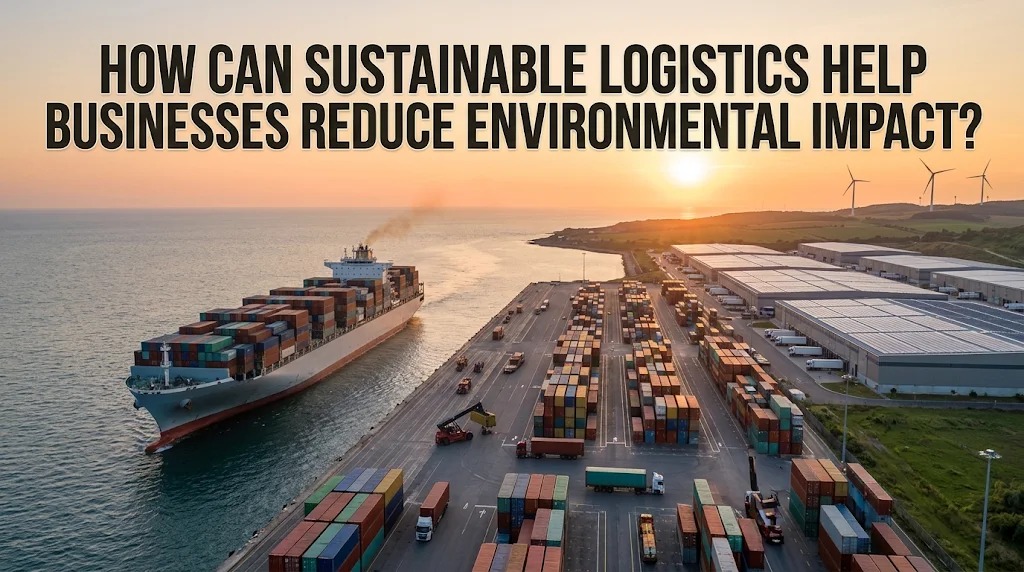
Sustainable logistics has become an important consideration for modern businesses that want to reduce environmental damage while maintaining efficient distribution operations. Logistics activities involve transportation, warehousing, packaging, and product delivery, all of which can consume significant amounts of energy and natural resources. Traditional logistics practices may contribute to air pollution, greenhouse gas emissions, excessive fuel consumption, and waste generation. Therefore, companies need more environmentally responsible strategies to manage their logistics activities.
As environmental awareness continues to grow, customers, business partners, and governments increasingly expect companies to adopt sustainable practices. Businesses can respond by improving transportation efficiency, reducing packaging waste, using renewable energy, and implementing better inventory management. These efforts not only help protect the environment but can also reduce operational expenses and improve brand reputation. Understanding sustainable logistics allows companies to develop distribution systems that support both business performance and environmental responsibility.
REDUCING CARBON EMISSIONS THROUGH ENVIRONMENTALLY FRIENDLY TRANSPORTATION
Transportation is one of the main sources of environmental impact in logistics because vehicles consume fuel and produce greenhouse gas emissions. Companies can reduce these emissions by selecting more environmentally friendly transportation methods. For example, electric delivery vehicles can reduce direct exhaust emissions, while rail and sea transportation may offer lower emissions per unit of cargo than road or air transportation in suitable situations. Choosing transportation methods based on shipment requirements helps businesses reduce their environmental footprint.
Furthermore, companies can implement route optimization to minimize unnecessary travel distances and fuel consumption. Digital route-planning systems can analyze delivery locations, traffic conditions, and transportation schedules to identify more efficient routes. Businesses can also combine shipments to reduce the number of vehicles required for product distribution. These strategies help companies lower emissions, control fuel expenses, and improve transportation efficiency without compromising delivery reliability.
USING RENEWABLE ENERGY AND IMPROVING WAREHOUSE EFFICIENCY
Warehouses require energy for lighting, ventilation, refrigeration, equipment, and other operational activities. Businesses can reduce their environmental impact by improving energy efficiency and adopting renewable energy sources. Installing solar panels, using energy-efficient lighting, and maintaining appropriate temperature controls can reduce electricity consumption. These improvements help companies lower greenhouse gas emissions associated with warehouse operations.
In addition, businesses can improve warehouse efficiency by organizing storage areas and optimizing product-handling activities. Efficient layouts reduce unnecessary movement of goods and equipment, helping employees complete tasks with less energy and time. Companies can also use automated systems to monitor electricity consumption and identify equipment that uses excessive energy. By combining renewable energy with efficient warehouse management, businesses can create more sustainable storage facilities and reduce long-term operating costs.
REDUCING PACKAGING WASTE AND PROMOTING REUSABLE MATERIALS
Sustainable packaging is an important part of environmentally responsible logistics because packaging materials can generate large amounts of waste. Companies can reduce this problem by choosing recyclable, biodegradable, or reusable materials when they are suitable for their products. Using packaging that matches product dimensions can also prevent unnecessary material consumption. This approach helps businesses reduce waste while maintaining adequate product protection during transportation.
Moreover, companies can introduce reusable packaging systems for distribution activities involving regular deliveries between the same locations. For example, reusable containers and pallets can replace certain single-use packaging materials. Businesses should also encourage suppliers and customers to participate in packaging reduction programs. Through responsible material selection and waste management, companies can reduce environmental pollution and support more sustainable distribution practices.
IMPLEMENTING DIGITAL TECHNOLOGY AND RESOURCE MANAGEMENT
Digital technology helps companies monitor logistics activities and identify opportunities to reduce environmental impact. Logistics management systems can provide information about transportation performance, inventory levels, energy consumption, and warehouse activities. Businesses can analyze this information to identify inefficient processes and develop more sustainable operational strategies. Accurate data also helps managers evaluate whether environmental improvement programs are producing meaningful results.
Additionally, technologies such as artificial intelligence and the Internet of Things can support more efficient resource management. AI can help optimize delivery routes and forecast demand, while connected sensors can monitor warehouse temperatures, energy usage, and equipment conditions. These technologies can reduce unnecessary transportation, prevent product waste, and improve operational planning. However, companies should also consider the energy consumption of digital infrastructure and choose solutions that provide genuine environmental and operational benefits.
BUILDING SUSTAINABLE SUPPLY CHAINS AND MEASURING ENVIRONMENTAL PERFORMANCE
Sustainable logistics requires cooperation between businesses, suppliers, transportation providers, and customers. Companies should work with partners that follow responsible environmental practices, such as reducing emissions, managing waste, and using resources efficiently. Evaluating supplier performance based on environmental standards can help businesses build a more responsible supply chain. Cooperation also makes it easier to introduce sustainable practices across different stages of product distribution.
Furthermore, companies need to measure their environmental performance to understand the effectiveness of sustainability programs. Important indicators include carbon emissions, fuel consumption, electricity usage, packaging waste, and transportation efficiency. Businesses can use these measurements to establish improvement targets and monitor progress over time. Regular evaluations help companies identify weaknesses and adjust their strategies according to operational needs. By developing measurable environmental goals, businesses can strengthen accountability and support long-term sustainability.
CONCLUSION
Sustainable logistics helps businesses reduce environmental impact through more efficient transportation, renewable energy, responsible packaging, digital technology, and environmentally conscious supply chain management. These strategies can reduce greenhouse gas emissions, minimize waste, and improve the use of natural resources. They can also provide financial benefits by reducing fuel consumption, electricity expenses, and unnecessary operational activities.
However, implementing sustainable logistics requires long-term planning and cooperation between different business partners. Companies should evaluate their environmental performance regularly and select solutions that match their operational requirements. By integrating sustainability into logistics management, businesses can protect the environment, improve their reputation, and achieve more responsible long-term growth.
Recent Posts

How Does Technology Make Daily Evaluation... 21.11.2026/62 View

Apa Strategi Menghadapi Kesenjangan antara Kompetensi... 21.11.2026/63 View

Mengapa Inventaris Aset Penting bagi Kelancaran... 21.11.2026/59 View

When Should Musicians Join a Record... 21.11.2026/58 View

Daily Evaluation or Daily Planning Which... 21.11.2026/66 View
