

How Can Sustainable Logistics Management Reduce Environmental Impact?
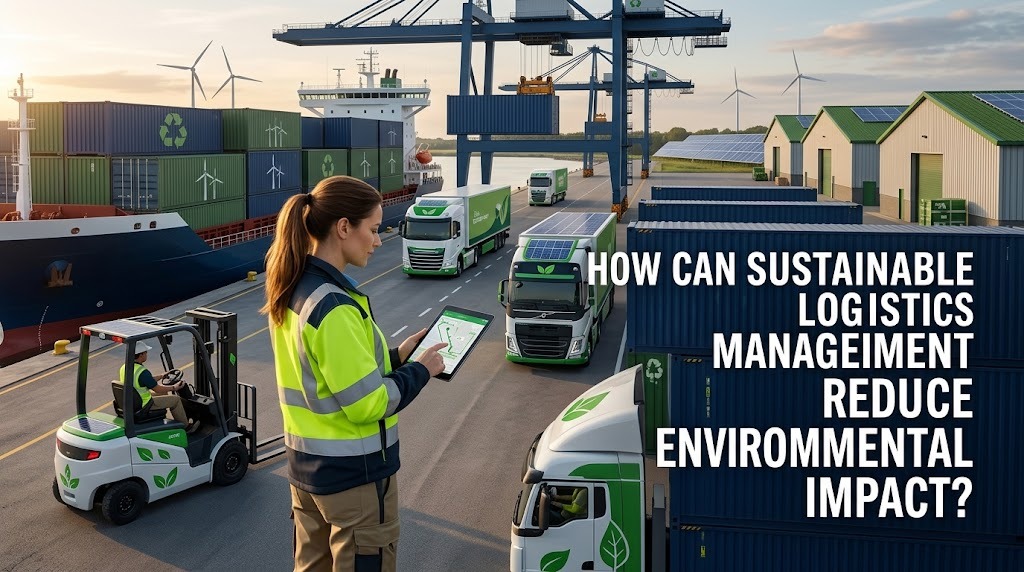
Sustainable logistics management helps businesses reduce the environmental impact of transporting, storing, and distributing products. As global demand for goods continues to increase, logistics activities can contribute to greenhouse gas emissions, fuel consumption, packaging waste, and air pollution. Companies therefore need strategies that balance operational efficiency with environmental responsibility. By optimizing transportation routes, improving warehouse energy use, reducing packaging waste, and adopting cleaner technologies, businesses can make their logistics operations more sustainable. Sustainable logistics management supports environmental protection while helping companies control costs, improve resource efficiency, and respond to growing customer expectations for responsible business practices.
UNDERSTANDING SUSTAINABLE LOGISTICS MANAGEMENT
Sustainable logistics management refers to planning and controlling the movement and storage of goods in ways that reduce environmental harm while maintaining operational and economic performance. It considers how transportation, warehousing, packaging, and distribution affect natural resources and the environment. The goal is to deliver products efficiently while minimizing unnecessary fuel consumption, emissions, and waste.
For example, a company can reduce its environmental impact by combining shipments, choosing efficient delivery routes, and using recyclable packaging materials. Businesses can also review suppliers and transportation providers to understand their environmental practices. Sustainable logistics does not mean eliminating every environmental impact, but rather reducing avoidable emissions and resource consumption through practical improvements. When these strategies become part of daily operations, companies can improve efficiency and strengthen their environmental responsibility.
REDUCING TRANSPORTATION EMISSIONS THROUGH ROUTE OPTIMIZATION
Transportation is a major source of emissions in logistics, particularly when businesses depend heavily on fuel-powered vehicles. Companies can reduce unnecessary emissions by optimizing delivery routes and avoiding excessive travel distances. Route planning software can help identify efficient paths based on delivery locations, traffic conditions, and vehicle capacity. These improvements may also reduce fuel expenses and delivery times.
Businesses can further reduce emissions by consolidating shipments and improving vehicle utilization. For example, combining orders for nearby destinations can reduce the number of separate trips required. Where practical, companies may use electric vehicles, bicycles, or other lower-emission transportation options for suitable deliveries. Efficient transportation planning helps businesses reduce fuel consumption while maintaining reliable distribution services. The most appropriate solution depends on delivery distances, infrastructure, vehicle availability, and operational requirements.
IMPROVING WAREHOUSE ENERGY EFFICIENCY
Warehouses consume energy through lighting, heating, cooling, refrigeration, and equipment operation. Businesses can reduce this consumption by installing energy-efficient lighting, using motion sensors, and maintaining heating and cooling systems properly. In facilities with suitable conditions, improved insulation and natural lighting can also reduce energy requirements. These measures help lower electricity costs while reducing the environmental footprint of warehouse operations.
Companies may also consider renewable energy sources, such as rooftop solar panels, when financially and technically practical. Energy monitoring systems can identify equipment that consumes excessive electricity or operates unnecessarily. In addition, warehouse layouts can be improved to reduce product handling distances and unnecessary equipment movement. Energy-efficient warehouse management supports more responsible resource use and can provide long-term operational savings.
MINIMIZING PACKAGING WASTE AND PROMOTING RECYCLING
Packaging protects products during transportation, but excessive packaging can increase material consumption and waste. Businesses can reduce this problem by choosing appropriately sized boxes, avoiding unnecessary wrapping, and using recyclable or reusable materials when suitable. Sustainable packaging should protect products effectively while minimizing environmental impact. Companies must also consider product fragility, hygiene requirements, and transportation conditions before changing packaging materials.
Recycling programs can help businesses manage cardboard, plastic, and other packaging waste more responsibly. Reusable containers and returnable packaging may also be practical for businesses with regular shipments between the same locations. However, reusable packaging should be managed carefully because cleaning, transportation, and repeated handling also consume resources. By evaluating the entire packaging process, companies can reduce waste, protect products, and improve material efficiency without compromising delivery quality.
USING GREEN TECHNOLOGY AND DATA ANALYTICS
Digital technology helps companies measure environmental performance and identify opportunities for improvement. Logistics management software can track transportation distances, fuel consumption, shipment volumes, and warehouse energy use. These measurements allow managers to identify inefficient processes and evaluate whether sustainability initiatives are producing meaningful results. Accurate data also supports more informed planning and resource allocation.
Businesses can use data analytics to forecast demand, reduce unnecessary shipments, and improve inventory placement. Some logistics systems also support vehicle monitoring, route optimization, and emissions estimation. Companies may introduce electric vehicles, alternative fuels, or automated equipment when these options suit their operational needs and environmental objectives. However, they should evaluate the energy sources, costs, and full life cycle impacts of new technologies. Combining digital monitoring with practical improvements helps businesses make progress toward more sustainable logistics operations.
BUILDING SUSTAINABLE SUPPLY CHAINS AND MEASURING RESULTS
Sustainable logistics requires cooperation between businesses, suppliers, transportation providers, and customers. Companies can evaluate suppliers based on their environmental practices, packaging choices, transportation methods, and resource efficiency. Sustainable supplier partnerships encourage shared responsibility and help businesses identify opportunities to reduce waste across the supply chain. Clear environmental expectations can also support more consistent performance among business partners.
Businesses should measure their progress using indicators such as fuel consumption, emissions per shipment, energy use per warehouse order, packaging waste, and vehicle utilization. These measurements help managers compare results over time and identify areas that require further improvement. Companies should use consistent calculation methods and avoid making environmental claims that cannot be supported by reliable evidence. Regular performance evaluation ensures that sustainability efforts remain practical, measurable, and aligned with business goals. Continuous improvement can help companies reduce their environmental impact while maintaining dependable logistics services.
CONCLUSION
Sustainable logistics management can reduce environmental impact by improving transportation efficiency, lowering warehouse energy consumption, minimizing packaging waste, and adopting suitable digital technologies. Businesses can also strengthen sustainability through responsible supplier relationships and regular environmental performance monitoring. These strategies help reduce unnecessary resource use while supporting operational efficiency. Although some initiatives require initial investment, careful planning can create long-term environmental and economic benefits. By implementing practical and measurable sustainability strategies, companies can reduce emissions, manage resources responsibly, and build a more sustainable logistics system.
Recent Posts

Bagaimana Sistem SKS pada Program Kuliah... 22.11.2026/60 View

How Does Technology Make Daily Evaluation... 21.11.2026/87 View

Apa Strategi Menghadapi Kesenjangan antara Kompetensi... 21.11.2026/85 View

Mengapa Inventaris Aset Penting bagi Kelancaran... 21.11.2026/83 View

When Should Musicians Join a Record... 21.11.2026/87 View
