

How Can Teachers Build Positive Character In Students?
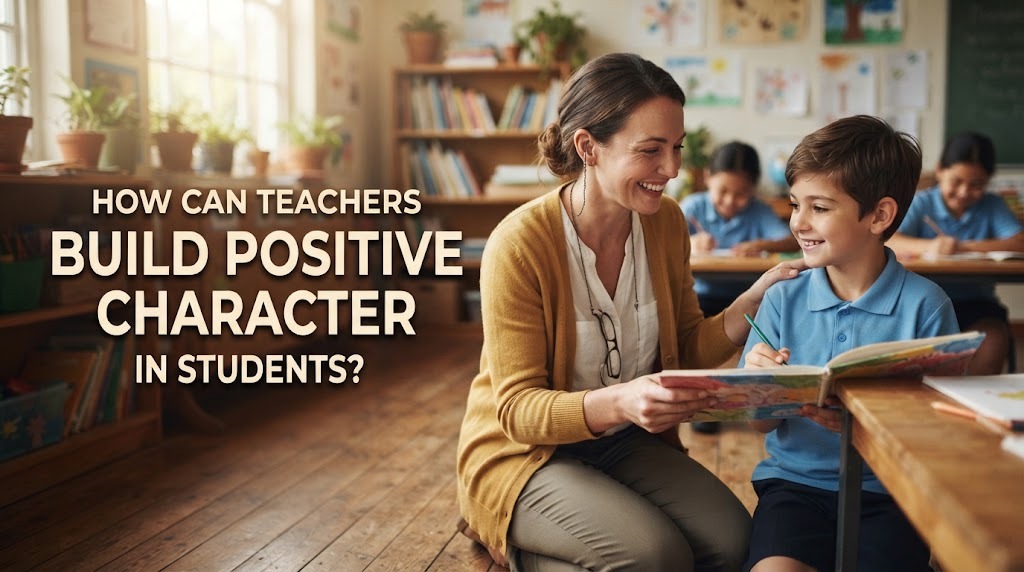
Teachers play an important role in helping students develop positive character. Their responsibility is not limited to teaching academic subjects because students also learn from how teachers communicate, solve problems, and treat others. A supportive teacher can encourage students to practice honesty, responsibility, respect, discipline, and empathy in everyday situations. Character development usually happens gradually through consistent guidance and repeated practice. Therefore, teachers can become important role models in shaping students' attitudes and behavior.
BECOMING A POSITIVE ROLE MODEL
One of the most effective ways teachers can build positive character is by becoming a good role model. Students often observe how teachers speak, respond to mistakes, handle disagreements, and treat different people. When teachers demonstrate honesty, patience, fairness, and respect, students can see how these values are applied in real situations. A teacher who keeps promises and takes responsibility for mistakes also shows students the importance of accountability. Positive examples can influence students more effectively than simply telling them what they should do.
Teachers should also try to maintain consistent behavior in different situations. For example, a teacher should apply classroom rules fairly rather than giving special treatment to certain students. Consistency helps students understand that values such as fairness and respect should be practiced by everyone. It also creates trust between teachers and students. When students trust their teacher, they may become more willing to accept guidance and improve their behavior.
TEACHING VALUES THROUGH DAILY ACTIVITIES
Character education does not always need to be taught through special lessons. Teachers can include character values in everyday classroom activities. Group assignments can teach cooperation, classroom duties can develop responsibility, and discussions can encourage students to respect different opinions. Even simple activities such as returning borrowed items or keeping the classroom clean can become opportunities to practice good character. Regular practice makes these values easier for students to understand and remember.
Teachers can also explain the reason behind a particular value or rule. For example, students can learn that keeping the classroom clean is not only about following school regulations but also about respecting a shared environment. When students understand the purpose of positive behavior, they are more likely to practice it willingly. This approach can help students connect character education with real-life situations. As a result, good behavior can gradually become part of their daily habits.
PROVIDING CLEAR RULES AND EXPECTATIONS
Clear rules help students understand what behavior is expected in the classroom. Teachers can establish rules related to respect, punctuality, responsibility, communication, and academic honesty. These expectations should be explained in simple language so students understand what they mean. Teachers should also apply rules consistently and fairly to avoid confusion. A clear classroom structure can help students feel more secure and understand the boundaries of appropriate behavior.
Rules become more effective when students understand the reasons behind them. Teachers can invite students to discuss why certain behaviors are important and how they affect others. This encourages students to develop self-discipline rather than following rules only because they are afraid of punishment. When students understand the consequences of their actions, they can become more responsible for their choices. Over time, this can support stronger character development.
ENCOURAGING RESPONSIBILITY AND INDEPENDENCE
Teachers can build positive character by giving students opportunities to take responsibility for their own tasks. Students can be asked to organize materials, complete assignments, lead group activities, or help maintain the classroom. These responsibilities allow students to practice independence in realistic situations. Teachers should provide guidance when necessary while still allowing students to solve problems on their own. This balance can help students become more confident and accountable.
Mistakes can also become valuable learning opportunities. Instead of immediately solving every problem, teachers can ask students to think about what went wrong and how they can improve. Learning from mistakes helps students understand that responsibility includes recognizing problems and making better choices. This approach can develop resilience and encourage students to keep trying. Over time, students may become more comfortable taking responsibility for both their successes and their mistakes.
USING POSITIVE REINFORCEMENT
Positive reinforcement can encourage students to continue practicing good behavior. Teachers can recognize students when they demonstrate honesty, cooperation, discipline, kindness, or responsibility. Recognition does not always need to involve rewards or prizes. A sincere compliment, constructive feedback, or simple acknowledgment can show students that their positive actions are valued. This can motivate students to repeat the behavior in future situations.
However, teachers should focus on the behavior and effort, rather than labeling students as naturally good or bad. For example, saying that a student showed strong responsibility is more useful than simply saying that the student is a good person. This helps students understand which behavior should be repeated. Positive reinforcement should also be fair and not create unhealthy competition among classmates. The goal is to encourage meaningful character growth rather than simply gaining praise.
TEACHING EMPATHY AND RESPECT
Teachers can help students develop empathy by encouraging them to consider how other people may feel. Classroom discussions, stories, role-playing, and group activities can help students understand different perspectives. Students can learn that people may respond differently because they have different experiences and emotions. This understanding can reduce unnecessary conflict and encourage more respectful communication. Empathy can also help students become more supportive of classmates who are experiencing difficulties.
Respect should be practiced even when students disagree with one another. Teachers can demonstrate how to disagree politely, listen carefully, and avoid insulting others. When conflicts occur, teachers can guide students to discuss the problem and find a fair solution. This teaches students that disagreements do not have to become personal attacks. These skills can help students build healthier relationships both inside and outside school.
CREATING A SAFE AND INCLUSIVE CLASSROOM
A positive classroom should make students feel safe, respected, and included. Teachers can create this environment by preventing bullying, encouraging respectful communication, and making sure students have opportunities to participate. Students should feel that they can ask questions and express ideas without being humiliated. A supportive environment can make students more comfortable practicing positive behavior. It can also encourage them to respect classmates who have different abilities, opinions, and personalities.
Teachers should respond to inappropriate behavior in a fair and constructive way. Instead of humiliating students in front of their classmates, teachers can discuss the problem privately and explain its consequences. Students should understand why their behavior was inappropriate and what they can do differently next time. This approach can protect their dignity while still maintaining classroom standards. A safe and inclusive environment provides a strong foundation for character development.
WORKING WITH PARENTS AND THE SCHOOL COMMUNITY
Character development becomes stronger when teachers work together with parents and the wider school community. Students receive clearer guidance when important values are supported both at school and at home. Teachers can communicate with parents about students' progress, challenges, and positive improvements. Parents can then reinforce similar habits outside the classroom. This cooperation creates greater consistency in students' character development.
Schools can also provide activities that allow students to practice positive values beyond regular lessons. Community service, leadership activities, teamwork, and school projects can teach students responsibility and cooperation. Teachers can guide students during these activities and help them reflect on what they have learned. Such experiences show students that character is not only something discussed in class. It is something they can demonstrate through their actions.
CONCLUSION
Teachers can build positive character in students through consistent examples, meaningful activities, clear expectations, positive reinforcement, and supportive guidance. They can teach important values such as responsibility, honesty, discipline, empathy, respect, and independence through everyday classroom experiences. Creating a safe and inclusive environment also helps students feel comfortable practicing these values. Cooperation between teachers, parents, and schools can make character education more consistent and effective. With patient guidance and regular practice, students can gradually develop positive habits and strong character that benefit them throughout their lives.
Recent Posts

Bagaimana Sistem SKS pada Program Kuliah... 22.11.2026/35 View

How Does Technology Make Daily Evaluation... 21.11.2026/69 View

Apa Strategi Menghadapi Kesenjangan antara Kompetensi... 21.11.2026/69 View

Mengapa Inventaris Aset Penting bagi Kelancaran... 21.11.2026/67 View

When Should Musicians Join a Record... 21.11.2026/68 View
