

How Can Teachers Create Learning Experiences Students Remember?
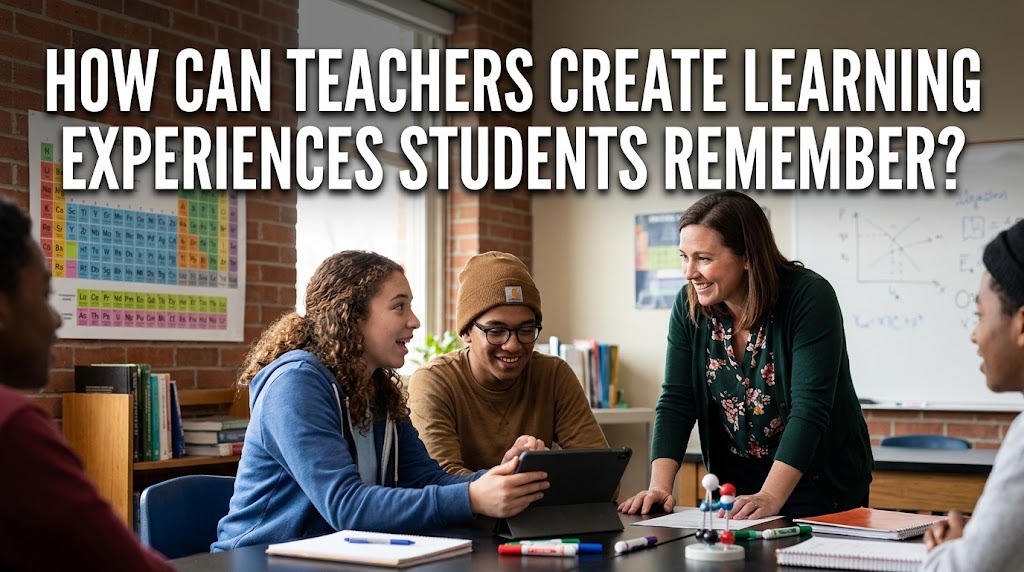
Memorable learning experiences help students understand lessons more deeply and connect new knowledge with real-life situations. Teachers play an important role in creating these experiences through engaging activities, meaningful discussions, practical examples, and supportive classroom environments. When students actively participate in the learning process, they have more opportunities to understand information and connect it with what they already know.
Learning does not have to be limited to textbooks, lectures, and examinations. Teachers can make lessons more meaningful by encouraging curiosity, creativity, collaboration, and independent thinking. These approaches can help students develop a stronger interest in learning and remember important concepts beyond the classroom.
CONNECTING LESSONS WITH REAL-LIFE EXPERIENCES
Students often understand information more easily when they can relate it to situations they encounter in everyday life. Teachers can use familiar examples, current issues, and practical demonstrations to explain abstract concepts. This approach helps students recognize the purpose of what they are learning and how it can be applied outside school.
For example, a mathematics teacher can introduce percentages through shopping discounts or household budgeting. A business teacher can explain marketing strategies by analyzing advertisements from familiar brands. These connections make lessons more relevant and give students a clearer understanding of how academic knowledge works in real situations.
ENCOURAGING ACTIVE PARTICIPATION
Students are more involved in learning when they have opportunities to ask questions, solve problems, and share their ideas. Instead of relying entirely on lectures, teachers can introduce discussions, presentations, experiments, and classroom challenges. Active participation allows students to process information rather than simply receive it.
Teachers can also invite students to explain concepts in their own words or demonstrate what they have learned. These activities reveal whether students understand the material and give them opportunities to strengthen their knowledge. Participating directly in a lesson can make the experience more meaningful and easier to recall later.
USING CREATIVE TEACHING METHODS
Creative teaching methods can make lessons more interesting and accessible to students with different learning needs. Teachers may use storytelling, educational games, visual materials, simulations, and digital tools to present information in engaging ways. The choice of method should support the learning objective rather than serve only as entertainment.
For instance, a history teacher can use a timeline and role-playing activity to help students explore events from different perspectives. A language teacher can organize a storytelling exercise that encourages students to practice vocabulary and communication. When creative activities are connected to clear learning goals, they can improve understanding and make classroom experiences more memorable.
BUILDING POSITIVE EMOTIONAL CONNECTIONS
Students are more likely to participate when they feel respected, supported, and comfortable asking questions. Teachers can create this atmosphere by listening carefully, responding patiently, and treating mistakes as opportunities for improvement. Positive interactions help students associate learning with curiosity and personal growth rather than fear of embarrassment.
A teacher's enthusiasm can also influence the classroom atmosphere. Showing genuine interest in a subject, celebrating meaningful progress, and recognizing student contributions can make lessons feel more encouraging. Although every student responds differently, a supportive environment can help many learners become more confident and willing to participate.
INCORPORATING GROUP PROJECTS AND COLLABORATION
Collaborative learning gives students opportunities to exchange ideas, explain concepts, and solve problems together. Group projects can help them understand different perspectives while developing communication, teamwork, and responsibility. Working with classmates may also expose students to explanations that complement the teacher's instruction.
Teachers can make collaborative activities more effective by assigning clear roles and setting specific goals. For example, students can work together to create a presentation, conduct a simple investigation, or develop a business proposal. Reflecting on the process afterward helps students identify what they learned and how collaboration contributed to the outcome.
ENCOURAGING CURIOSITY AND CRITICAL THINKING
Memorable lessons often begin with questions that encourage students to investigate a topic. Teachers can introduce real-world problems, surprising examples, or open-ended questions that invite students to explore possible explanations. This approach encourages learners to think beyond memorizing facts and develop a deeper understanding of the subject.
Critical thinking activities can include comparing information, evaluating evidence, and defending conclusions with logical reasons. Teachers should provide enough guidance to keep students focused while allowing them to discover ideas independently. When students actively investigate a question, they may develop a stronger connection with the knowledge they gain.
PROVIDING HANDS-ON LEARNING OPPORTUNITIES
Hands-on learning allows students to apply concepts through direct experience. Depending on the subject, teachers can organize experiments, demonstrations, field observations, practical assignments, or project-based activities. These experiences help students connect theoretical knowledge with observable results.
For example, students studying entrepreneurship can design a simple product promotion, calculate costs, and identify a target audience. Science students can conduct safe experiments and record their observations. Practical activities can make abstract ideas easier to understand, especially when teachers guide students in discussing the results and relating them to the lesson.
USING FEEDBACK AND REFLECTION EFFECTIVELY
Feedback helps students recognize their progress and understand which areas need further improvement. Teachers can provide specific comments about students' work, explain common mistakes, and suggest practical steps for improvement. Clear feedback makes learning more purposeful because students know what to work on next.
Reflection is equally important because it encourages students to review what they have learned. Teachers can ask students to summarize key ideas, identify the most challenging concept, or explain how they might use the knowledge in everyday life. These activities help students organize information and recognize the meaning of their learning experiences.
USING TECHNOLOGY WITH A CLEAR PURPOSE
Digital technology can support memorable learning when it helps students explore information, visualize concepts, or practice skills. Teachers can use educational videos, interactive presentations, virtual simulations, and online quizzes to complement classroom instruction. These resources can offer alternative explanations and provide immediate opportunities to check understanding.
However, technology is not automatically effective simply because it is modern. Teachers should select tools that match the subject, students' needs, and available resources. Clear instructions and opportunities for discussion help ensure that digital activities contribute to learning rather than distract students from the main objective.
CONCLUSION
Teachers can create memorable learning experiences by connecting lessons to real life, encouraging participation, using creative methods, and providing meaningful opportunities for practice. Supportive relationships, collaboration, critical thinking, and constructive feedback also help students engage more deeply with new knowledge. The most effective approach depends on the learning objective and the needs of the students. By combining engaging activities with clear explanations and reflection, teachers can help students build understanding that remains useful long after a lesson ends.
Recent Posts

Bagaimana Sistem SKS pada Program Kuliah... 22.11.2026/58 View

How Does Technology Make Daily Evaluation... 21.11.2026/86 View

Apa Strategi Menghadapi Kesenjangan antara Kompetensi... 21.11.2026/84 View

Mengapa Inventaris Aset Penting bagi Kelancaran... 21.11.2026/82 View

When Should Musicians Join a Record... 21.11.2026/86 View
