

How Can Teachers Develop Positive Values Through School Activities?
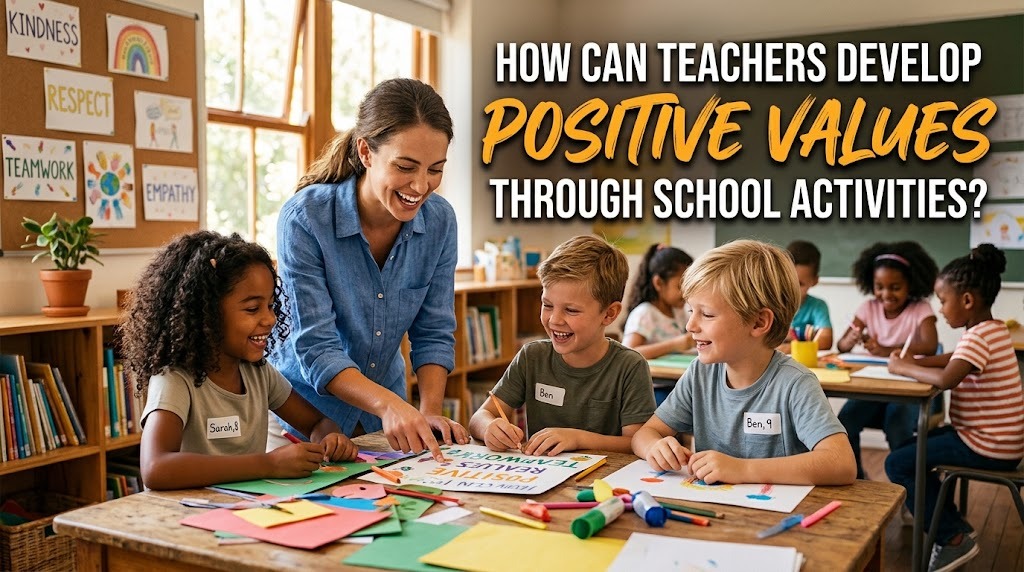
School activities provide valuable opportunities for students to develop positive values beyond academic knowledge. Through classroom projects, sports, student organizations, community service, and extracurricular programs, students can learn responsibility, honesty, cooperation, discipline, and respect. Teachers play an important role in guiding these experiences so that students understand the values behind their actions. Instead of simply explaining good behavior, teachers can create situations where students practice it in real life. With thoughtful planning and consistent guidance, school activities can help students build character and develop skills that benefit them throughout their lives.
PROMOTE TEAMWORK THROUGH GROUP PROJECTS
Group projects help students understand the importance of cooperation and shared responsibility. Teachers can assign tasks that require students to exchange ideas, divide responsibilities, and work toward a common goal. During these activities, students learn to respect different opinions, manage disagreements, and appreciate the contributions of their classmates. Teachers should ensure that every member has a meaningful role rather than allowing only a few students to complete the work. These experiences help students recognize that successful teamwork depends on communication, fairness, and mutual respect.
TEACH DISCIPLINE THROUGH SCHOOL ROUTINES
Daily school routines can help students develop discipline and responsibility. Activities such as arriving on time, completing assignments, maintaining classroom cleanliness, and following agreed rules encourage students to manage their behavior consistently. Teachers can explain the purpose behind these expectations so that students understand their value rather than following instructions only to avoid punishment. They can also encourage learners to monitor their own progress and take responsibility when they make mistakes. Over time, consistent routines can support the development of self-discipline and dependable habits.
BUILD HONESTY THROUGH ACADEMIC ACTIVITIES
Academic activities offer practical opportunities for students to demonstrate honesty and integrity. Teachers can reinforce these values by encouraging students to submit original work, acknowledge sources, report experiment results accurately, and avoid cheating during assessments. When students make mistakes, teachers should guide them toward correcting their actions and understanding the consequences. Classroom discussions about ethical choices can also help students recognize why honesty matters, even when telling the truth is difficult. These practices help learners understand that integrity involves making responsible decisions in both academic and everyday situations.
DEVELOP EMPATHY THROUGH COMMUNITY SERVICE
Community service introduces students to the needs and experiences of people beyond their immediate social circles. Teachers can organize activities such as collecting donations, visiting community centers, supporting environmental campaigns, or helping maintain shared public spaces. Before and after these activities, students can discuss the purpose of their work and reflect on the people or environments they are helping. This reflection makes the experience more meaningful than simply completing a task. Through thoughtful service, students can develop empathy, compassion, and a stronger sense of social responsibility.
ENCOURAGE LEADERSHIP THROUGH STUDENT ORGANIZATIONS
Student organizations provide opportunities to practice leadership, accountability, and decision-making. Teachers can guide students in planning events, managing responsibilities, coordinating teams, and evaluating the results of their work. Students learn that leadership involves listening to others, communicating clearly, and accepting responsibility when plans do not succeed. Teachers should provide guidance while allowing students to make appropriate decisions independently. These experiences help learners understand that effective leadership depends on service, fairness, and commitment rather than authority alone.
DEVELOP SPORTSMANSHIP THROUGH SPORTS AND COMPETITIONS
Sports and competitions can teach students how to handle success and disappointment respectfully. Teachers and coaches can emphasize fair play, teamwork, respect for opponents, and adherence to agreed rules. Students should learn to congratulate others, accept decisions calmly, and recognize that effort and improvement matter alongside winning. When conflicts occur, teachers can help students discuss the situation and identify more constructive responses. These experiences help learners practice emotional control, perseverance, and respect in challenging situations.
PRACTICE RESPONSIBILITY THROUGH ENVIRONMENTAL ACTIVITIES
Environmental programs allow students to practice responsibility toward their school and community. Activities such as recycling, planting trees, maintaining school gardens, and reducing unnecessary waste help learners understand how individual actions affect shared surroundings. Teachers can assign rotating responsibilities so that students participate fairly and recognize the importance of consistent effort. Students can also evaluate the results of their activities and suggest improvements for future programs. These practical experiences encourage environmental awareness, cooperation, and respect for public spaces.
REINFORCE RESPECT THROUGH CULTURAL AND CREATIVE ACTIVITIES
Cultural events, arts programs, and classroom presentations give students opportunities to learn about different traditions, perspectives, and forms of expression. Teachers can encourage students to share their backgrounds, listen respectfully to others, and discuss differences without making unfair judgments. Activities such as traditional performances, exhibitions, storytelling, and collaborative artwork can promote appreciation for diversity. Teachers should establish clear expectations against ridicule, discrimination, and exclusion. These experiences help students understand that respect means recognizing the dignity and contributions of others.
USE REFLECTION TO STRENGTHEN POSITIVE VALUES
School activities become more effective for character development when students reflect on what they have learned. Teachers can ask students to describe the challenges they encountered, the decisions they made, and how their behavior affected other people. Reflection can take place through short written journals, group discussions, presentations, or personal evaluations. Teachers should focus on helping students recognize lessons and identify practical ways to improve their future behavior. This process helps students connect school experiences with the values they can apply in everyday life.
CONCLUSION
Teachers can develop positive values through school activities by creating opportunities for students to practice teamwork, discipline, honesty, empathy, leadership, and respect. Group projects, community service, sports, student organizations, and environmental programs provide meaningful experiences that connect values with real actions. Reflection and consistent guidance help students understand why these values matter and how they can apply them outside school. The goal is not simply to make students follow rules but to help them develop sound judgment and personal responsibility. Through purposeful activities, teachers can support students in becoming considerate, dependable, and active members of their communities.
Recent Posts

Bagaimana Sistem SKS pada Program Kuliah... 22.11.2026/57 View

How Does Technology Make Daily Evaluation... 21.11.2026/86 View

Apa Strategi Menghadapi Kesenjangan antara Kompetensi... 21.11.2026/84 View

Mengapa Inventaris Aset Penting bagi Kelancaran... 21.11.2026/82 View

When Should Musicians Join a Record... 21.11.2026/86 View
