

How Can Teachers Support Students with Different Personalities?
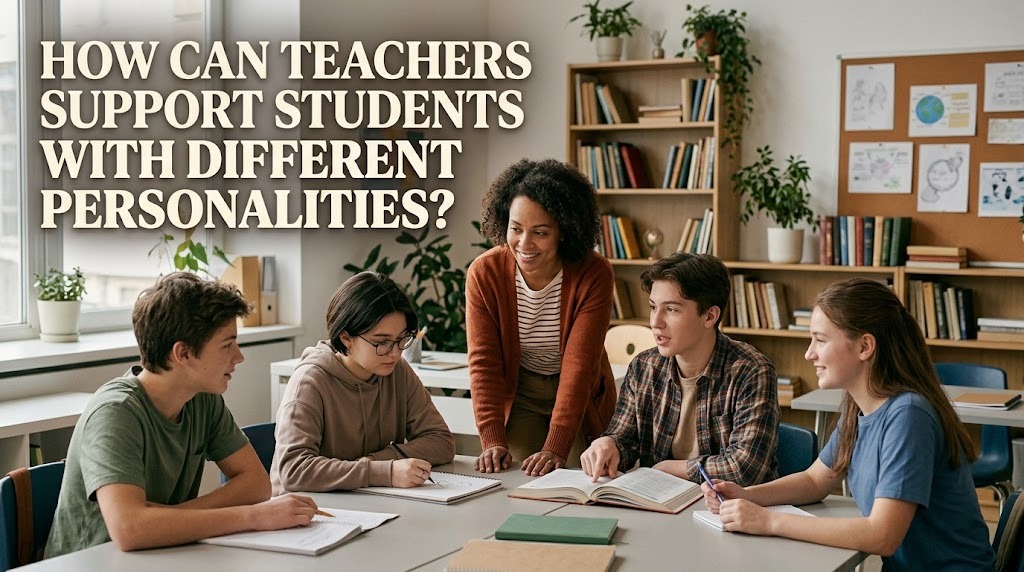
Every student has a unique personality that influences how they communicate, participate in class, and respond to learning activities. Some students enjoy speaking in front of others, while others feel more comfortable expressing their ideas through writing or individual assignments. These differences can affect students' classroom experiences and the ways they build relationships with teachers and classmates.
Teachers can support students with different personalities by creating an inclusive learning environment, offering varied activities, and respecting individual needs. The goal is not to change students into a particular type of person but to help each student develop confidence, communication skills, and academic abilities. When teachers recognize individual differences, they can make learning more comfortable, engaging, and effective.
RECOGNIZING INDIVIDUAL PERSONALITY DIFFERENCES
Understanding students' personalities helps teachers recognize that not everyone learns or communicates in the same way. Some students may be outgoing and energetic, while others may prefer quiet reflection before sharing their opinions. Neither approach automatically indicates stronger academic ability or greater potential.
Teachers can learn about students through classroom observations, conversations, assignments, and feedback. Rather than making assumptions based on personality labels, they should pay attention to individual strengths, challenges, interests, and preferences. This understanding helps teachers choose appropriate ways to encourage participation and support development.
CREATING A COMFORTABLE CLASSROOM ENVIRONMENT
A supportive classroom allows students to express themselves without excessive fear of embarrassment or judgment. Teachers can establish clear expectations for respectful communication, active listening, and cooperation. When students know their contributions will be treated seriously, they may feel more comfortable participating.
Teachers should also respond constructively when students make mistakes or disagree with one another. Avoiding public humiliation and discouraging hurtful comments can help students feel safer when sharing ideas. A positive classroom atmosphere supports students with different personalities while encouraging mutual respect.
USING VARIED TEACHING METHODS
A single teaching method may not meet the needs of every student. Some learners enjoy group discussions, while others benefit from written exercises, visual explanations, practical demonstrations, or independent research. Combining different methods gives students more opportunities to understand lessons and demonstrate their knowledge.
For example, a teacher can introduce a topic through a short explanation, allow students to discuss it in pairs, and then ask them to write individual reflections. This approach offers several ways to engage with the material. It also helps students practice skills that may be less familiar to them without forcing everyone to participate in exactly the same way.
ENCOURAGING QUIET STUDENTS TO PARTICIPATE
Quiet students may need additional time to organize their thoughts before speaking. Teachers can support them by providing discussion questions in advance, allowing short writing activities, or inviting them to share ideas in small groups before addressing the whole class. These strategies give students more time to prepare and can reduce unnecessary pressure.
However, teachers should not assume that every quiet student lacks confidence or wants to become more outgoing. Some students are comfortable listening and reflecting before contributing. The important goal is to ensure they have meaningful opportunities to participate and demonstrate understanding in ways that suit the learning objectives.
GUIDING OUTGOING STUDENTS CONSTRUCTIVELY
Outgoing students may enjoy discussions, presentations, and collaborative activities. Their enthusiasm can contribute positively to classroom learning, especially when they encourage others to participate. Teachers can build on these strengths by assigning presentations, leadership responsibilities, or group coordination tasks.
At the same time, teachers should help outgoing students practice listening, taking turns, and respecting different viewpoints. Clear discussion rules can prevent a few voices from dominating classroom conversations. This approach helps outgoing students develop communication and teamwork skills while ensuring that quieter classmates also have opportunities to contribute.
BUILDING STUDENT CONFIDENCE THROUGH FEEDBACK
Constructive feedback helps students understand their strengths and identify areas for improvement. Teachers should focus on specific behaviors and learning progress rather than making broad judgments about a student's personality. For example, they can praise a well-supported argument, a thoughtful written response, or an improvement in presentation skills.
Feedback should also provide practical next steps. A student who struggles with speaking can practice in a small group before presenting to the class, while a student who finds independent work difficult can learn to break assignments into smaller tasks. Personalized guidance helps students develop skills gradually without feeling that their personality is a problem.
PROMOTING TEAMWORK AND MUTUAL UNDERSTANDING
Group activities can help students with different personalities learn from one another. Teachers can organize collaborative projects in which students contribute through research, writing, design, discussion, or presentation. Assigning clear responsibilities helps ensure that every group member has a meaningful role.
Teachers should also encourage students to appreciate different working styles. One student may generate ideas quickly, while another may carefully evaluate details before making a decision. When students understand these differences, they can develop better communication habits and learn to combine their strengths to achieve shared goals.
ADAPTING SUPPORT TO INDIVIDUAL NEEDS
Personality is only one factor that influences student behavior and learning. Academic ability, previous experiences, language skills, confidence, and personal circumstances can also affect participation. Teachers should therefore avoid assuming that personality alone explains a student's difficulties.
Individual conversations, flexible assignments, and regular feedback can help teachers identify the type of support a student needs. Some students may benefit from additional academic guidance, while others may need clearer instructions or more opportunities to practice. Teachers should adjust their approaches based on observed needs rather than relying on stereotypes.
HELPING STUDENTS DEVELOP NEW SKILLS
Supporting different personalities does not mean allowing students to avoid every challenging activity. Students also need opportunities to develop skills outside their usual comfort zones. Teachers can introduce these challenges gradually and provide appropriate guidance throughout the process.
For instance, students who are uncomfortable with public speaking can begin with short presentations in small groups. Students who prefer working alone can practice collaboration through structured pair assignments. These experiences encourage growth while respecting individual differences and allowing students to build confidence at a manageable pace.
CONCLUSION
Teachers can support students with different personalities by recognizing individual needs, creating a respectful classroom, and using varied teaching methods. Encouragement, constructive feedback, collaborative activities, and flexible opportunities for participation can help students develop their strengths and improve unfamiliar skills. Effective support does not require every student to behave in the same way. Instead, teachers should provide fair opportunities for learning while helping each student grow academically, socially, and personally.
Recent Posts

Bagaimana Sistem SKS pada Program Kuliah... 22.11.2026/58 View

How Does Technology Make Daily Evaluation... 21.11.2026/86 View

Apa Strategi Menghadapi Kesenjangan antara Kompetensi... 21.11.2026/84 View

Mengapa Inventaris Aset Penting bagi Kelancaran... 21.11.2026/82 View

When Should Musicians Join a Record... 21.11.2026/86 View
