

How Can Teachers Turn Student Mistakes into Learning?
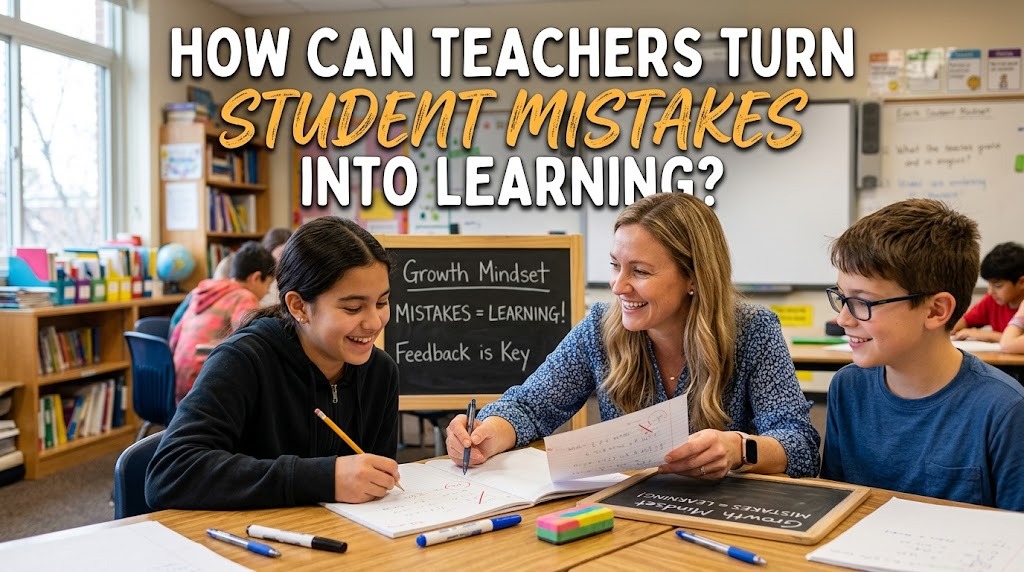
Mistakes are a natural part of the learning process. Students may misunderstand a concept, choose an incorrect answer, or struggle to apply a skill they have recently learned. Instead of treating these mistakes as failures, teachers can use them as opportunities to improve understanding and develop critical thinking. A supportive learning environment helps students recognize what went wrong, understand why it happened, and discover better ways to approach similar challenges. By responding constructively to mistakes, teachers can strengthen student confidence, encourage curiosity, and promote continuous improvement.
CREATE A CLASSROOM THAT ACCEPTS MISTAKES
Students learn more effectively when they feel comfortable acknowledging their mistakes. Teachers can establish this atmosphere by explaining that errors are a normal part of learning and do not define a student's intelligence or ability. When students are not afraid of embarrassment, they are more likely to ask questions, participate in discussions, and attempt challenging tasks. Teachers should respond calmly to incorrect answers instead of using sarcasm or public criticism. This approach helps students develop confidence and view mistakes as opportunities for growth.
IDENTIFY THE REASON BEHIND EACH MISTAKE
Understanding why a mistake occurs is essential for helping students improve. An incorrect answer may result from a misunderstanding, a calculation error, unclear instructions, or insufficient practice. Teachers can ask students to explain their reasoning rather than immediately providing the correct answer. This process helps identify gaps in understanding and reveals whether the problem involves knowledge, strategy, or attention to detail. Once the cause becomes clear, teachers can provide more targeted guidance.
ENCOURAGE STUDENTS TO REFLECT ON THEIR ERRORS
Reflection helps students recognize the relationship between their actions and their results. Teachers can encourage students to review their work and identify the specific steps where their reasoning became inaccurate. Simple questions such as what went wrong, why it happened, and what could be done differently can guide this process. Students may also keep a learning journal to record common mistakes and the lessons they discover from them. Over time, reflection can improve self-awareness, independence, and problem-solving skills.
PROVIDE CONSTRUCTIVE AND SPECIFIC FEEDBACK
Feedback should help students understand how to improve rather than simply indicate that an answer is wrong. Teachers can explain which part of the work needs attention, why it is incorrect, and what steps may lead to a better result. For example, when a student makes an error in a mathematics problem, the teacher can review the relevant formula and demonstrate how to apply it correctly. Specific feedback gives students a clear direction for improvement. It also helps them focus on developing their skills instead of becoming discouraged by criticism.
USE MISTAKES AS DISCUSSION OPPORTUNITIES
Classroom discussions can turn individual errors into valuable learning experiences for the entire class. Teachers may present an anonymous example of a common mistake and invite students to explain why the answer does not work. By comparing different approaches, students can develop a deeper understanding of the topic and learn to evaluate evidence carefully. Teachers should guide these discussions respectfully so that no student feels exposed or embarrassed. This strategy also encourages collaboration and allows students to learn from different perspectives.
PROVIDE OPPORTUNITIES TO TRY AGAIN
Learning becomes more meaningful when students have opportunities to apply feedback and correct their work. Teachers can allow students to revise assignments, repeat practice exercises, or solve similar problems after receiving guidance. These activities help students determine whether they understand the correction or have only memorized the right answer. Teachers can gradually increase the difficulty of tasks as students demonstrate improvement. Giving students another opportunity also reinforces the idea that progress depends on practice and persistence.
CONNECT MISTAKES WITH REAL-LIFE EXPERIENCES
Real-life examples help students understand why learning from mistakes matters beyond the classroom. In business projects, for instance, students may discover that an ineffective marketing strategy results from misunderstanding customer needs. Teachers can guide them to review the available information, identify weaknesses, and develop a more suitable approach. Similar activities can be used in science experiments, writing assignments, teamwork, and practical skill development. Applying lessons to realistic situations helps students develop adaptable problem-solving skills.
DEVELOP A GROWTH MINDSET
A growth mindset encourages students to believe that their abilities can develop through practice, feedback, and effective learning strategies. Teachers can reinforce this perspective by recognizing improvement, persistence, and thoughtful effort rather than focusing only on final scores. Instead of describing a student as naturally talented or incapable, teachers can highlight the strategies that helped the student make progress. This language encourages students to keep working when a task becomes difficult. It also helps them understand that mistakes can provide useful information about what they need to learn next.
ADAPT TEACHING METHODS BASED ON STUDENT ERRORS
Student mistakes can reveal when a teaching method or explanation needs adjustment. If several students misunderstand the same concept, teachers may need to explain it differently, provide additional examples, or introduce visual learning materials. Some students may benefit from guided practice, while others may need more challenging exercises to strengthen their understanding. Reviewing patterns in student errors helps teachers identify common learning difficulties. By adjusting instruction accordingly, teachers can make lessons more responsive to students' needs.
CONCLUSION
Teachers can turn student mistakes into learning opportunities by creating a supportive classroom, identifying the causes of errors, encouraging reflection, and providing constructive feedback. Classroom discussions, revision opportunities, real-life applications, and growth-oriented encouragement can further strengthen the learning process. Mistakes become valuable when students understand what happened and have a chance to apply what they have learned. With consistent guidance, teachers can help students become more confident, resilient, and independent learners who view challenges as opportunities to improve.
Recent Posts

Bagaimana Sistem SKS pada Program Kuliah... 22.11.2026/57 View

How Does Technology Make Daily Evaluation... 21.11.2026/86 View

Apa Strategi Menghadapi Kesenjangan antara Kompetensi... 21.11.2026/84 View

Mengapa Inventaris Aset Penting bagi Kelancaran... 21.11.2026/82 View

When Should Musicians Join a Record... 21.11.2026/86 View
