

How Can Technology Help Manage Population Density Problems?
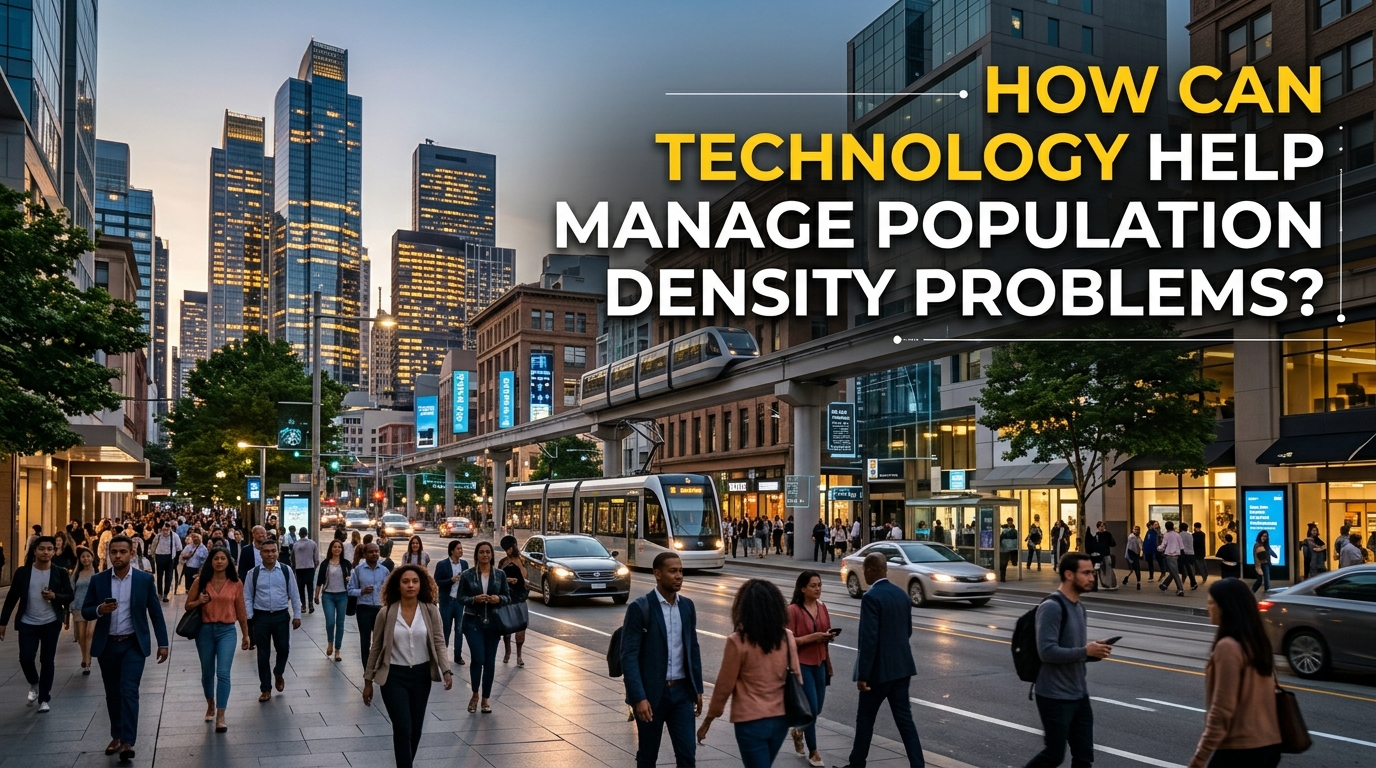
Population density is one of the major challenges faced by many cities around the world. As more people move to urban areas, cities often experience traffic congestion, housing shortages, overcrowded public facilities, pollution, and increasing pressure on natural resources. Managing these problems requires effective planning, accurate information, and solutions that can adapt to growing populations.
Technology plays an important role in managing population density problems by helping governments understand population patterns, improve public services, and use available resources more efficiently. From smart transportation systems to digital urban planning, technological innovations can make cities more organized, comfortable, and sustainable.
1. USING DATA TO MONITOR POPULATION GROWTH
Technology helps governments collect and analyze population data more accurately. Digital population databases, geographic information systems (GIS), and statistical software allow authorities to identify areas experiencing rapid population growth. This information helps planners understand where additional housing, schools, hospitals, and transportation facilities are needed.
With accurate data, governments can make better decisions based on real conditions rather than estimates alone. For example, population maps can show which neighborhoods are becoming overcrowded and require additional infrastructure. This approach supports more effective urban planning and helps prevent public services from becoming overwhelmed.
2. IMPROVING PUBLIC TRANSPORTATION SYSTEMS
One common problem in densely populated cities is traffic congestion. Technology can help reduce this problem through intelligent transportation systems, which use sensors, cameras, GPS, and real-time traffic information to monitor road conditions. These systems help traffic authorities adjust traffic signals, identify congested routes, and provide alternative travel recommendations.
Digital transportation applications also make public transportation more convenient. People can check bus or train schedules, track vehicles, purchase electronic tickets, and plan their journeys through smartphones. When public transportation becomes more reliable and accessible, more residents may choose it instead of private vehicles, helping reduce traffic congestion and air pollution.
3. SUPPORTING SMART CITY DEVELOPMENT
A smart city uses digital technology and connected systems to improve urban services and residents' quality of life. Technologies such as the Internet of Things (IoT), sensors, and artificial intelligence can help monitor electricity usage, water distribution, waste collection, and public infrastructure. These systems allow city governments to identify problems and respond more quickly.
For example, smart streetlights can adjust their brightness based on surrounding conditions, while connected waste containers can notify collection services when they are nearly full. These innovations help cities use resources more efficiently, especially in areas with large populations. However, smart city programs require reliable infrastructure, proper funding, and strong data protection.
4. HELPING GOVERNMENTS PLAN HOUSING AND INFRASTRUCTURE
Rapid population growth often increases the demand for affordable housing, roads, schools, hospitals, and clean water. Technology helps urban planners analyze land availability, population distribution, environmental conditions, and infrastructure capacity before developing new areas. Digital mapping and 3D modeling can also help planners visualize how buildings and public facilities will affect the surrounding environment.
Building Information Modeling (BIM) is another useful technology for designing and managing construction projects. It allows architects, engineers, and governments to examine building designs, estimate materials, and identify potential problems before construction begins. By using these tools, authorities can develop infrastructure more efficiently and reduce the risk of poorly planned urban expansion.
5. IMPROVING WASTE AND ENVIRONMENTAL MANAGEMENT
High population density can increase the amount of household waste, air pollution, and pressure on clean water supplies. Technology helps cities monitor environmental conditions through air-quality sensors, water-monitoring systems, and digital waste-management platforms. The information collected can help authorities identify pollution sources and determine which areas need immediate attention.
Smart waste-management systems can also improve garbage collection by identifying containers that need to be emptied. In addition, digital platforms can provide residents with information about recycling locations and waste separation practices. These solutions support cleaner neighborhoods, more efficient waste collection, and better environmental protection.
6. EXPANDING ACCESS TO EDUCATION AND HEALTHCARE
Densely populated areas often place significant pressure on schools, hospitals, and other public facilities. Technology can reduce some of this pressure by making essential services available through digital platforms. Online learning and digital education resources allow students to access lessons without always needing to attend physical classrooms.
In healthcare, telemedicine enables patients to consult medical professionals remotely for suitable health concerns. Electronic medical records can also help healthcare providers manage patient information more efficiently. Although digital services cannot completely replace schools, hospitals, or direct medical treatment, they can improve access and reduce unnecessary travel and waiting times.
7. SUPPORTING BETTER DISTRIBUTION OF ECONOMIC OPPORTUNITIES
Population density problems can become more serious when employment opportunities are concentrated in only a few major cities. Technology can help reduce this imbalance by supporting remote work, online businesses, and digital entrepreneurship. Through internet access and digital platforms, people can work, sell products, and provide services without always moving to large urban centers.
Governments can also use digital platforms to provide information about job opportunities, business training, and public support programs in smaller cities. This can encourage economic development outside major metropolitan areas. More evenly distributed employment opportunities may reduce excessive migration to already crowded urban regions, although this also depends on local infrastructure and investment.
8. USING ARTIFICIAL INTELLIGENCE FOR URBAN PLANNING
Artificial intelligence (AI) can help governments analyze large amounts of information and identify patterns that may be difficult to detect manually. For example, AI systems can examine population trends, traffic conditions, housing demand, and infrastructure capacity to support urban planning decisions. These insights can help authorities predict which areas may experience greater pressure in the future.
AI can also support simulations of different development plans. Planners can compare possible outcomes before deciding where to build new roads, public transportation routes, or residential areas. However, AI should support human decision-making rather than replace it because inaccurate data, algorithmic bias, and privacy concerns can affect the quality of its recommendations.
9. CHALLENGES OF USING TECHNOLOGY TO MANAGE POPULATION DENSITY
Although technology offers many benefits, implementing it is not always easy. Some regions lack reliable internet access, digital infrastructure, skilled workers, or sufficient funding. These limitations can prevent communities from enjoying the same benefits as residents in more technologically advanced cities.
Another important concern is data privacy and cybersecurity. Digital systems that collect population information must be protected against unauthorized access and misuse. Governments should establish clear data protection policies, provide digital education, and ensure that technology remains accessible to different income groups. Without proper management, technological development may create new inequalities instead of solving existing problems.
10. CONCLUSION
Technology can help manage population density problems by improving urban planning, transportation, housing development, environmental management, and access to public services. Tools such as GIS, artificial intelligence, smart city systems, and digital platforms allow governments to understand population needs and use resources more effectively. These innovations can make densely populated areas more organized, efficient, and sustainable.
However, technology alone cannot solve every population density problem. It must be supported by effective government policies, proper infrastructure investment, public participation, and fair access to digital services. When technology is combined with responsible planning, it can help create cities that accommodate growing populations while maintaining a better quality of life.
Recent Posts

Bagaimana Sistem SKS pada Program Kuliah... 22.11.2026/30 View

How Does Technology Make Daily Evaluation... 21.11.2026/66 View

Apa Strategi Menghadapi Kesenjangan antara Kompetensi... 21.11.2026/65 View

Mengapa Inventaris Aset Penting bagi Kelancaran... 21.11.2026/64 View

When Should Musicians Join a Record... 21.11.2026/64 View
