

How Can Technology Help People Prepare For The Transitional Season?
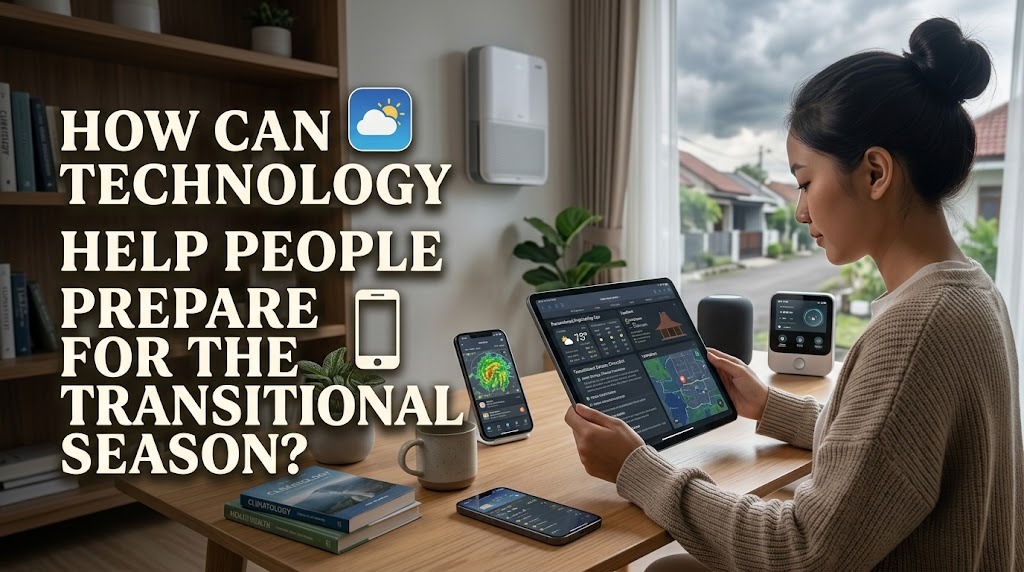
The transitional season, known as musim pancaroba in Indonesia, is the period when weather changes between the dry and rainy seasons. During this time, people may experience sudden heavy rain, strong winds, hot temperatures, and unpredictable weather. These conditions can increase the risk of floods, fallen trees, transportation problems, and certain health issues. Fortunately, technology can help people prepare for changing weather by providing timely information, early warnings, and practical tools for daily planning. By using technology wisely, individuals and communities can reduce risks and respond more quickly to unexpected weather conditions.
WEATHER FORECASTING AND REAL-TIME INFORMATION
Weather forecasting is one of the most useful ways technology helps people prepare for the transitional season. Meteorological agencies use weather satellites, radar systems, and computer models to observe atmospheric conditions and estimate future weather patterns. These tools help experts identify the possibility of heavy rainfall, thunderstorms, strong winds, and other potentially dangerous conditions. People can access forecasts through weather websites, mobile applications, television, and official social media accounts. With this information, they can plan outdoor activities, prepare suitable clothing, and avoid unnecessary travel during severe weather.
However, weather forecasts are predictions rather than guarantees, and conditions can change quickly. Checking updated information from reliable sources is important, especially when storms develop unexpectedly. In Indonesia, people can consult the official weather information provided by BMKG, the country's meteorological, climatological, and geophysical agency. Comparing forecasts with local conditions can also help people make better decisions. Accurate and timely weather information allows families, workers, and communities to prepare before dangerous conditions arrive.
EARLY WARNING SYSTEMS FOR NATURAL DISASTERS
Early warning systems use technology to alert people about potential hazards such as floods, severe storms, and landslides. These systems may combine rainfall measurements, river-level sensors, weather radar, and communication networks to identify dangerous conditions. When a possible threat is detected, warnings can be distributed through mobile notifications, text messages, sirens, radio, or other communication channels. This information gives residents more time to protect their belongings, prepare emergency supplies, or evacuate when instructed. Early warnings are particularly valuable for communities located near rivers, steep slopes, or flood-prone areas.
The effectiveness of a warning depends on how quickly it reaches people and whether they understand what action to take. Communities should learn the meaning of local warning messages and know which evacuation routes and safe locations to use. People should also remember that not every hazard can be predicted with complete accuracy. Following official instructions immediately is essential when authorities issue an evacuation warning. Combining modern warning technology with community preparedness can reduce injuries, property damage, and loss of life.
MOBILE APPLICATIONS AND DIGITAL COMMUNICATION
Mobile applications make weather information easier to access throughout the day. Many applications display current conditions, hourly forecasts, rainfall probabilities, and severe weather alerts. Some also provide maps that help users understand which areas may be affected by rain or storms. People can use these features to decide when to travel, carry umbrellas, protect electronic devices, or postpone outdoor activities. Smartphone technology makes it possible to receive important updates even when people are away from home.
Digital communication also helps families and communities share useful information during changing weather. Messaging applications and social media can be used to communicate road closures, flooded streets, damaged trees, and available evacuation centers. However, misinformation can spread quickly through the same platforms, especially during emergencies. People should verify important reports through official government agencies or trusted news sources before sharing them. Responsible digital communication helps ensure that technology supports public safety rather than creating unnecessary panic.
SMART SENSORS AND FLOOD MONITORING
Smart sensors can help communities monitor environmental conditions that may lead to flooding. Rain gauges measure rainfall, while river-level sensors track changes in water levels. When connected to monitoring systems, these devices can send measurements to local authorities or trigger alerts when certain thresholds are reached. This information helps officials identify areas that may need closer attention and communicate risks to residents. In places with frequent flooding, continuous monitoring can support faster and better-informed decisions.
Some monitoring systems use connected devices, often called the Internet of Things, to collect and transmit information automatically. For example, sensors installed near rivers can provide regular updates without requiring someone to take measurements manually each time. Nevertheless, sensors need proper installation, maintenance, reliable power, and communication connections to work effectively. Their readings should also be interpreted alongside weather forecasts and local knowledge. Combining sensor data with early warnings can improve flood preparedness, although it cannot eliminate every flood risk.
TECHNOLOGY FOR HOME AND EMERGENCY PREPARATION
Technology can help people prepare their homes before the transitional season begins. Weather applications and digital reminders can prompt families to inspect roofs, clean drainage channels, secure loose outdoor objects, and check emergency supplies. Flashlight applications may provide temporary lighting, although a separate flashlight with spare batteries is more reliable during power outages. Portable power banks and battery-powered radios can help people stay connected when electricity or internet services are disrupted. Simple emergency equipment, supported by useful digital tools, can make households better prepared for sudden storms.
Smart home devices may also help monitor certain conditions, such as water entering a building or smoke from an electrical problem. In some locations, connected pumps or water-level alarms can provide additional support when flooding threatens a property. However, these devices should not replace basic safety measures or professional assistance when needed. Families should keep drinking water, essential medicines, important documents, and emergency contact information accessible. Preparing before severe weather arrives is more effective than waiting until roads are flooded or electricity is unavailable.
SOCIAL MEDIA AND COMMUNITY COOPERATION
Social media can help residents share information about local weather conditions and hazards. Photos, videos, and location details may help authorities understand the effects of flooding, fallen trees, or damaged roads. Community groups can also use digital platforms to organize clean-up activities, distribute supplies, and check on vulnerable residents. Community-based information sharing is especially useful when official updates do not immediately describe every affected street or neighborhood. When people cooperate, technology can strengthen local preparedness and response.
However, users should avoid sharing unverified information, old photographs presented as current events, or personal details that could put others at risk. Reports should include clear locations and, when possible, be confirmed by reliable sources. People should not enter flooded roads or approach damaged power lines just to record videos. Safety must always come before online updates. Responsible use of social media can help communities respond to emergencies while reducing confusion and unnecessary danger.
THE BENEFITS AND LIMITATIONS OF WEATHER TECHNOLOGY
Technology provides several important benefits during the transitional season. It helps people receive forecasts quickly, monitor developing hazards, communicate with others, and make informed decisions. It can also help authorities identify dangerous conditions and organize emergency responses more efficiently. Early access to reliable information may reduce exposure to severe weather and help protect homes, businesses, and public facilities. These advantages make technology a valuable part of disaster preparedness.
Despite these benefits, technology has limitations. Internet access, electricity, mobile signal coverage, and the availability of suitable devices may be unreliable during severe weather. Forecasts can also change, and monitoring systems may fail if equipment is damaged or poorly maintained. For this reason, people should have backup communication methods, understand local evacuation procedures, and listen to official announcements. Technology works best when combined with human judgment, community cooperation, and practical preparation.
CONCLUSION
Technology can help people prepare for the transitional season through weather forecasting, early warning systems, mobile applications, smart sensors, and digital communication. These tools provide useful information about heavy rain, strong winds, floods, and other potential hazards. They also help families protect their homes, plan their activities, and communicate during emergencies. However, technology cannot prevent every disaster, and its effectiveness depends on reliable information, functioning equipment, and public awareness. Using trusted digital tools while following official guidance and preparing emergency supplies can help people stay safer throughout the transitional season.
Recent Posts

Bagaimana Sistem SKS pada Program Kuliah... 22.11.2026/54 View

How Does Technology Make Daily Evaluation... 21.11.2026/83 View

Apa Strategi Menghadapi Kesenjangan antara Kompetensi... 21.11.2026/82 View

Mengapa Inventaris Aset Penting bagi Kelancaran... 21.11.2026/78 View

When Should Musicians Join a Record... 21.11.2026/84 View
