

How Can Technology Support Different Learning Styles?
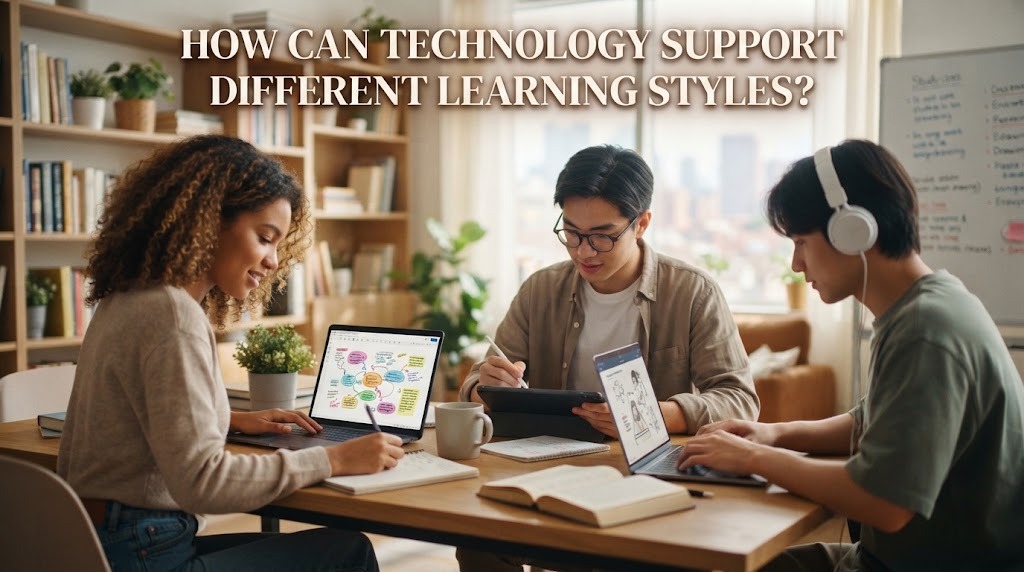
Technology has become an important part of modern education. Students can now access learning materials through videos, audio, digital books, interactive exercises, simulations, and online discussions. These tools give students more options for studying and can support different learning preferences.
Technology does not mean that every student should use the same digital tool. Different subjects and learning goals may require different approaches. By choosing technology based on the type of material and learning activity, students can make the learning process more flexible, interactive, and meaningful.
SUPPORTING VISUAL LEARNING
Technology can provide many resources for students who prefer visual materials. Educational videos, diagrams, digital presentations, infographics, animations, and interactive charts can help students see how information is organized. These resources can be especially useful when a topic involves processes, structures, comparisons, or relationships between ideas.
Students can also create their own visual materials using digital tools. For example, they can make mind maps, presentation slides, concept diagrams, or digital notes to summarize lessons. Visual learning can become more engaging when students actively create and organize information instead of only watching or reading it.
SUPPORTING AUDITORY LEARNING
Digital technology also provides many options for students who prefer learning through listening. Recorded lectures, educational podcasts, audiobooks, and voice explanations can provide additional ways to access information. Students can listen to relevant materials while reviewing lessons or preparing for a class.
Technology can also support communication through online discussions and recorded presentations. Students can practice explaining concepts aloud and listen to explanations from teachers or classmates. Auditory learning can be combined with written notes and practice activities so students can process information through more than one method.
SUPPORTING READING AND WRITING
Digital books, online articles, learning platforms, and note-taking applications can support students who prefer written information. Students can search for specific concepts, organize notes, highlight important information, and review materials at their own pace. Digital documents can also make it easier to update and reorganize notes.
Technology can encourage students to write summaries, answer questions, and create digital study guides. Some learning platforms provide writing exercises and immediate feedback that can help students identify areas that need improvement. Reading and writing can therefore become more interactive when students use digital tools to actively work with information.
SUPPORTING KINESTHETIC AND PRACTICAL LEARNING
Technology can also support students who enjoy learning through practice and direct interaction. Simulations, virtual laboratories, educational games, interactive exercises, and digital projects can allow students to explore concepts through action. These tools can be particularly useful when real-world practice is expensive, difficult, or not immediately available.
For example, a simulation can allow students to observe what happens when they change certain variables. Interactive exercises can also provide opportunities to solve problems and receive feedback. Kinesthetic learning can be supported when technology allows students to make decisions, perform virtual tasks, experiment, and apply concepts rather than simply consume information.
SUPPORTING SOCIAL AND COLLABORATIVE LEARNING
Technology makes it easier for students to communicate and work together even when they are not in the same physical location. Video meetings, discussion forums, shared documents, collaborative platforms, and group projects can support social learning. Students can exchange ideas, ask questions, divide responsibilities, and provide feedback to one another.
Collaborative technology can also help students learn from different perspectives. However, successful online collaboration still requires clear communication and responsible participation. Collaborative learning becomes more useful when each student has a clear role and the group focuses on meaningful academic goals.
USING TECHNOLOGY IN A FLEXIBLE WAY
Technology can support different learning preferences, but using more digital tools does not automatically make learning more effective. Students still need to choose resources carefully and avoid distractions that can interfere with concentration. A useful tool should help students understand, practice, apply, or review the material.
Students can also combine several methods depending on their learning goals. For example, they can watch a short explanation, read supporting material, create a visual summary, discuss the topic with classmates, and complete practice questions. Digital learning works best when technology is used purposefully as part of an active learning process.
CONCLUSION
Technology can support different learning preferences by providing visual, auditory, written, interactive, and collaborative learning resources. Videos and diagrams can support visual learning, audio materials can support listening, digital texts can support reading and writing, while simulations and interactive activities can provide opportunities for practical learning.
However, students should not depend on one learning style or one type of technology. Learning can be more effective when students combine different strategies based on the subject, learning goal, and type of material. The key is to use technology as a tool for active understanding, practice, collaboration, and continuous learning.
Recent Posts

Bagaimana Sistem SKS pada Program Kuliah... 22.11.2026/21 View

How Does Technology Make Daily Evaluation... 21.11.2026/64 View

Apa Strategi Menghadapi Kesenjangan antara Kompetensi... 21.11.2026/65 View

Mengapa Inventaris Aset Penting bagi Kelancaran... 21.11.2026/62 View

When Should Musicians Join a Record... 21.11.2026/60 View
