

How Can Technology Support the Development of Musical Intelligence?
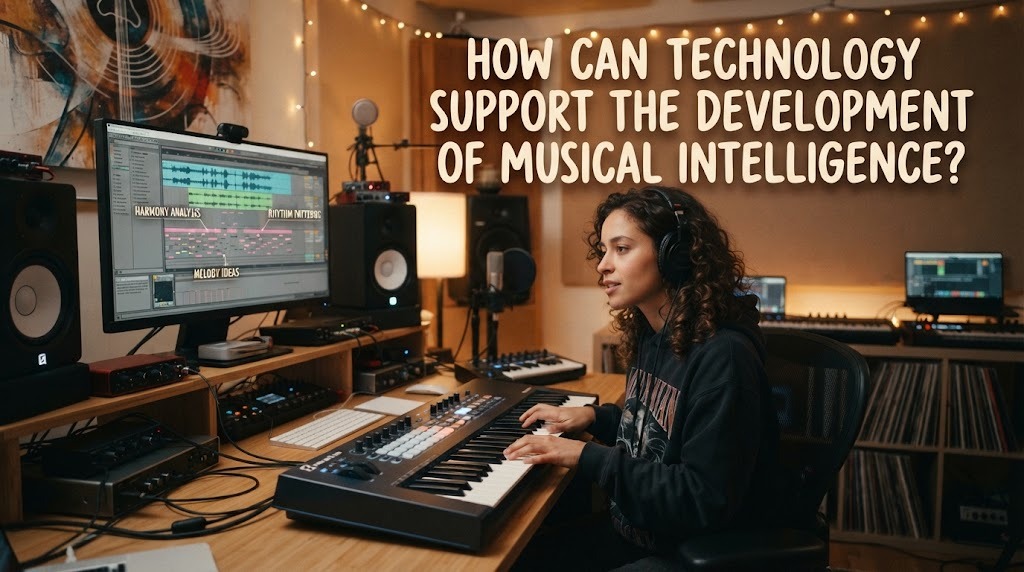
Technology has made learning music more accessible, flexible, and engaging for people of different ages and skill levels. Musical intelligence refers to the ability to recognize, understand, remember, and create musical patterns, including rhythm, melody, pitch, and tone. With the help of digital tools, learners can practice musical skills, explore different sounds, and develop their creativity at their own pace. From music-learning applications to digital recording software, technology provides various opportunities to improve musical abilities. When used consistently, these tools can support musical development both inside and outside the classroom.
MAKING MUSIC LEARNING MORE ACCESSIBLE
Technology allows people to learn music without always attending formal classes or having access to a private teacher. Online tutorials, educational videos, and digital learning platforms provide explanations about singing, musical notation, rhythm, and playing instruments. Beginners can pause lessons, repeat difficult sections, and practice whenever they have free time. This flexibility makes music education more accessible to students and people with busy schedules.
Digital resources also allow learners to explore different musical instruments and styles before choosing what they want to study. For example, someone interested in the piano can follow beginner lessons online, while another learner can study guitar chords through an interactive application. Although online resources can support independent learning, guidance from an experienced teacher can still be valuable for correcting mistakes and developing proper techniques.
IMPROVING RHYTHM AND PITCH RECOGNITION
Rhythm and pitch are important elements of musical intelligence. Technology provides tools that help learners recognize beats, distinguish notes, and understand changes in melody. Rhythm-training applications may include exercises that ask users to follow a beat or repeat a particular pattern. Pitch-training tools can help learners identify notes and practice singing or playing them accurately.
These exercises provide immediate feedback, allowing learners to recognize errors and try again. For instance, a singer can use a pitch-training application to check whether a note matches the intended pitch. A beginner drummer can practice keeping a steady beat with a digital metronome. Regular practice with these tools can strengthen listening skills, timing, and musical accuracy.
SUPPORTING CREATIVITY THROUGH DIGITAL MUSIC TOOLS
Digital music software enables learners to create music without needing a complete collection of physical instruments. They can combine virtual instruments, record vocals, arrange melodies, and experiment with different sounds. Some applications also provide loops and sample libraries that help beginners understand how musical elements can be combined. These features encourage users to explore ideas and develop their own compositions.
For example, a student can create a short song by combining a drum pattern, a keyboard melody, and recorded vocals. The student can then adjust the tempo, change instruments, or rearrange the sections to explore different musical effects. This process encourages experimentation and problem-solving while developing practical music skills. However, digital tools are most useful when learners actively make creative decisions rather than simply relying on automatic features.
USING RECORDING TOOLS TO EVALUATE PROGRESS
Recording technology allows learners to listen to their own performances and identify areas that need improvement. A person can record a singing exercise, an instrumental performance, or a musical composition and review it afterward. Listening to a recording may reveal problems with timing, pitch, rhythm, or consistency that were difficult to notice during the performance. This makes self-evaluation a useful part of regular practice.
Learners can also compare recordings made at different stages of their development. Hearing improvements over time may help them stay motivated and recognize which techniques are working well. For example, a guitarist can record the same song every few weeks to evaluate changes in timing and accuracy. Combining self-assessment with feedback from teachers or experienced musicians can provide a clearer understanding of progress.
ENCOURAGING COLLABORATION AND MUSICAL COMMUNICATION
Technology makes it easier for musicians to share ideas and work together, even when they are in different locations. Online communities, video calls, and collaborative music platforms allow learners to exchange recordings, discuss musical techniques, and receive feedback. These interactions expose learners to different musical styles and approaches. They can also help students discover new ways to interpret or perform a piece of music.
Collaboration encourages active listening because musicians need to understand how their parts fit together. For example, students can create a group composition by recording different instrument parts and combining them digitally. They can discuss the arrangement, adjust their performances, and develop the final version together. Through these activities, technology supports musical learning as well as communication and teamwork.
MAKING MUSICAL PRACTICE MORE INTERACTIVE
Interactive applications can make music practice more engaging by turning exercises into activities with goals, progress indicators, and immediate feedback. Some tools use games to teach note recognition, rhythm patterns, and basic music theory. These features may help beginners remain interested while practicing fundamental skills. They can also make it easier to identify which areas require more attention.
However, interactive features should support meaningful learning rather than become the main purpose of practice. Learners still need to develop listening skills, understand musical concepts, and apply what they learn to actual performances. A balanced routine that combines digital exercises with singing, playing instruments, and listening to music can provide a more complete learning experience.
USING TECHNOLOGY WISELY FOR MUSICAL DEVELOPMENT
Although technology offers many benefits, it cannot replace every aspect of musical learning. Excessive screen time, distracting notifications, and dependence on automated features can reduce the quality of practice. Learners should choose reliable tools that match their goals and skill levels. Setting specific practice times and focusing on one musical skill at a time can make digital learning more effective.
It is also important to balance digital practice with real musical experiences. Singing with others, playing physical instruments, attending performances, and learning from teachers can develop skills that applications may not fully address. By combining technology with consistent practice and active listening, learners can build a stronger understanding of music and improve their abilities over time.
CONCLUSION
Technology supports the development of musical intelligence by making music education more accessible, improving rhythm and pitch recognition, encouraging creativity, and helping learners evaluate their progress. Digital tools also provide opportunities for collaboration and interactive practice. However, technology works best when it is combined with consistent effort, real musical experiences, and appropriate guidance. By choosing useful tools and practicing regularly, learners can strengthen their musical skills and explore their creative potential more effectively.
Recent Posts

Bagaimana Sistem SKS pada Program Kuliah... 22.11.2026/27 View

How Does Technology Make Daily Evaluation... 21.11.2026/65 View

Apa Strategi Menghadapi Kesenjangan antara Kompetensi... 21.11.2026/65 View

Mengapa Inventaris Aset Penting bagi Kelancaran... 21.11.2026/62 View

When Should Musicians Join a Record... 21.11.2026/63 View
