

How Can Teenagers Develop Their Bodily Kinesthetic Intelligence?
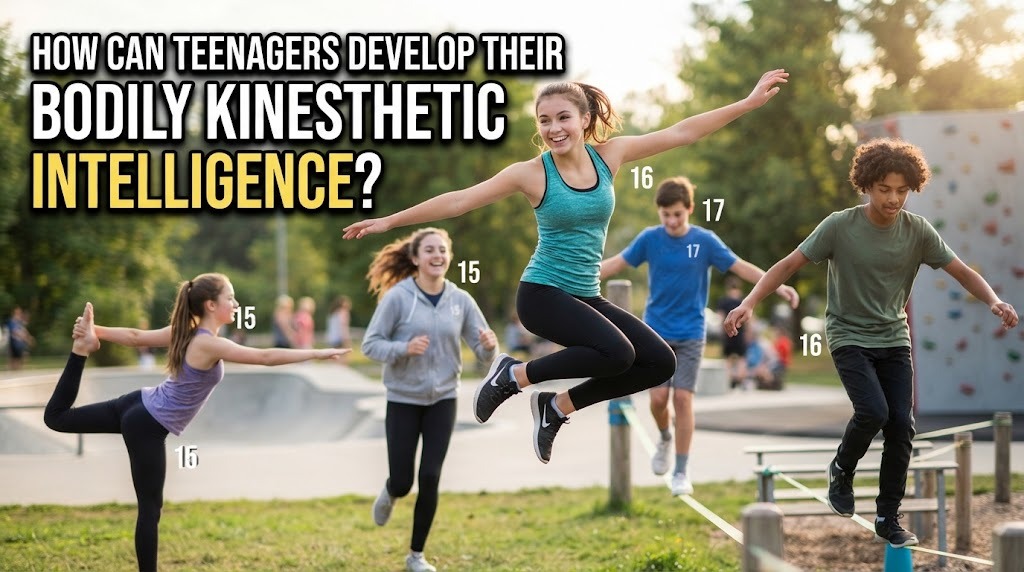
Bodily kinesthetic intelligence is the ability to use the body effectively to move, create, perform, and complete practical tasks. Teenagers can develop this intelligence through regular activities that involve movement, coordination, and direct physical experience. It is not limited to athletes or dancers because many everyday activities can strengthen physical awareness and motor skills. With consistent practice, teenagers can become more confident in using their bodies and solving practical problems.
UNDERSTAND BODILY KINESTHETIC INTELLIGENCE
Teenagers can begin by understanding their own strengths and interests. Some may enjoy sports, dancing, cooking, crafts, acting, or repairing objects, while others may prefer activities that require detailed hand movements. Paying attention to these preferences can help teenagers identify activities that naturally encourage physical coordination and hands on learning. They can also try different activities instead of focusing on only one type of movement. This process helps them discover which activities are enjoyable and useful for their development.
Bodily kinesthetic intelligence includes more than strength or speed. It can involve balance, flexibility, coordination, body awareness, precision, and controlled movement. Teenagers can improve these abilities gradually through regular practice. Understanding this broader meaning can encourage them to explore activities that match their individual strengths.
PARTICIPATE IN REGULAR PHYSICAL ACTIVITIES
Regular physical activity is one of the practical ways teenagers can develop bodily kinesthetic intelligence. Activities such as walking, running, cycling, swimming, dancing, and playing sports require the body to coordinate different movements. These activities can help teenagers improve balance, endurance, agility, and body control. They can choose activities they enjoy so that exercise becomes easier to maintain consistently. Regular movement can also support general physical fitness and healthy development.
Teenagers do not need to participate in competitive sports to develop these abilities. Simple activities such as stretching, recreational games, or practicing basic movement patterns can also provide useful physical experience. The important factor is consistent and safe participation. Teenagers should also use appropriate equipment and learn correct techniques to reduce the risk of injury.
TRY HANDS ON LEARNING ACTIVITIES
Hands on activities can help teenagers connect physical actions with learning. Cooking, gardening, crafting, woodworking, building models, and simple science experiments can require careful hand movements and coordination. These activities encourage teenagers to learn by doing instead of only reading or listening to information. They can also improve problem solving because teenagers often need to adjust their actions when something does not work as expected. Practical activities can therefore support both physical and thinking skills.
Schools and families can provide opportunities for teenagers to work with real materials and tools under appropriate supervision. For example, students can create projects, practice laboratory activities, or develop useful products. Direct experience can make learning more memorable while helping teenagers become more comfortable with practical tasks.
PRACTICE DANCE AND CREATIVE MOVEMENT
Dance is another useful activity for developing bodily kinesthetic intelligence. Different dance styles require rhythm, balance, coordination, flexibility, and body control. Teenagers can learn choreography, create their own movements, or practice simple routines. These activities allow them to understand how different parts of the body work together. Dance can also provide a creative way to express emotions and ideas.
Creative movement does not have to be performed in front of a large audience. Teenagers can practice privately, join a school activity, or participate in a dance group if they feel comfortable. Regular practice and gradual improvement are more important than achieving perfect movements immediately. With time, teenagers can become more aware of their posture, timing, and coordination.
DEVELOP FINE MOTOR SKILLS
Bodily kinesthetic intelligence also involves small and precise movements. Teenagers can develop fine motor skills through activities such as drawing, painting, playing musical instruments, sewing, assembling models, cooking, or making crafts. These activities require controlled movements of the hands and fingers. They can improve precision and hand eye coordination when practiced regularly. Fine motor activities are especially useful for teenagers who enjoy detailed creative or technical tasks.
Teenagers can also use practical projects to strengthen these abilities. Repairing simple objects, organizing materials, or creating handmade products can provide opportunities to practice precise movements. The goal is not to make every activity perfect but to develop control, accuracy, and confidence through practice.
LEARN THROUGH SPORTS AND TEAM ACTIVITIES
Sports can provide teenagers with many opportunities to develop bodily kinesthetic abilities. Football, basketball, badminton, volleyball, martial arts, and other activities require participants to respond quickly and coordinate their bodies. They may need to control speed, direction, balance, and timing while interacting with other people. These experiences can strengthen motor coordination and body awareness. Team sports can also teach cooperation and communication.
Teenagers can benefit from focusing on skill development rather than only winning. Practicing basic movements repeatedly can help the body become more familiar with specific actions. Feedback from teachers, coaches, or experienced teammates can also help teenagers improve their techniques. A supportive environment can make physical activities more enjoyable and encourage continued participation.
USE PRACTICE TO IMPROVE BODY AWARENESS
Body awareness means understanding how the body moves and responds during different activities. Teenagers can develop this ability by paying attention to their posture, balance, movement, breathing, and coordination. Activities such as yoga, stretching, dance, swimming, and sports can provide useful opportunities to practice body awareness. They can also learn to notice when a movement feels uncomfortable and adjust their technique when necessary. This awareness can support safer and more controlled movement.
Progress does not always happen immediately. Teenagers should allow themselves enough time to practice and improve gradually. Consistency is more important than perfection when developing a physical skill. Setting small goals can help teenagers recognize their progress and stay motivated.
COMBINE MOVEMENT WITH DAILY LEARNING
Teenagers can also develop bodily kinesthetic intelligence by adding movement to their everyday learning routine. For example, they can use demonstrations, physical models, role playing, or simple experiments when studying certain subjects. Walking while reviewing information or using gestures to remember concepts may also make learning more active for some students. These methods can make abstract ideas easier to connect with practical experiences. However, different students learn in different ways, so movement should complement rather than replace other learning methods.
Teachers can provide opportunities for students to participate, demonstrate, build, create, and practice during lessons. Group projects and practical assignments can also encourage students to use both physical and cognitive skills. By combining movement with academic learning, teenagers can develop practical abilities while understanding school subjects more deeply.
BUILD A CONSISTENT AND SAFE ROUTINE
Developing bodily kinesthetic intelligence requires regular practice rather than occasional activity. Teenagers can create a simple routine that includes exercise, creative projects, practical tasks, or sports. They should choose activities that match their interests while gradually trying new challenges. Rest, proper technique, and safety are also important parts of physical development. A balanced routine helps teenagers avoid excessive physical strain.
Support from parents, teachers, coaches, and friends can also encourage continued development. Teenagers should be allowed to make mistakes and learn from them without feeling excessive pressure. Positive feedback and realistic goals can help build confidence. Over time, regular practice can turn unfamiliar movements into more comfortable and controlled skills.
CONCLUSION
Teenagers can develop bodily kinesthetic intelligence through physical activities, hands on learning, creative movement, sports, fine motor practice, and practical projects. They can start with activities they enjoy and gradually explore new experiences that challenge their coordination and body awareness. Regular practice, safe techniques, and supportive guidance can make the development process more effective. Bodily kinesthetic intelligence is not only useful for sports but can also support learning, creativity, and practical problem solving. By staying active and consistent, teenagers can strengthen their physical abilities while discovering new interests and skills.
Recent Posts

Bagaimana Sistem SKS pada Program Kuliah... 22.11.2026/28 View

How Does Technology Make Daily Evaluation... 21.11.2026/65 View

Apa Strategi Menghadapi Kesenjangan antara Kompetensi... 21.11.2026/65 View

Mengapa Inventaris Aset Penting bagi Kelancaran... 21.11.2026/62 View

When Should Musicians Join a Record... 21.11.2026/63 View
