

How Can The Art Of Speaking Improve Self Confidence?
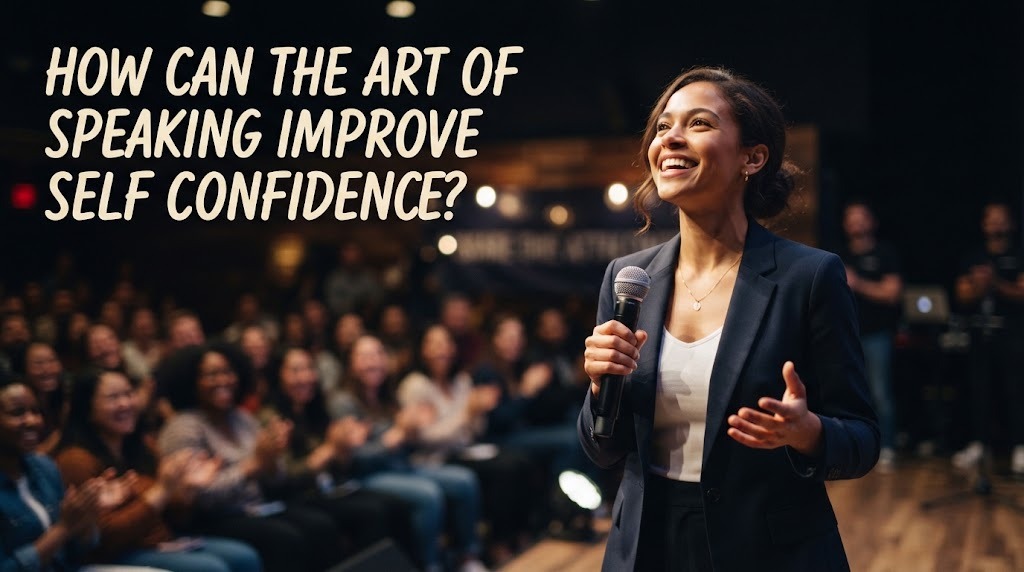
The art of speaking is an important skill that can influence how people express themselves and interact with others. Speaking clearly and confidently allows a person to communicate ideas, opinions, and feelings without excessive fear. Regular speaking practice can also help people become more comfortable when facing different audiences. As this ability develops, a person may become more confident in both social and professional situations. Therefore, learning the art of speaking can be an effective way to improve self confidence.
BUILDING CONFIDENCE THROUGH REGULAR SPEAKING PRACTICE
Regular speaking practice helps people become more familiar with expressing their thoughts. At first, someone may feel nervous, confused, or afraid of making mistakes when speaking in front of others. However, repeated practice can gradually reduce these feelings and create a greater sense of confidence. Simple activities such as discussing a topic, reading aloud, or giving a short presentation can provide useful practice. Over time, these activities make speaking feel more natural.
Practice also allows people to identify their weaknesses and improve them step by step. They can learn how to control their voice, choose appropriate words, and organize their ideas more clearly. Consistent practice is more useful than trying to become an excellent speaker immediately. Each successful speaking experience can become positive evidence that a person is capable of communicating effectively. This can strengthen self confidence in future situations.
REDUCING FEAR OF SPEAKING IN FRONT OF OTHERS
Fear of speaking in front of other people is common, especially when someone worries about being judged. The art of speaking can help reduce this fear by teaching people how to prepare and respond to different situations. When speakers understand their topic well, they usually feel more prepared to communicate their ideas. Good preparation can reduce uncertainty and make nervousness easier to manage. With repeated experience, speaking in front of others can become less intimidating.
Another useful approach is learning to accept mistakes as part of the learning process. A speaker does not need to deliver every sentence perfectly to communicate successfully. Small mistakes can provide opportunities to learn and improve future performance. Developing this mindset can reduce the pressure to appear perfect. As a result, people can become more comfortable and confident when speaking publicly.
IMPROVING BODY LANGUAGE AND VOICE CONTROL
Confidence is communicated not only through words but also through body language and voice. Maintaining appropriate eye contact, using natural gestures, and standing with good posture can make a speaker appear more confident. Similarly, speaking at a suitable volume and using clear pronunciation can help listeners understand the message. Learning these techniques can make people more aware of how they present themselves. This awareness can gradually strengthen self confidence.
Voice control is also important because an overly quiet or rushed voice may make a speaker appear uncertain. Practicing pauses, pronunciation, tone, and speaking speed can create a more effective delivery. These skills do not require a person to change their personality or imitate another speaker. Instead, they help speakers communicate in a way that feels clear and authentic. When people feel comfortable with their delivery, they are more likely to speak with confidence.
HELPING PEOPLE EXPRESS IDEAS MORE CLEARLY
The art of speaking encourages people to organize their thoughts before communicating them. A speaker who knows the main point of a message can explain it more easily and avoid unnecessary confusion. Clear communication can make people feel more capable because they can see that others understand their ideas. This experience can provide positive reinforcement and encourage them to participate more actively in conversations. Clear expression is therefore closely connected with confidence.
Speaking skills are also useful when people need to explain opinions that are different from those of others. A confident speaker can communicate disagreement respectfully without becoming aggressive or overly defensive. This ability can be especially valuable in classrooms, workplaces, meetings, and social situations. When people know how to express their ideas appropriately, they may become less afraid of participating in discussions. In this way, effective speaking can support greater confidence in communication.
DEVELOPING SOCIAL AND PROFESSIONAL CONFIDENCE
Strong speaking skills can improve confidence in everyday social interactions. People who are comfortable speaking may find it easier to introduce themselves, start conversations, ask questions, and participate in group activities. These experiences can create more opportunities to build relationships and develop communication skills. Over time, successful interactions can increase a person's belief in their own abilities. Social confidence can therefore grow through regular communication.
Speaking skills are equally valuable in professional environments. Presentations, interviews, meetings, teamwork, and discussions often require people to communicate their ideas clearly. A person who can explain information confidently may appear more prepared and reliable to others. Developing speaking skills can help individuals handle these situations with less hesitation. As a result, the art of speaking can contribute to professional confidence and career development.
USING FEEDBACK TO STRENGTHEN SELF CONFIDENCE
Feedback can help speakers understand which parts of their communication are effective and which areas need improvement. Constructive feedback from teachers, friends, colleagues, or mentors can provide a different perspective on speaking performance. Instead of viewing criticism as failure, speakers can use it as information for future improvement. This approach encourages a growth mindset and makes learning more purposeful. Gradually, improved performance can lead to stronger confidence.
It is also important to evaluate progress fairly. Speakers should recognize improvements rather than focusing only on mistakes. For example, speaking more clearly, maintaining better eye contact, or feeling less nervous can all be signs of progress. Recognizing these small achievements can create a positive cycle of practice, improvement, and confidence. This process helps people develop confidence based on real experience rather than simply trying to appear confident.
CONCLUSION
The art of speaking can improve self confidence by helping people practice communication, manage nervousness, and express ideas clearly. Regular practice, effective body language, voice control, and constructive feedback can make speaking situations more manageable. These skills are useful not only for public speaking but also for social interactions, education, and professional life. Confidence usually develops gradually through repeated experiences and continuous improvement. By learning and practicing the art of speaking, people can become more comfortable, prepared, and confident when communicating with others.
Recent Posts

Bagaimana Sistem SKS pada Program Kuliah... 22.11.2026/37 View

How Does Technology Make Daily Evaluation... 21.11.2026/70 View

Apa Strategi Menghadapi Kesenjangan antara Kompetensi... 21.11.2026/73 View

Mengapa Inventaris Aset Penting bagi Kelancaran... 21.11.2026/68 View

When Should Musicians Join a Record... 21.11.2026/71 View
