

How Can The Art Of Speaking Improve Social Skills?
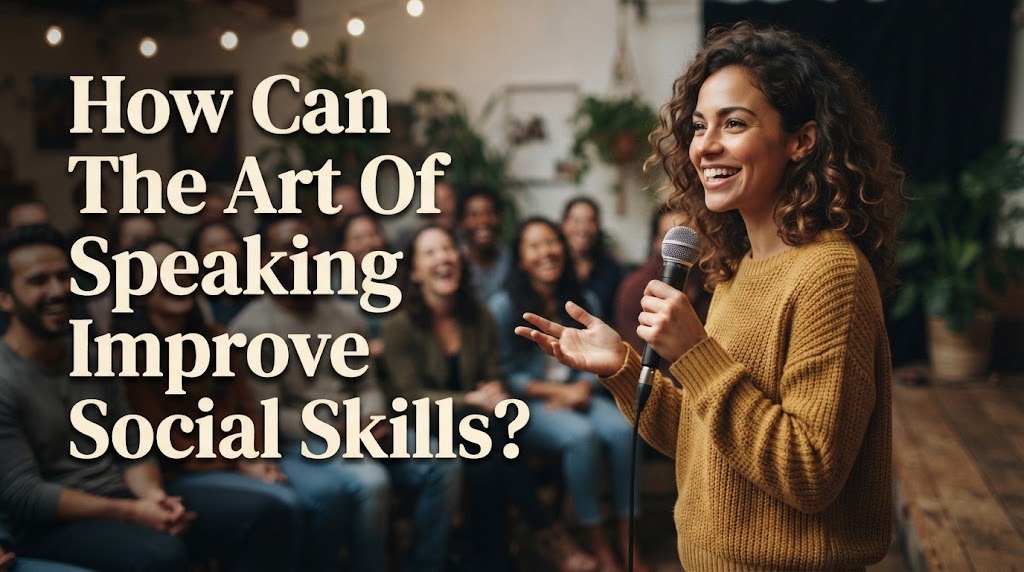
The ability to communicate well plays an important role in building healthy social relationships. The art of speaking involves more than simply saying words because it also includes listening, choosing appropriate language, expressing emotions, and responding to other people. Good speaking skills can help individuals feel more comfortable when interacting with friends, classmates, colleagues, and new people. For this reason, speaking is closely connected to the development of social skills.
People with strong communication abilities can usually express their thoughts and needs more clearly. They can also understand different opinions and respond to conversations appropriately. Although social skills may develop naturally through experience, they can be improved through regular communication practice. Learning the art of speaking can therefore help people become more confident and effective in social situations.
SPEAKING BUILDS CONFIDENCE IN SOCIAL SITUATIONS
One important benefit of speaking practice is that it can increase social confidence. People who are comfortable expressing their ideas may find it easier to start conversations and participate in group activities. Confidence can reduce the fear of saying something incorrectly or being judged by others. As a result, people may become more willing to interact with different individuals.
Confidence does not mean talking constantly or trying to dominate conversations. Instead, it means being comfortable enough to express thoughts and respond to others. Practicing simple conversations can gradually make social interactions feel more natural. Over time, this experience can help people become less nervous when meeting new people or speaking in groups.
IMPROVES THE ABILITY TO START CONVERSATIONS
Starting a conversation can be difficult, especially when people do not know each other well. Good speaking skills can help individuals find appropriate topics and begin interactions naturally. Simple questions about school, work, hobbies, or shared experiences can provide an easy starting point. The goal is not to create a perfect conversation but to make communication comfortable.
People can also pay attention to the other person's response and use it to continue the discussion. For example, if someone mentions a hobby, the speaker can ask a related question. Showing genuine interest makes conversations feel more natural. With regular practice, starting conversations can become easier and less stressful.
STRENGTHENS ACTIVE LISTENING
The art of speaking is closely connected to active listening. A good conversation requires people to listen carefully instead of thinking only about what they want to say next. Listening allows individuals to understand another person's ideas, feelings, and expectations. It also helps them provide responses that are relevant to the conversation.
Active listening can be demonstrated through appropriate eye contact, short responses, and relevant questions. People should avoid interrupting unnecessarily while someone else is speaking. Listening shows that another person's thoughts are valued. This can create stronger connections and encourage more open communication.
HELPS PEOPLE EXPRESS EMOTIONS CLEARLY
Social relationships often involve emotions, and people need to communicate those emotions appropriately. Clear emotional expression can help others understand how someone feels without creating unnecessary confusion. For example, a person can calmly explain that they feel disappointed instead of immediately blaming someone else. This approach can make difficult conversations easier to manage.
Speaking skills also help people express positive emotions such as appreciation, encouragement, and gratitude. Simple words can have a meaningful effect on relationships when they are expressed sincerely. Healthy emotional communication can reduce misunderstandings and strengthen connections. Learning to communicate feelings respectfully is therefore an important social skill.
REDUCES MISUNDERSTANDINGS
Many social problems occur because people interpret messages differently. Clear communication can reduce misunderstandings by helping speakers explain what they actually mean. Choosing appropriate words and providing enough context can make a message easier to understand. Asking questions can also help clarify information before making assumptions.
People should also pay attention to their tone because the same words can sound different depending on how they are delivered. A calm tone may communicate respect, while an aggressive tone can create tension. Effective communication requires attention to both words and delivery. This can help people handle conversations more successfully.
MAKES GROUP COMMUNICATION MORE EFFECTIVE
Social interactions often happen in groups, such as classrooms, organizations, workplaces, and community activities. In these situations, effective speaking skills help people share ideas without preventing others from participating. Speakers need to explain their opinions clearly while also giving other people opportunities to respond. This creates a more balanced and productive discussion.
Good group communication also requires people to disagree respectfully. Different opinions are normal, but disagreements can become problematic when people attack each other instead of discussing ideas. Respectful speaking encourages cooperation and helps groups reach better decisions. These skills are useful in both academic and professional environments.
HELPS BUILD BETTER RELATIONSHIPS
Strong communication can support the development of healthy social relationships. People are more likely to feel comfortable around someone who communicates respectfully and listens to their concerns. Open conversations can help individuals understand each other's personalities, interests, and expectations. This understanding can create stronger connections over time.
Speaking skills can also help people maintain relationships when problems occur. Instead of avoiding difficult conversations, individuals can explain their concerns calmly and listen to the other person's perspective. Honest and respectful communication builds trust. As trust grows, relationships can become more stable and meaningful.
IMPROVES ADAPTABILITY IN DIFFERENT SOCIAL SETTINGS
Different social situations require different communication styles. The way someone speaks with close friends may not be appropriate when speaking with teachers, employers, or unfamiliar people. Socially skilled speakers can adapt their communication according to the situation and audience. They understand when to be casual, polite, formal, or more careful with their words.
This ability to adapt can make people more comfortable in unfamiliar environments. It can also help them communicate with individuals who have different personalities or communication preferences. Adaptability makes social interaction more flexible and effective. Learning through different conversations is one of the best ways to develop this ability.
CONCLUSION
The art of speaking can improve social skills by building confidence, strengthening active listening, improving emotional expression, reducing misunderstandings, and supporting better relationships. Speaking skills also help people participate effectively in group conversations and adapt to different social environments. These abilities make everyday interactions more comfortable and meaningful.
Social skills do not develop overnight. Regular communication, careful listening, and learning from real experiences can gradually make social interactions easier. By practicing how to speak clearly, listen respectfully, and respond appropriately, people can become more confident communicators and develop stronger connections with others.
Recent Posts

Bagaimana Sistem SKS pada Program Kuliah... 22.11.2026/37 View

How Does Technology Make Daily Evaluation... 21.11.2026/70 View

Apa Strategi Menghadapi Kesenjangan antara Kompetensi... 21.11.2026/73 View

Mengapa Inventaris Aset Penting bagi Kelancaran... 21.11.2026/68 View

When Should Musicians Join a Record... 21.11.2026/71 View
