

How Can the Student Senate Increase Student Participation in University Decision Making?
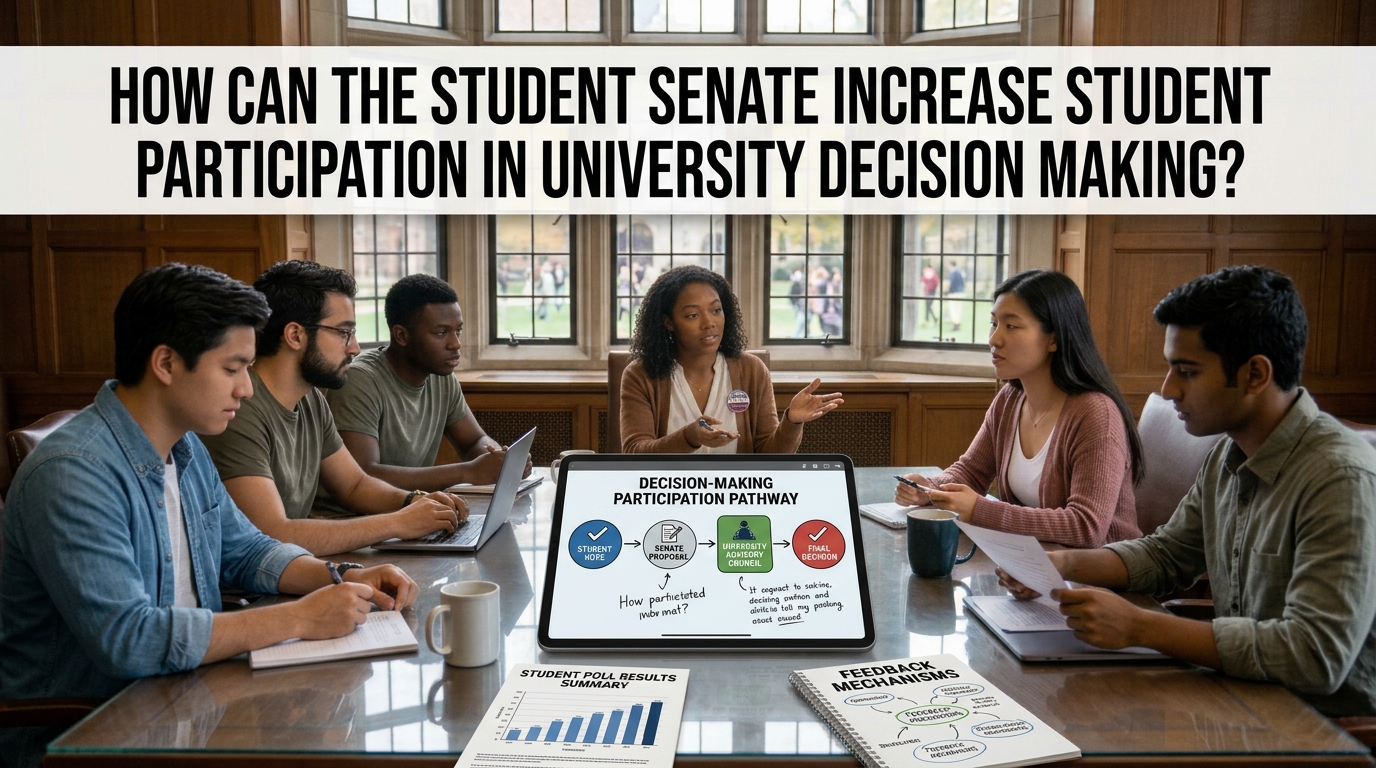
Student participation is an important part of creating a democratic, inclusive, and responsive university environment. Students are directly affected by academic policies, campus facilities, student services, and other institutional decisions. Therefore, their opinions and experiences should be considered when universities develop policies and plan improvements. As a student representative organization, the student senate has an important role in connecting students with university management and ensuring that their concerns receive proper attention.
However, student participation in university decision-making is not always easy to achieve. Some students may lack information about available opportunities, feel uncomfortable expressing their opinions, or believe that their contributions will not influence actual decisions. To address these challenges, the student senate needs to create accessible communication channels, organize meaningful discussions, and encourage students to become actively involved in campus governance.
PROVIDING ACCESSIBLE CHANNELS FOR STUDENT ASPIRATIONS
One effective way for the student senate to increase student participation is by providing accessible channels for student aspirations. These channels allow students to express their opinions, submit complaints, and communicate suggestions about university policies and campus services. Examples include online suggestion forms, student discussion forums, official email addresses, and dedicated complaint services. By offering different communication methods, the student senate can make it easier for students from various backgrounds to participate.
The channels should also be easy to access, regularly monitored, and supported by clear procedures. Students need to understand where they can submit their concerns and how their feedback will be handled. The student senate should provide updates about important submissions to demonstrate that student opinions are being taken seriously. This approach can strengthen trust and encourage more students to share their perspectives.
ORGANIZING OPEN DISCUSSIONS AND STUDENT FORUMS
Open discussions and student forums provide opportunities for students to communicate directly with their representatives and university decision-makers. Through these activities, students can express their concerns, ask questions, and discuss policies that affect their academic and social experiences. The student senate can organize regular forums at the faculty or university level to ensure that different student groups have opportunities to participate.
These discussions should create a comfortable environment where everyone can speak without fear of being ignored or judged. Student senate members should act as facilitators who encourage balanced participation and prevent discussions from being dominated by a small group. Important feedback should be documented and summarized for further discussion with university management. In this way, student forums become more than ordinary meetings because they provide a practical connection between student voices and institutional decisions.
IMPROVING TRANSPARENCY IN UNIVERSITY DECISION-MAKING
Transparency is essential for building student trust in university governance. The student senate can encourage transparency by sharing relevant information about university policies, meeting outcomes, proposed regulations, and decisions that affect students. When students understand how decisions are developed, they can provide more informed opinions and participate more confidently in discussions.
The student senate should also communicate the progress of student proposals and explain the reasons behind decisions whenever possible. For example, if a student suggestion cannot be implemented, representatives should provide a clear explanation rather than leaving students without information. Regular reports through official websites, social media, and campus announcements can help maintain open communication. Greater transparency makes students feel recognized as important stakeholders in university development.
USING DIGITAL PLATFORMS TO REACH MORE STUDENTS
Digital technology offers practical opportunities to expand student participation in university decision-making. The student senate can use social media, online surveys, digital discussion groups, and university platforms to collect feedback from a wider student population. These tools are particularly useful for students who cannot attend face-to-face meetings because of academic schedules or other responsibilities.
Digital platforms also make it easier to distribute information quickly and provide updates about ongoing discussions. However, the student senate must ensure that online participation is organized, accessible, and respectful of student privacy. It should also provide alternative offline channels for students who have limited internet access or prefer direct communication. Combining digital and traditional methods can create a more inclusive participation system.
INVOLVING STUDENTS IN POLICY EVALUATION
The student senate can increase meaningful participation by involving students in the evaluation of university policies. Students experience the direct effects of academic regulations, scholarship programs, campus facilities, and student services. Their feedback can help identify problems that may not be immediately visible to university administrators. Therefore, collecting student opinions before and after policy implementation can improve the quality of institutional decisions.
The evaluation process can include surveys, focus group discussions, interviews, and public consultations. Student senate members should analyze the collected information and present relevant findings to university management. They can also recommend improvements based on actual student experiences and available evidence. This involvement allows students to contribute not only to discussions but also to the continuous improvement of university policies.
BUILDING COLLABORATION WITH STUDENT ORGANIZATIONS
Collaboration with student organizations is another effective strategy for expanding student involvement. The student senate can work with student associations, clubs, faculty organizations, and other campus communities to gather different perspectives. Each organization may have specific concerns related to academic activities, student welfare, facilities, or extracurricular development. Working together helps the student senate understand issues affecting different groups across the university.
Regular coordination meetings can be organized to exchange information, discuss common challenges, and develop recommendations. Student organizations can also help distribute information about participation opportunities to their members. Through this collaboration, the student senate can reach students who may not usually participate in formal university discussions. Strong partnerships also encourage collective responsibility for improving campus life.
PROVIDING STUDENT LEADERSHIP AND CIVIC EDUCATION
Some students do not participate in university decision-making because they lack knowledge about student representation and campus governance. To overcome this challenge, the student senate can organize leadership training and civic education programs. These programs can introduce students to university governance structures, student rights, organizational responsibilities, and the importance of democratic participation. With better knowledge, students can understand how their opinions may contribute to institutional improvements.
Workshops, public discussions, leadership seminars, and student representation campaigns can make these topics easier to understand. The student senate should also encourage students to develop communication, critical thinking, and public speaking skills. These abilities help them express their opinions constructively and participate in discussions with confidence. As a result, more students may become interested in contributing to university decision-making.
FOLLOWING UP ON STUDENT FEEDBACK AND PROPOSALS
Collecting student feedback is not enough if the student senate does not follow up on the information received. Consistent follow-up demonstrates that student participation has a meaningful purpose and that representatives are committed to advocating for student interests. The senate should organize feedback, identify priority issues, and communicate relevant proposals to university management.
Furthermore, students should receive updates about the progress and outcomes of their suggestions. The student senate can publish periodic reports explaining which proposals have been accepted, are being discussed, or cannot yet be implemented. Providing these updates helps prevent misunderstandings and reduces the impression that student feedback is being ignored. A clear follow-up process can strengthen accountability and encourage students to participate in future decision-making activities.
CONCLUSION
The student senate can increase student participation in university decision-making by creating accessible communication channels, organizing open discussions, improving transparency, and using digital platforms. It can also involve students in policy evaluation, strengthen collaboration with student organizations, and provide leadership education. Most importantly, student feedback must receive proper follow-up so that students can see how their contributions influence university policies and campus development.
Meaningful student participation requires continuous cooperation between student representatives, the wider student community, and university management. By creating an inclusive and transparent decision-making environment, the student senate can strengthen student representation and help universities develop policies that better reflect the needs and aspirations of their students.
Recent Posts

Bagaimana Sistem SKS pada Program Kuliah... 22.11.2026/35 View

How Does Technology Make Daily Evaluation... 21.11.2026/69 View

Apa Strategi Menghadapi Kesenjangan antara Kompetensi... 21.11.2026/69 View

Mengapa Inventaris Aset Penting bagi Kelancaran... 21.11.2026/67 View

When Should Musicians Join a Record... 21.11.2026/68 View
