

How Can Traditional Games Help Children Learn Regional Languages?
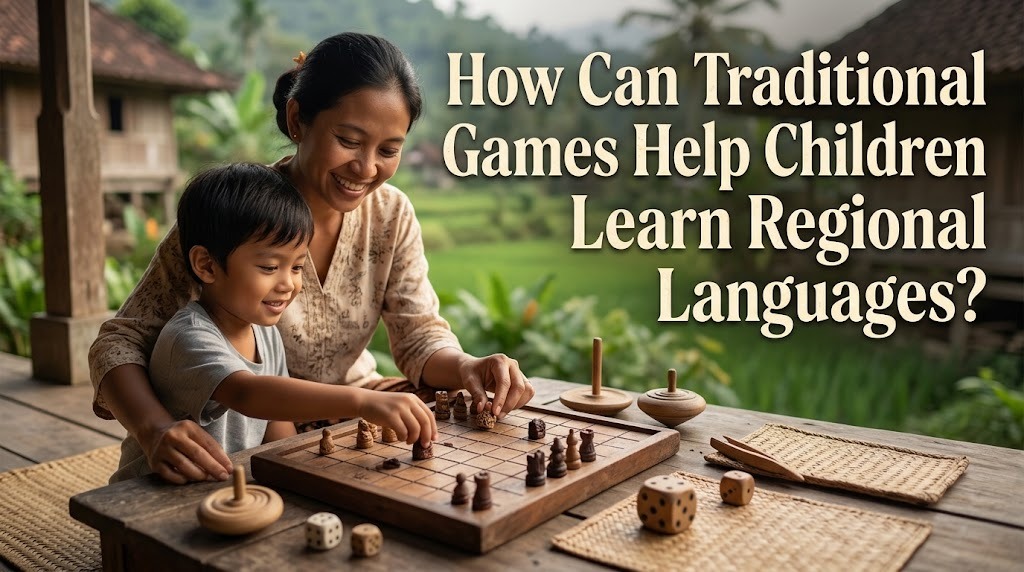
Traditional games are an important part of Indonesia's cultural heritage, offering children opportunities to develop social skills, learn local customs, and build relationships with others. Many traditional games are played using regional languages, especially when children give instructions, sing songs, count turns, or communicate with teammates. These everyday interactions can create a natural environment for learning new vocabulary and practicing pronunciation. Unlike formal lessons that focus mainly on memorization, games encourage children to use language actively while having fun. Traditional games can help preserve regional languages by making language learning enjoyable, interactive, and closely connected to local culture.
TRADITIONAL GAMES INTRODUCE CHILDREN TO REGIONAL VOCABULARY
Traditional games expose children to words and expressions that are commonly used during play. Children may learn vocabulary related to numbers, movement, directions, objects, and everyday activities. For example, they might practice counting in Javanese while playing a counting game or use Sundanese expressions when giving instructions to friends. Because these words are repeated throughout the activity, children have more opportunities to remember their meanings. Learning vocabulary through play helps children connect words with real actions and experiences.
Teachers and parents can introduce a small set of regional words before a game begins. They can explain the meanings, demonstrate the pronunciation, and encourage children to use the words while playing. As children become more familiar with the vocabulary, adults can gradually introduce additional expressions. This approach allows children to learn at a comfortable pace without feeling overwhelmed. Over time, repeated exposure can help them build a stronger foundation in their regional language.
PLAYING GAMES ENCOURAGES SPEAKING AND LISTENING SKILLS
Communication is essential in many traditional games because children need to understand instructions, ask questions, and respond to other players. When the game is conducted in a regional language, children practice listening to spoken words and using appropriate responses. They also learn how to pronounce words clearly so that other players can understand them. These interactions provide practical language experience that may be difficult to achieve through written exercises alone. Traditional games encourage children to use regional languages for meaningful communication rather than simply memorizing vocabulary.
Group games also help children become more confident when speaking. Children who are shy about using a regional language may feel more comfortable trying new words while participating in an activity with friends. Mistakes can become natural opportunities for learning when adults and other players respond patiently. Parents and teachers can support this process by correcting errors gently and praising children's efforts. A positive atmosphere helps children recognize that learning a language is a gradual process that improves with practice.
TRADITIONAL SONGS AND RHYMES STRENGTHEN LANGUAGE MEMORY
Some traditional children's games include songs, rhymes, chants, or repeated phrases in regional languages. These elements help children remember vocabulary because rhythm and repetition make words easier to recall. Singing also gives children opportunities to practice pronunciation, intonation, and the natural rhythm of a language. When children repeat the same expressions during different rounds of a game, they gradually become more familiar with the language. Songs and rhymes can make regional vocabulary easier to remember by combining language with rhythm and movement.
Parents and teachers can introduce songs associated with traditional games and explain unfamiliar words before children begin playing. They can also ask children to identify repeated expressions or describe what a song means. If a traditional rhyme contains words that are no longer commonly used, adults can explain their meanings and cultural background. This helps children understand that regional languages contain valuable knowledge from earlier generations. Recording songs with permission from knowledgeable speakers can also support future learning and cultural preservation.
GAMES CONNECT LANGUAGE LEARNING WITH LOCAL CULTURE
Traditional games often reflect the customs, values, and social relationships of the communities where they developed. Through these activities, children can learn not only regional vocabulary but also the cultural meanings behind particular expressions. For example, games may teach children how to take turns, cooperate, show respect, and resolve disagreements. When these interactions occur in a regional language, children experience how language is connected to community life. Traditional games preserve both linguistic knowledge and cultural practices by passing them from one generation to the next.
Parents and older community members can explain the history of a game and how it was played when they were children. They can introduce traditional expressions that were commonly used during play and discuss how their meanings may differ across communities. Children can compare games from different regions to discover similarities and differences in vocabulary, rules, and customs. Such activities encourage curiosity about Indonesia's linguistic diversity. They also help children develop a sense of belonging to their families and communities.
PARENTS AND TEACHERS CAN ORGANIZE LANGUAGE-BASED GAME ACTIVITIES
Parents and teachers can make traditional games more effective for language learning by planning activities that match children's ages and language abilities. They can select games that involve simple instructions, repeated expressions, counting, or teamwork. Before playing, adults should introduce essential vocabulary and demonstrate how the language is used during the activity. During the game, they can encourage children to communicate in the regional language without forcing them to speak perfectly. Regular, enjoyable practice is more effective for building confidence than making children afraid of language mistakes.
Schools can organize traditional game days in which students learn games from their own communities and explore games from other regions. Families can also arrange play sessions with grandparents or local cultural groups who know traditional games and expressions. Teachers may create simple learning materials that explain the rules, vocabulary, and cultural background of each game. Children's progress can be observed through their ability to understand instructions, recognize words, and communicate with others. These activities work best when language learning remains enjoyable and children are encouraged to participate at their own pace.
DIGITAL MEDIA CAN HELP PRESERVE TRADITIONAL GAMES AND LANGUAGES
Digital technology can support traditional games by helping families and educators document their rules, songs, vocabulary, and cultural meanings. Videos can demonstrate how to play a game while showing the regional language used by its participants. Audio recordings can help children listen to native pronunciation and practice unfamiliar expressions. Digital collections can also make information about traditional games accessible to children who live far from their ancestral communities. Combining traditional play with digital resources can expand opportunities for children to learn regional languages.
However, digital materials should complement real interaction rather than replace it. Children learn communication skills most effectively when they have opportunities to speak and listen to other people. Parents and teachers should therefore combine videos or digital guides with hands-on games and group activities. Community members who understand the language and traditions should help review recorded materials for accuracy. With appropriate support, digital documentation can preserve traditional knowledge while encouraging children to use regional languages in everyday life.
CONCLUSION
Traditional games can help children learn regional languages by introducing vocabulary, strengthening speaking and listening skills, improving memory through songs, and connecting language with local culture. Parents, teachers, and community members can support this process by organizing enjoyable activities that encourage children to communicate naturally. Digital resources can further preserve traditional games and make language-learning materials available to wider audiences. However, consistent interaction with family members and fluent speakers remains essential for developing lasting language skills. By bringing traditional games into homes, schools, and communities, Indonesia can encourage children to appreciate regional languages and help protect its cultural heritage for future generations.
Recent Posts

Bagaimana Sistem SKS pada Program Kuliah... 22.11.2026/49 View

How Does Technology Make Daily Evaluation... 21.11.2026/77 View

Apa Strategi Menghadapi Kesenjangan antara Kompetensi... 21.11.2026/78 View

Mengapa Inventaris Aset Penting bagi Kelancaran... 21.11.2026/74 View

When Should Musicians Join a Record... 21.11.2026/79 View
