

How Can Universities Improve Campus Bus Safety and Comfort?
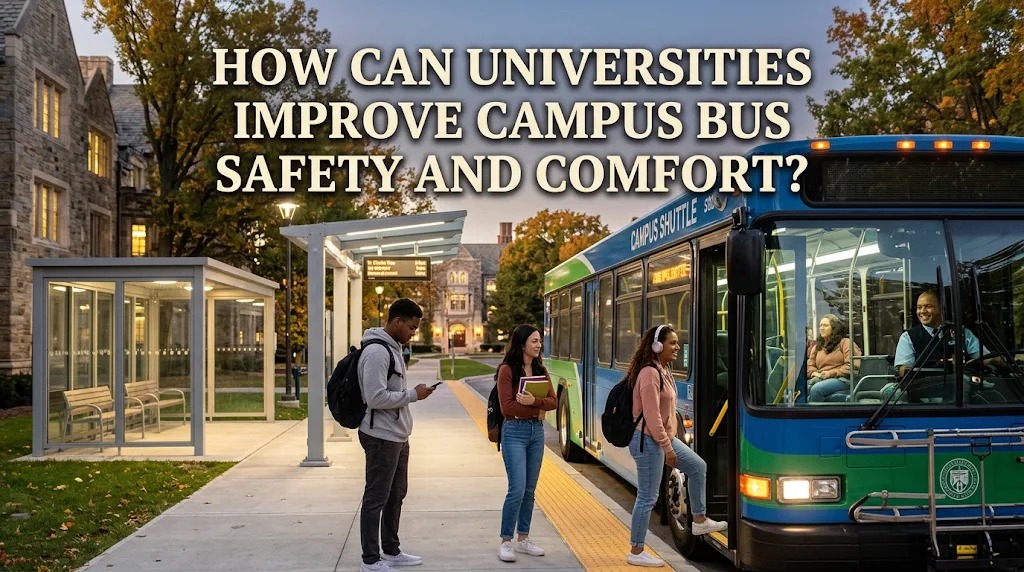
Campus buses play an important role in helping students travel between different university facilities. They provide convenient transportation to classrooms, libraries, laboratories, dormitories, and other campus locations. However, providing buses alone is not enough. Universities must also ensure that their transportation services are safe, comfortable, reliable, and accessible to all students.
Improving campus bus safety and comfort requires proper vehicle maintenance, qualified drivers, organized routes, and suitable passenger facilities. Universities should also consider student feedback to identify transportation problems and improve service quality. With effective management, campus buses can provide a better travel experience and support a safer university environment.
MAINTAINING VEHICLE CONDITIONS AND SAFETY STANDARDS
Regular vehicle maintenance is one of the most important steps universities can take to improve campus bus safety. Buses should undergo routine inspections to ensure that important components, such as brakes, tires, engines, lights, and seat belts, function properly. These inspections help identify potential mechanical problems before they cause accidents or transportation disruptions. Universities should also establish clear maintenance schedules and ensure that damaged vehicles are repaired immediately.
In addition to mechanical inspections, buses should have appropriate safety equipment. Emergency exits, fire extinguishers, first aid kits, and clearly displayed safety instructions can help passengers respond to unexpected situations. Universities should also ensure that each vehicle has sufficient passenger capacity to prevent overcrowding. By maintaining high safety standards, universities can reduce transportation risks and build student confidence in campus bus services.
HIRING QUALIFIED AND RESPONSIBLE BUS DRIVERS
The quality of campus bus drivers has a direct influence on passenger safety. Universities should recruit drivers who have valid driving licenses, sufficient experience, and a good understanding of traffic regulations. Drivers should also receive training in defensive driving, emergency response, and passenger safety. These skills help them handle different road conditions and respond appropriately to unexpected situations.
Responsible drivers should follow speed limits, respect pedestrian crossings, and avoid dangerous driving behavior. They must also ensure that passengers board and leave the bus safely at designated stops. Universities can evaluate driver performance through regular supervision and student feedback. Providing professional training and clear working standards can help create a safer and more reliable campus transportation service.
IMPROVING BUS COMFORT AND PASSENGER FACILITIES
Comfortable transportation can make daily campus journeys more enjoyable for students. Universities should provide buses with clean seats, sufficient space, proper ventilation, and functioning air conditioning when available. Regular cleaning is also necessary to maintain hygiene and prevent unpleasant conditions inside the vehicles. These facilities are particularly important for students who use campus buses several times a day.
Universities should also consider accessibility when designing or selecting campus buses. Accessible entrances, handrails, designated seating, and sufficient space for mobility aids can help students with disabilities use transportation more easily. Clear information about bus stops and available facilities can further improve passenger convenience. By considering different student needs, universities can create an inclusive transportation environment that provides comfort for everyone.
PROVIDING CLEAR ROUTES AND RELIABLE SCHEDULES
Well-planned routes and reliable schedules are essential for improving campus bus services. Universities should identify locations with high transportation demand, including lecture buildings, libraries, dormitories, laboratories, and main campus entrances. Bus routes should connect these important destinations efficiently without unnecessary detours. Proper route planning can reduce travel time and make transportation more convenient for students.
Universities should also provide accurate information about departure times, arrival times, and designated bus stops. Digital applications, campus websites, and information boards can help students check schedules and avoid unnecessary waiting. Real-time bus tracking can provide additional convenience by allowing passengers to monitor vehicle locations. With organized routes and consistent schedules, students can plan their academic activities more effectively.
STRENGTHENING PASSENGER RULES AND EMERGENCY PROCEDURES
Clear passenger regulations help maintain safety and order during campus bus journeys. Universities should establish rules regarding passenger capacity, boarding procedures, seat allocation, and appropriate behavior inside vehicles. Students should be encouraged to wait at designated stops, avoid blocking entrances, and follow instructions from drivers. These simple practices can prevent confusion and reduce the risk of accidents during boarding and departure.
Emergency procedures are equally important for protecting passengers. Universities should prepare clear guidelines for handling vehicle breakdowns, medical emergencies, traffic accidents, and other unexpected situations. Drivers and transportation staff should understand how to contact emergency services and provide initial assistance when necessary. Universities can also conduct regular safety training to ensure that everyone understands their responsibilities. Proper preparation can help reduce risks and improve passenger confidence.
CONCLUSION
Universities can improve campus bus safety and comfort by maintaining vehicles regularly, hiring qualified drivers, providing comfortable facilities, and organizing reliable routes. Clear passenger regulations and effective emergency procedures are also essential for protecting students during their journeys.
In addition, universities should evaluate transportation services regularly and consider feedback from students and staff. Improvements should focus on safety, accessibility, cleanliness, and service reliability. With proper planning and consistent management, campus buses can become a safer, more comfortable, and dependable transportation facility for the entire university community.
Recent Posts

Bagaimana Sistem SKS pada Program Kuliah... 22.11.2026/30 View

How Does Technology Make Daily Evaluation... 21.11.2026/66 View

Apa Strategi Menghadapi Kesenjangan antara Kompetensi... 21.11.2026/65 View

Mengapa Inventaris Aset Penting bagi Kelancaran... 21.11.2026/64 View

When Should Musicians Join a Record... 21.11.2026/64 View
