

How Can Universities Measure the Success of Lecturer Seminars?
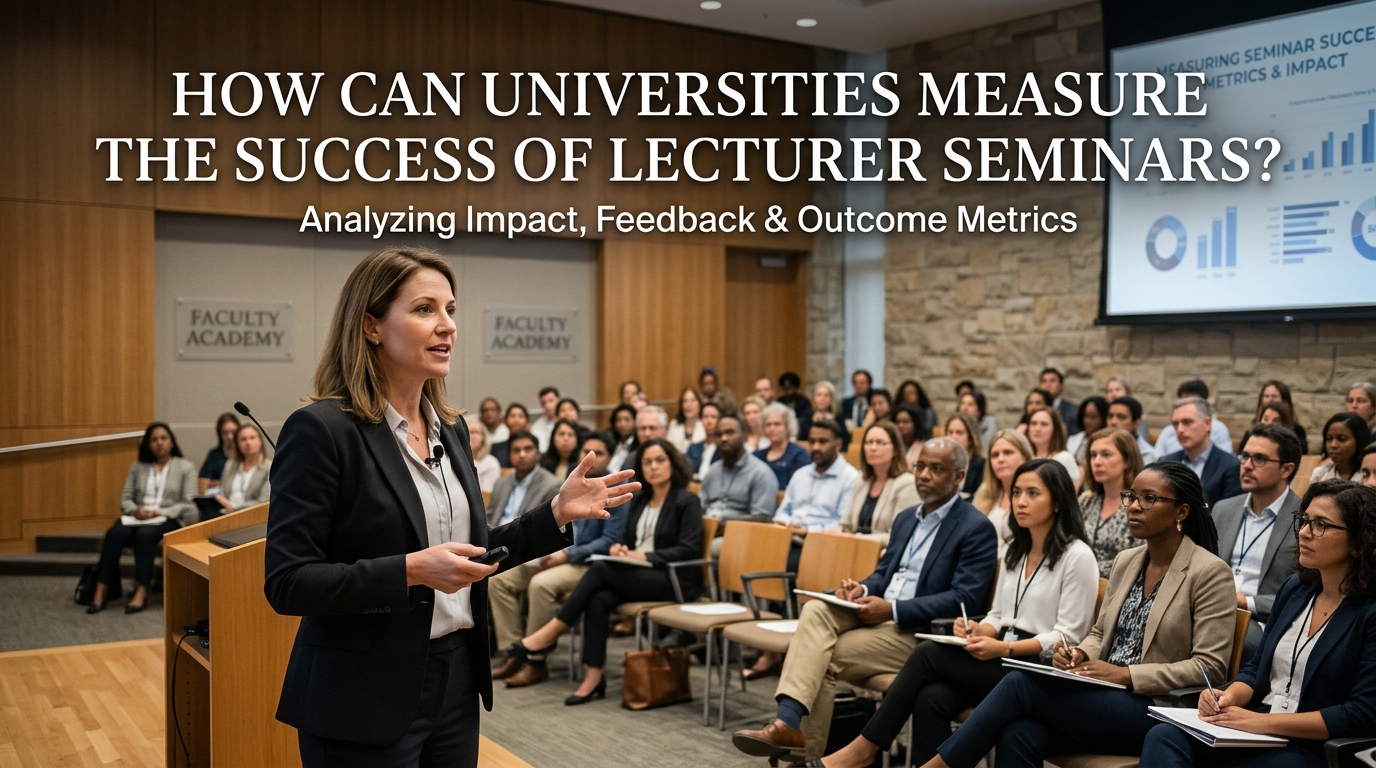
Lecturer seminars are important professional development activities that help university educators improve their knowledge, teaching skills, and academic performance. However, organizing a seminar does not automatically mean that it has achieved its objectives. Universities need to evaluate whether the activities provide meaningful benefits for lecturers and contribute to better teaching practices. Measuring seminar success helps institutions identify strengths, recognize weaknesses, and plan more effective programs in the future. By using clear indicators and collecting reliable feedback, universities can ensure that lecturer seminars provide lasting value.
SETTING CLEAR SEMINAR OBJECTIVES
The first step in measuring the success of lecturer seminars is establishing clear objectives before the event begins. Universities should determine what participants are expected to learn, understand, or improve. For example, a seminar may aim to strengthen teaching methods, develop research skills, or introduce new educational technologies. These objectives should be specific enough to evaluate after the activity. Clear objectives provide a foundation for selecting appropriate success indicators and determining whether the seminar meets its intended purpose.
COLLECTING PARTICIPANT FEEDBACK
Participant feedback helps universities understand how lecturers perceive the quality and usefulness of a seminar. Organizers can distribute questionnaires or conduct short interviews after the event. Questions may cover the relevance of the topics, the quality of presentations, the speakers' expertise, and the effectiveness of the discussion sessions. Participants should also have opportunities to suggest improvements for future activities. However, positive satisfaction ratings alone do not prove learning improvement, so feedback should be combined with other evaluation methods.
MEASURING KNOWLEDGE AND SKILL DEVELOPMENT
Universities should evaluate whether lecturers gain useful knowledge and skills from seminar participation. One method is to use short assessments before and after the event to compare participants' understanding of specific topics. Practical exercises, presentations, and case studies can also demonstrate whether lecturers can apply the information they receive. For example, a seminar about digital teaching tools may ask participants to create a simple learning activity using a new platform. These assessments provide more direct evidence of learning progress and professional development than attendance records alone.
EVALUATING CHANGES IN TEACHING PRACTICES
A successful lecturer seminar should encourage participants to apply relevant ideas in their daily academic activities. Universities can follow up several weeks or months after the event to determine whether lecturers have changed their teaching methods. Evidence may include revised lesson plans, new classroom activities, improved assessment strategies, or the responsible use of educational technology. Classroom observations and teaching reflections can provide additional information when conducted appropriately. The application of seminar knowledge is an important indicator because it shows whether learning extends beyond the event itself.
ANALYZING STUDENT LEARNING OUTCOMES
Universities can also examine whether seminar-related teaching improvements contribute to better student learning experiences. Relevant indicators include student feedback, classroom participation, completion rates, and performance on assessments aligned with the course objectives. For example, if lecturers introduce more interactive activities, universities can examine whether students participate more actively. However, student outcomes are influenced by many factors, including prior knowledge, attendance, learning resources, and course difficulty. Therefore, universities should avoid attributing every improvement directly to seminars and instead use multiple sources of evidence to understand their possible impact.
ASSESSING RESEARCH AND ACADEMIC DEVELOPMENT
Some lecturer seminars focus on research methods, academic writing, publication strategies, or collaboration. In these cases, universities can measure success by tracking relevant outcomes over an appropriate period. Examples include research proposals developed, collaborative projects initiated, manuscripts prepared, and conference presentations completed. Publication numbers may also be considered, but they should not be the only measure because academic publishing often requires considerable time. Universities should prioritize research quality, ethical standards, and meaningful academic contributions rather than simply counting outputs.
MONITORING PARTICIPATION AND RESOURCE USE
Participation data can help universities determine whether a seminar reaches its intended audience. Organizers can record registration numbers, attendance rates, completion rates, and engagement during discussions or practical sessions. They can also compare the seminar's costs with its learning objectives and observed benefits. Relevant expenses may include speaker fees, venue rental, technology, learning materials, and administrative support. Efficient resource management does not simply mean spending less; it means using available resources effectively to achieve the seminar's goals.
USING FOLLOW UP EVALUATION
The effects of professional development may not become visible immediately after a seminar. Universities should therefore conduct follow-up evaluations after participants have had time to apply what they learned. Follow-up surveys, interviews, teaching portfolios, and progress reports can reveal which skills are being used and what challenges remain. Organizers can also ask lecturers whether they need additional training or mentoring. This ongoing process helps institutions understand long-term seminar effectiveness and improve the design of future programs.
USING EVALUATION RESULTS FOR IMPROVEMENT
Evaluation is most valuable when universities use the findings to make practical decisions. Organizers should compare results with the original objectives and identify which parts of the seminar worked well. If participants report that the material was too theoretical, future sessions could include more demonstrations, practical exercises, or discussion time. If lecturers struggle to apply new skills, universities could provide mentoring or follow-up workshops. By turning evaluation findings into action, institutions can build a continuous improvement process that strengthens professional development over time.
CONCLUSION
Universities can measure the success of lecturer seminars by evaluating participant feedback, knowledge development, teaching practices, student learning experiences, and academic progress. Attendance and satisfaction are useful indicators, but they should be supported by evidence of learning and practical application. Follow-up assessments can reveal whether seminar benefits continue beyond the event. Universities should also consider costs, institutional objectives, and the time needed for meaningful results to appear. With clear objectives, reliable evaluation methods, and continuous improvement, universities can make lecturer seminars more effective and valuable for the academic community.
Recent Posts

Bagaimana Sistem SKS pada Program Kuliah... 22.11.2026/49 View

How Does Technology Make Daily Evaluation... 21.11.2026/76 View

Apa Strategi Menghadapi Kesenjangan antara Kompetensi... 21.11.2026/78 View

Mengapa Inventaris Aset Penting bagi Kelancaran... 21.11.2026/74 View

When Should Musicians Join a Record... 21.11.2026/78 View
