

How Can Universities Organize Effective and High Quality Lecturer Seminars?
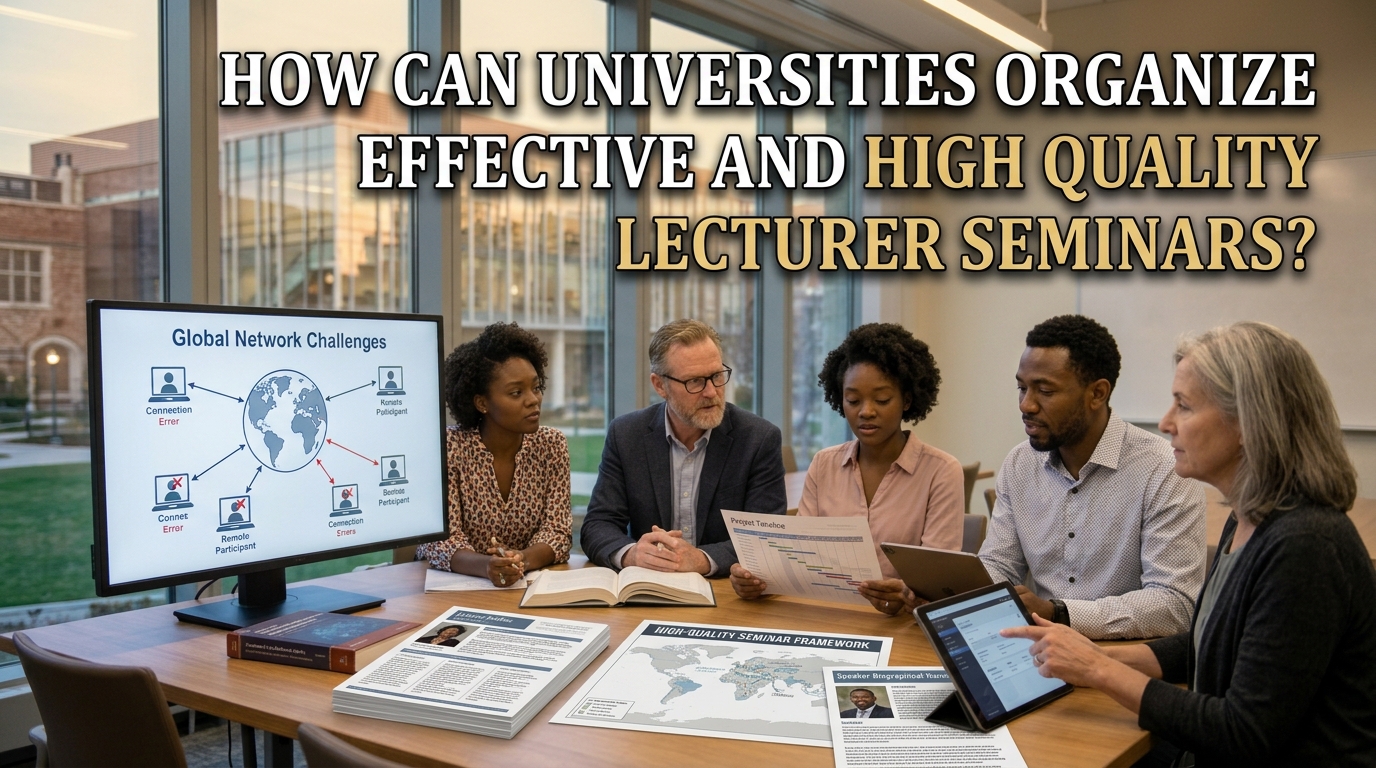
Lecturer seminars are important academic activities that help lecturers improve their teaching skills, exchange research findings, and develop professional relationships. However, organizing a successful seminar requires more than inviting speakers and preparing a schedule. Universities need clear objectives, relevant topics, qualified speakers, effective communication, and appropriate facilities. With careful planning, institutions can create high-quality lecturer seminars that provide meaningful learning experiences and support academic development.
DEFINE CLEAR SEMINAR OBJECTIVES
The first step in organizing an effective lecturer seminar is establishing clear objectives. Universities should determine what participants are expected to learn, understand, or achieve after attending the event. Objectives may include improving teaching methods, exploring research developments, discussing educational technology, or strengthening academic collaboration. Clear goals help organizers select suitable speakers, prepare relevant materials, and design appropriate activities.
Seminar objectives should also match the needs of lecturers and the university's academic priorities. For example, a seminar focused on research quality may cover research methodology, data analysis, or scientific publication. Organizers should communicate the objectives before the event so participants understand its purpose. Well-defined objectives provide a strong foundation for planning and evaluating seminar success.
SELECT RELEVANT AND INFORMATIVE TOPICS
Choosing the right topic is essential for attracting participants and maintaining their interest. Universities should identify current academic issues, professional development needs, and challenges faced by lecturers in their teaching or research activities. Topics can include innovative teaching strategies, curriculum development, research ethics, digital learning, and academic writing. Relevant subjects help participants connect seminar discussions with their professional responsibilities.
Organizers can identify suitable topics by collecting feedback from lecturers, consulting academic departments, and reviewing developments in higher education. They should avoid topics that are too broad unless the seminar is designed as an introductory event. A focused topic allows speakers to explain important concepts in greater depth and provide practical examples. Relevant seminar topics make academic discussions more useful and encourage active participation.
INVITE QUALIFIED AND EXPERIENCED SPEAKERS
Speakers play a major role in determining the quality of lecturer seminars. Universities should invite professionals who have relevant academic knowledge, research experience, or practical expertise in the selected topic. Qualified speakers can explain complex ideas clearly, provide credible examples, and respond to participants' questions. Their experience also helps connect academic concepts with real challenges in higher education.
Before confirming speakers, organizers should review their qualifications, professional background, and familiarity with the intended audience. They should provide clear information about the seminar objectives, presentation duration, and expected content. Speakers should also be encouraged to use reliable sources and explain their ideas in an accessible way. Experienced and well-prepared speakers help build credibility and improve the learning experience.
PREPARE A CLEAR AND REALISTIC SEMINAR SCHEDULE
A well-organized schedule helps seminars run smoothly and ensures that important topics receive enough attention. Universities should determine the event duration, presentation order, discussion periods, breaks, and question-and-answer sessions. The schedule should allow sufficient time for speakers to explain their material without making the event unnecessarily long. Organizers must also consider participants' availability and other academic responsibilities.
A detailed agenda should be shared with speakers and participants before the event. Each session should have a clear time allocation, and a moderator should help maintain the schedule. Organizers should also prepare contingency plans for late arrivals, technical problems, or unexpected changes. Effective time management keeps the seminar focused, organized, and respectful of everyone's time.
PROVIDE SUITABLE FACILITIES AND DIGITAL TECHNOLOGY
The facilities and technology used during a lecturer seminar can significantly influence its effectiveness. For in-person events, universities should provide a comfortable venue, suitable seating, presentation equipment, microphones, and reliable internet access when needed. For online or hybrid seminars, organizers should choose a platform that supports presentations, participant interaction, and technical requirements. The selected format should match the event's objectives and the needs of its audience.
All equipment and digital tools should be tested before the seminar begins. Organizers should prepare presentation files, check audio and video quality, and assign technical support staff when necessary. They should also consider accessibility, including readable materials and captions where possible. Reliable facilities and appropriate technology allow participants to focus on learning rather than dealing with avoidable disruptions.
ENCOURAGE ACTIVE PARTICIPATION AND ACADEMIC DISCUSSION
High-quality lecturer seminars should encourage participants to contribute ideas instead of only listening to presentations. Universities can include question-and-answer sessions, group discussions, case studies, and interactive activities related to the seminar topic. These methods allow lecturers to compare experiences, examine different perspectives, and explore practical solutions. Active participation also helps speakers understand the audience's interests and concerns.
Moderators should create an atmosphere where participants feel comfortable asking questions and expressing different opinions respectfully. They can invite contributions from quieter participants and ensure that discussions remain relevant to the topic. Speakers should respond clearly and acknowledge useful comments or alternative viewpoints. Meaningful academic interaction makes seminars more engaging and supports deeper understanding.
MANAGE THE SEMINAR BUDGET EFFECTIVELY
Budget planning is another important part of organizing a successful lecturer seminar. Universities may need to cover speaker fees, venue rental, transportation, accommodation, equipment, promotional materials, refreshments, and digital platform subscriptions. The exact expenses depend on the event's size, format, and institutional resources. A realistic budget helps organizers avoid unnecessary costs and allocate funds according to the seminar's priorities.
Organizers should compare available options and distinguish essential expenses from optional additions. They can use existing university facilities, digital registration systems, or institutional technology to reduce costs where appropriate. All spending should follow university financial procedures, and expenses should be documented clearly. Responsible budget management helps maintain event quality while ensuring that resources are used efficiently.
PROMOTE THE SEMINAR AND COMMUNICATE CLEARLY
Effective promotion helps universities reach the right audience and encourage participation. Organizers can share seminar information through university websites, official email, academic departments, professional networks, and institutional social media accounts. Promotional materials should clearly explain the topic, objectives, speakers, date, registration process, and intended audience. Accurate information allows lecturers to decide whether the seminar matches their professional interests.
Communication should continue after registration. Participants need timely reminders, access instructions, agenda updates, and information about any materials they should prepare. Speakers should also receive clear guidance about presentation requirements and deadlines. Clear and timely communication reduces confusion, improves attendance preparation, and creates a more professional experience.
EVALUATE SEMINAR QUALITY AND PARTICIPANT FEEDBACK
Evaluating the seminar helps universities understand whether the event achieved its objectives. Organizers can collect feedback through surveys, short questionnaires, discussion summaries, or direct comments from participants. Useful evaluation questions may cover the relevance of the topic, the clarity of presentations, the quality of discussions, and the organization of the event. Attendance figures can provide additional information, but they should not be the only measure of success.
Universities should use the findings to identify strengths and areas for improvement. If participants report that a session was too theoretical, future seminars could include more practical examples or group activities. Organizers can also assess whether participants gained knowledge or identified ideas they can apply to teaching and research. Continuous evaluation and improvement help universities make future lecturer seminars more effective and valuable.
SUPPORT FOLLOW-UP AND PROFESSIONAL DEVELOPMENT
The benefits of a lecturer seminar should continue after the event ends. Universities can distribute permitted presentation materials, summaries, or useful references to help participants review the main points. Organizers may also encourage lecturers to discuss what they learned with colleagues or apply relevant ideas in their teaching and research. These activities help turn seminar knowledge into practical outcomes.
Follow-up activities can include research discussion groups, collaborative projects, mentoring, or additional training sessions. Universities may also maintain professional networks so participants can exchange ideas and continue conversations after the seminar. Any shared materials should respect copyright, privacy, and speaker permissions. Ongoing academic engagement strengthens the long-term value of seminars and supports continuous professional development.
CONCLUSION
Universities can organize effective and high-quality lecturer seminars by setting clear objectives, choosing relevant topics, inviting qualified speakers, and preparing a realistic schedule. They should also provide suitable facilities, encourage active participation, manage budgets carefully, and communicate clearly with everyone involved. These steps create a structured environment where lecturers can exchange knowledge and develop their professional abilities.
The process should not end when the seminar finishes. Participant feedback, practical follow-up, and continuous evaluation help universities improve future events and measure their value. By combining careful planning with meaningful academic interaction, universities can deliver lecturer seminars that support teaching quality, research development, and stronger academic communities.
Recent Posts

Bagaimana Sistem SKS pada Program Kuliah... 22.11.2026/49 View

How Does Technology Make Daily Evaluation... 21.11.2026/76 View

Apa Strategi Menghadapi Kesenjangan antara Kompetensi... 21.11.2026/78 View

Mengapa Inventaris Aset Penting bagi Kelancaran... 21.11.2026/74 View

When Should Musicians Join a Record... 21.11.2026/78 View
