

How Can Users Protect Their OTP Codes from Digital Scams?
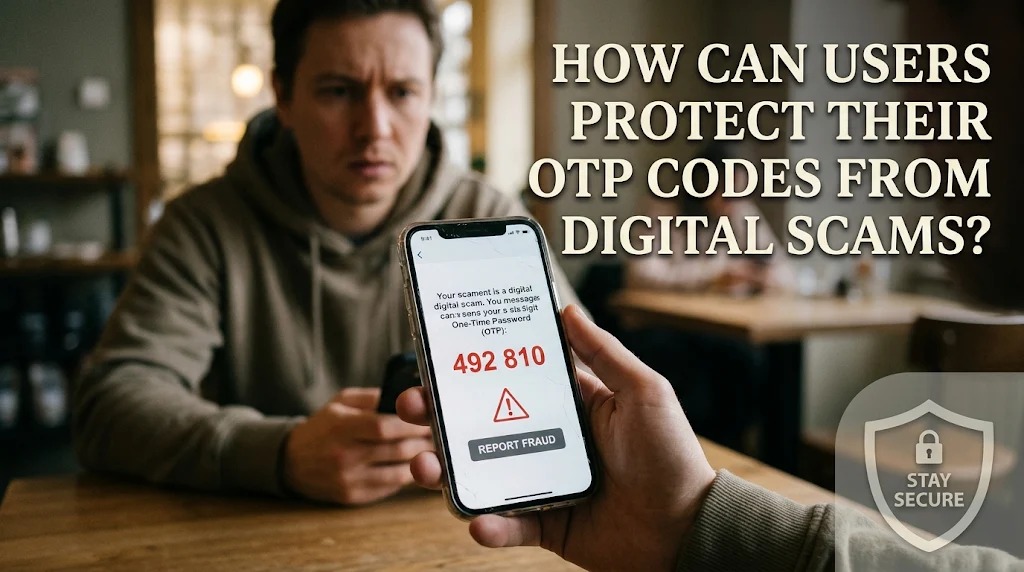
An OTP (One-Time Password) is an important security feature used to verify a person's identity when accessing digital accounts or completing online transactions. This temporary code is commonly delivered through SMS, email, or authenticator applications. Although OTP technology provides additional protection, cybercriminals increasingly use digital scams to trick users into revealing their verification codes.
Digital scams involving OTP codes can lead to serious consequences, including unauthorized account access, financial losses, identity theft, and the misuse of personal information. Many victims unknowingly share their codes because scammers pretend to be bank employees, customer service representatives, or trusted service providers. Therefore, understanding how to protect OTP codes is essential for maintaining digital security and preventing unauthorized activities.
UNDERSTANDING HOW OTP SCAMS WORK
OTP scams are fraudulent activities in which cybercriminals attempt to obtain temporary verification codes from unsuspecting users. These scams often involve social engineering techniques that manipulate people into sharing confidential information. Instead of directly breaking into an account, criminals exploit users' trust, fear, or lack of awareness about digital security.
One common method involves scammers sending fake messages that appear to come from banks, digital wallets, or popular online platforms. The messages may claim that an account has suspicious activity, that a transaction requires confirmation, or that the user's account will be suspended. Victims are then instructed to provide their OTP codes to resolve the supposed problem.
Another technique involves fraudulent phone calls in which criminals pretend to be official representatives. They may create a sense of urgency by claiming that someone is attempting to access the victim's account. When the victim receives an OTP message, the scammer asks them to read the code aloud. Once obtained, the code may be used to authorize account access or transactions.
NEVER SHARE YOUR OTP CODE WITH ANYONE
The most important way to protect an OTP code is to never share it with another person. Verification codes are confidential authentication information intended only for the account owner. Banks, legitimate digital platforms, and official customer support representatives should never ask users to disclose their active OTP codes through phone calls, messages, or social media conversations.
Scammers often use convincing language to make their requests appear legitimate. They may introduce themselves as bank employees, security officers, or technical support representatives. However, an official-looking identity does not guarantee that someone is trustworthy. Users should remain cautious whenever another person requests a verification code.
If someone asks for an OTP code, immediately stop the conversation and avoid providing any additional account information. Do not send screenshots of verification messages because they may contain sensitive details. Remember that an OTP code should remain private, even when the person requesting it claims to be helping resolve an account problem.
RECOGNIZE PHISHING MESSAGES AND SUSPICIOUS LINKS
Phishing is a common digital scam in which criminals impersonate trusted organizations to steal personal information. These attacks frequently use fake websites, emails, text messages, or social media accounts that resemble official communication channels. Their main objective is to persuade users to enter confidential information, including passwords and OTP codes.
For example, a victim may receive a message claiming that their digital banking account needs immediate verification. The message contains a link directing them to a website that looks similar to the bank's official page. After entering their login details and OTP code, the information may be collected by cybercriminals.
To avoid this type of attack, users should carefully examine the sender's identity, website address, and message content before taking action. Avoid clicking unfamiliar links or entering verification information on websites accessed through suspicious messages. Instead, open the official application or manually visit the service provider's verified website to check whether the notification is genuine.
USE STRONG PASSWORDS AND MULTI-FACTOR AUTHENTICATION
Protecting OTP codes should be part of a broader digital security strategy. Users should create strong and unique passwords for important accounts, especially online banking, email, digital wallets, and social media platforms. Reusing the same password across multiple services increases security risks because a breach on one platform may affect other accounts.
Another effective measure is enabling Multi-Factor Authentication (MFA) whenever available. This security method requires additional verification beyond a regular password, making unauthorized access more difficult. Depending on the platform, MFA may use authenticator applications, security keys, or other verification methods.
Authenticator applications can provide stronger protection against certain SMS-based attacks because they generate temporary codes directly on the user's device. However, no authentication method is completely immune to scams. Users should protect their smartphones, avoid installing suspicious applications, and keep account recovery information secure.
KEEP YOUR MOBILE DEVICE AND PERSONAL INFORMATION SECURE
A smartphone often stores important information, including verification messages, banking applications, email accounts, and personal documents. If someone gains unauthorized access to the device, they may obtain information that could be used to compromise digital accounts. Therefore, securing the mobile device is an important part of OTP protection.
Users should activate screen locks using strong PINs, passwords, fingerprints, or facial recognition when supported. They should also install operating system and application updates regularly because security updates help address known vulnerabilities. Downloading applications only from trusted sources can further reduce the risk of installing malicious software designed to steal sensitive information.
In addition, avoid sharing personal information publicly on social media. Details such as phone numbers, email addresses, and other identifying information may help scammers create more convincing fraudulent messages. Users should also be careful when connecting to unfamiliar public Wi-Fi networks, particularly when accessing sensitive accounts or conducting financial transactions.
TAKE IMMEDIATE ACTION WHEN AN OTP SCAM IS SUSPECTED
Recognizing a possible OTP scam early can help prevent further damage. If users receive an unexpected verification code without requesting it, they should never share the code or click links in related messages. This situation may indicate that someone is attempting to access an account using the user's phone number or login information.
If an OTP code has already been shared with another person, users should immediately secure the affected account. Change the account password through the official application or website, terminate unfamiliar active sessions if the feature is available, and review recent account activities. For financial accounts, contact the bank or digital wallet provider through its official customer service channel as soon as possible.
Users should also report suspicious messages, phone numbers, and fraudulent accounts to the relevant service provider. If unauthorized financial transactions have occurred, contact the financial institution immediately and follow its procedures for reporting fraud. Taking prompt action can reduce potential losses and prevent criminals from continuing to misuse compromised accounts.
CONCLUSION
Protecting OTP codes from digital scams requires awareness, caution, and consistent security practices. Users should never share verification codes, recognize suspicious messages, avoid unfamiliar links, and use strong passwords with additional authentication methods. Securing mobile devices and limiting the exposure of personal information can also reduce opportunities for cybercriminals.
Although OTP technology provides an additional layer of digital protection, its effectiveness depends partly on how responsibly users handle their verification information. By recognizing common scam techniques and responding quickly to suspicious activities, people can reduce the risk of identity theft, financial losses, and unauthorized account access.
Recent Posts

Bagaimana Sistem SKS pada Program Kuliah... 22.11.2026/35 View

How Does Technology Make Daily Evaluation... 21.11.2026/69 View

Apa Strategi Menghadapi Kesenjangan antara Kompetensi... 21.11.2026/69 View

Mengapa Inventaris Aset Penting bagi Kelancaran... 21.11.2026/67 View

When Should Musicians Join a Record... 21.11.2026/68 View
