

How Can Vehicle Restriction Policies Reduce Urban Traffic Congestion?
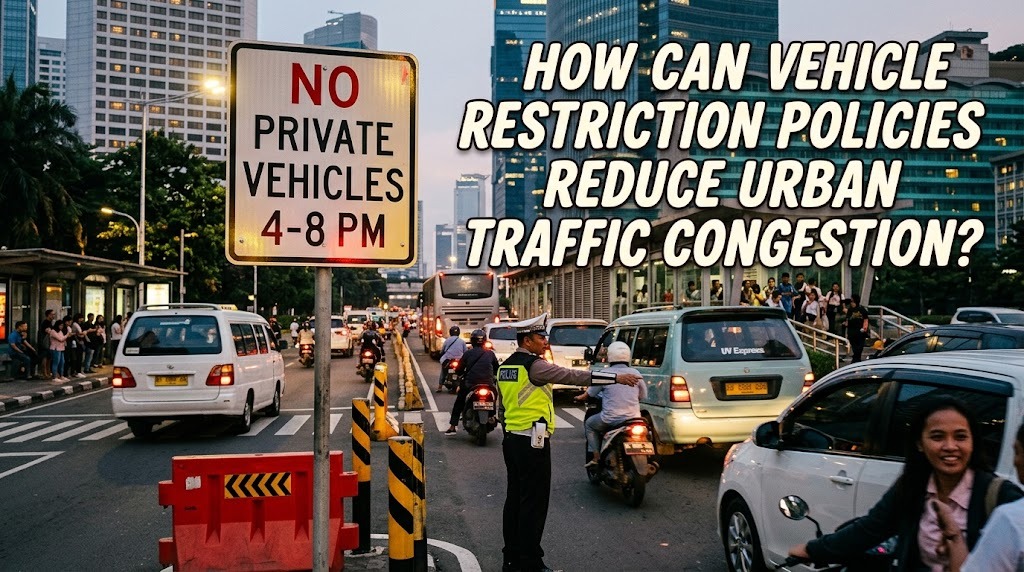
Urban traffic congestion is a serious challenge in many cities, particularly during morning and evening rush hours. The growing number of private cars and motorcycles places pressure on limited road space, causing longer travel times, increased fuel consumption, and higher air pollution. One approach to addressing this problem is implementing vehicle restriction policies that regulate when, where, or how certain vehicles can be used. These policies aim to reduce unnecessary vehicle trips, encourage alternative transportation, and improve traffic flow. When designed fairly and supported by reliable public transportation, vehicle restrictions can help cities manage congestion more effectively.
UNDERSTANDING VEHICLE RESTRICTION POLICIES
Vehicle restriction policies are regulations designed to control the number or types of vehicles using specific roads or areas. Governments may restrict vehicles according to license plate numbers, emission levels, vehicle size, or the time of day. Some cities limit access to busy downtown areas during peak hours, while others introduce charges for driving into congested zones. The purpose is to manage road demand and reduce pressure on transportation infrastructure without necessarily building additional roads.
Different cities use different approaches depending on their traffic conditions, public transportation networks, and environmental goals. For example, an area with severe rush-hour congestion may introduce time-based restrictions, while a city with serious air pollution may limit older, high-emission vehicles. However, restrictions must be clearly communicated and consistently enforced to avoid confusion. Authorities should also evaluate local travel patterns before choosing a policy. A well-designed restriction system focuses on reducing congestion while maintaining reasonable access to essential destinations.
REDUCING THE NUMBER OF VEHICLES DURING RUSH HOURS
One major benefit of vehicle restriction policies is their potential to reduce the number of vehicles traveling during the busiest periods. Rush-hour restrictions can encourage drivers to change their departure times, share vehicles, or use public transportation. When fewer vehicles enter crowded roads simultaneously, traffic flow may improve and journey times may become more predictable. These policies can be particularly useful near business districts, major intersections, and other locations with high travel demand.
Some cities use license plate-based restrictions that limit vehicle access on selected days or during particular hours. Other approaches include congestion pricing, which charges drivers for entering designated areas at specified times. These measures can reduce traffic when travelers have practical alternatives to driving. However, some people may respond by purchasing additional vehicles, changing routes to unrestricted streets, or shifting their journeys to other times. Governments must therefore monitor the results and adjust policies when restrictions simply move congestion elsewhere.
ENCOURAGING PUBLIC TRANSPORTATION AND SHARED MOBILITY
Vehicle restrictions are more effective when residents have convenient alternatives to private cars and motorcycles. Reliable public transportation allows commuters to reach workplaces, schools, and commercial areas without adding individual vehicles to congested roads. Governments should provide sufficient bus and train services, affordable fares, safe stations, and convenient connections between routes. If public transportation is overcrowded or unreliable, drivers may resist restrictions or face significant difficulties reaching their destinations.
Cities can also promote carpooling, cycling, and walking as alternatives for suitable journeys. Carpooling reduces the number of vehicles when several people share one trip, while safe bicycle lanes and sidewalks make short-distance travel more practical. Park-and-ride facilities can allow commuters to leave their vehicles outside congested areas and continue by bus or train. Employers may also support flexible working hours or remote work where appropriate. By combining restrictions with these alternatives, governments can reduce traffic demand while giving residents greater flexibility in choosing how to travel.
IMPROVING AIR QUALITY AND REDUCING ENVIRONMENTAL IMPACTS
Vehicle restriction policies can provide environmental benefits by reducing traffic volumes and limiting the use of highly polluting vehicles. When fewer vehicles travel through crowded areas, emissions may decrease, particularly if restrictions reduce unnecessary trips and stop-and-go driving. Low-emission zones can also encourage drivers and businesses to use cleaner vehicles that meet established environmental standards. These policies can help improve urban air quality when supported by effective monitoring and enforcement.
The environmental impact depends on how restrictions are designed and how people respond. If drivers simply divert to nearby streets, pollution may shift to other neighborhoods rather than decrease overall. Some restrictions may also encourage people to replace older vehicles with newer ones, but vehicle manufacturing and electricity generation can have environmental impacts of their own. Governments should evaluate changes in traffic volumes, air pollution, and travel behavior instead of assuming that every restriction automatically improves the environment. Combining vehicle policies with cleaner public transportation and active travel can produce more sustainable results.
ENSURING FAIRNESS AND EFFECTIVE ENFORCEMENT
Although vehicle restrictions can reduce congestion, they may create difficulties for people who depend on private vehicles. Workers with unusual schedules, residents with disabilities, emergency services, and people living in areas with limited public transportation may have fewer alternatives. Fair vehicle restriction policies should consider these differences and provide appropriate exemptions or support where justified. Authorities should consult communities and assess the likely effects on different income groups before implementing major restrictions.
Effective enforcement is also essential for achieving the intended results. Cities can use cameras, digital permits, license plate recognition, or authorized inspections to monitor compliance, depending on local laws and available resources. Rules, restricted areas, operating hours, fees, and penalties should be communicated clearly to the public. Enforcement systems must protect personal information and provide a fair process for challenging errors or penalties. Regular evaluation can help authorities identify problems, reduce unnecessary burdens, and improve public confidence in the policy.
DEVELOPING LONG-TERM TRAFFIC MANAGEMENT STRATEGIES
Vehicle restrictions should form part of a broader urban traffic management strategy rather than operate as an isolated measure. Governments need to coordinate transportation planning, parking management, land use, public transportation investment, and road safety initiatives. For example, restricting vehicles in a business district may work better when the area is connected to reliable bus routes and safe pedestrian facilities. Mixed-use neighborhoods can also reduce the need for long daily journeys by bringing homes, workplaces, and essential services closer together.
Authorities should assess the effectiveness of restrictions using measurable indicators. These may include average travel time, traffic volume, public transportation ridership, vehicle emissions, road safety, and access to essential services. Pilot programs can help cities understand how drivers respond before introducing permanent rules. Public feedback is also valuable because residents and businesses can identify unexpected consequences that traffic data alone may not reveal. Through continuous monitoring and adjustments, cities can develop policies that reduce congestion while supporting economic activity and everyday mobility.
CONCLUSION
Vehicle restriction policies can help reduce urban traffic congestion by controlling vehicle access, managing rush-hour demand, and encouraging people to use alternative transportation. Measures such as congestion pricing, license plate restrictions, and low-emission zones may improve traffic conditions when they are carefully designed and enforced. However, these policies are unlikely to succeed fairly without reliable public transportation, safe walking and cycling facilities, and appropriate support for people with limited travel options. Governments should evaluate traffic, environmental, and social outcomes regularly to ensure that restrictions achieve their intended goals. By combining vehicle controls with long-term urban planning, cities can build more efficient, accessible, and sustainable transportation systems.
Recent Posts

Bagaimana Sistem SKS pada Program Kuliah... 22.11.2026/54 View

How Does Technology Make Daily Evaluation... 21.11.2026/83 View

Apa Strategi Menghadapi Kesenjangan antara Kompetensi... 21.11.2026/81 View

Mengapa Inventaris Aset Penting bagi Kelancaran... 21.11.2026/78 View

When Should Musicians Join a Record... 21.11.2026/83 View
