

How Can Vice Principals Adapt to Curriculum Changes and Educational Technology?
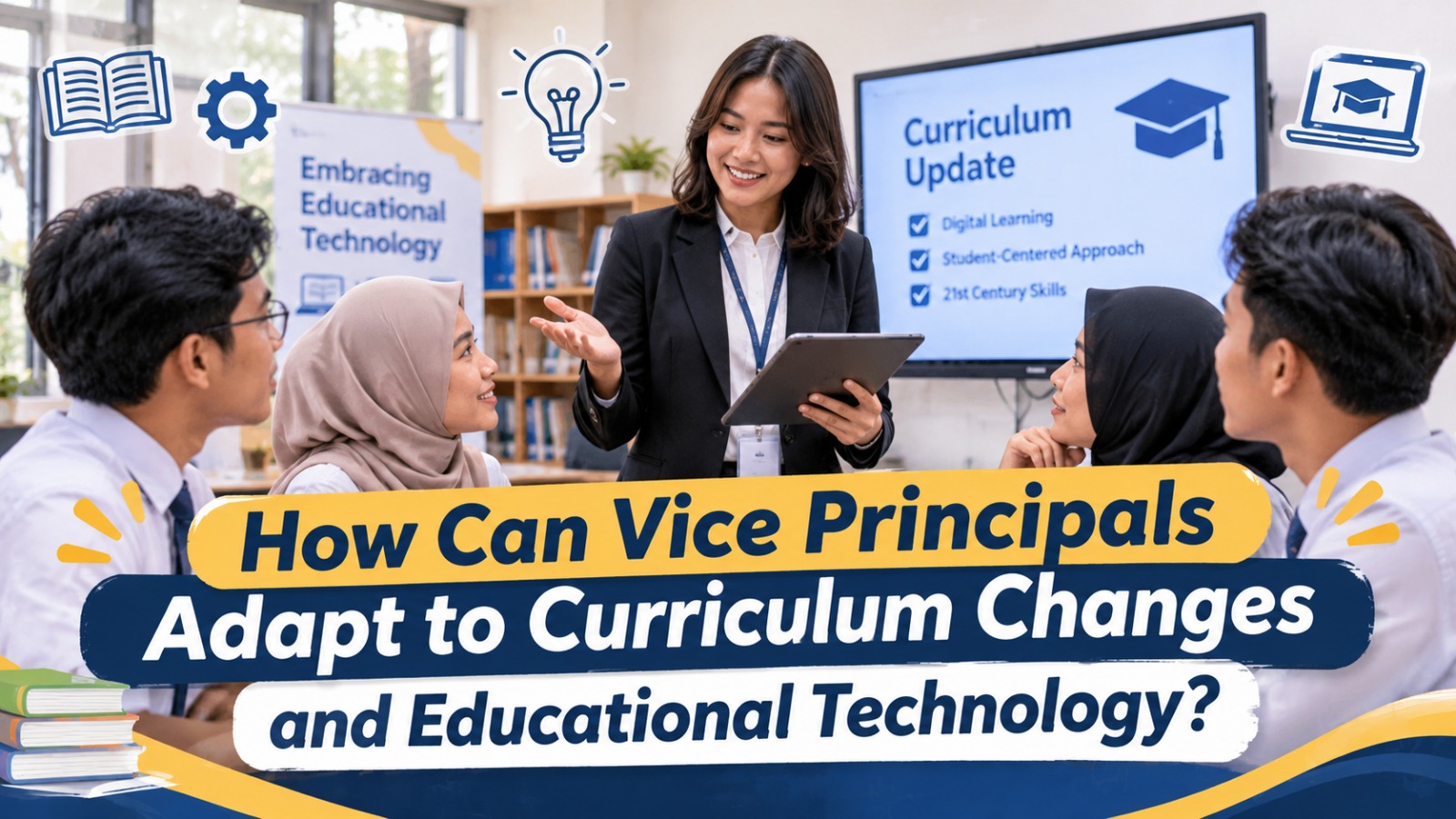
Education continues to develop as new curriculum policies, teaching methods, and digital technologies influence the learning process. Schools need to adjust their educational programs to ensure that students receive relevant knowledge and skills. In this situation, vice principals have an important responsibility in helping teachers and school staff adapt to educational changes. They need to understand new curriculum requirements, support professional development, and encourage the effective use of technology in classrooms. Through continuous learning, effective communication, and proper planning, vice principals can help schools maintain educational quality and prepare students for future challenges.
UNDERSTANDING AND FOLLOWING CURRICULUM CHANGES
One of the first steps a vice principal must take is understanding changes in the national curriculum and educational policies. Curriculum updates may introduce new learning objectives, teaching approaches, assessment methods, and competency standards. A vice principal needs to study these changes carefully to understand how they affect school activities and teaching responsibilities. Understanding curriculum policies helps school leaders ensure that educational programs remain aligned with applicable government requirements.
Furthermore, a vice principal should communicate curriculum changes clearly to teachers and school staff. Teachers need sufficient information to adjust lesson plans, learning materials, and classroom strategies. Regular meetings and discussions can help identify difficulties that may occur during curriculum implementation. The vice principal can also coordinate with relevant educational authorities to obtain accurate guidance and information. With proper understanding and communication, schools can implement curriculum changes more effectively.
SUPPORTING TEACHER TRAINING AND PROFESSIONAL DEVELOPMENT
Teachers play a central role in implementing curriculum changes, so they need continuous professional development. A vice principal should encourage teachers to participate in training programs, educational workshops, seminars, and professional learning activities. These opportunities help teachers understand updated curriculum requirements and develop teaching methods that match students' learning needs. Professional development also allows teachers to improve their classroom management and assessment skills.
In addition, a vice principal can encourage teachers to share knowledge and experiences through internal discussions and collaborative learning activities. Experienced teachers can provide practical guidance to colleagues who are still adapting to new educational approaches. School leaders can also arrange mentoring programs to help teachers overcome difficulties in preparing learning materials or conducting assessments. Continuous professional development ensures that teachers remain prepared to respond to educational changes. As a result, students can receive better learning experiences from competent and confident educators.
IMPLEMENTING EDUCATIONAL TECHNOLOGY IN CLASSROOM ACTIVITIES
Educational technology has become an important tool for supporting modern teaching and learning. A vice principal can encourage teachers to use digital learning platforms, educational applications, online resources, and interactive media to make lessons more engaging. For example, teachers can use digital presentations, educational videos, virtual simulations, and online quizzes to explain difficult concepts. These tools can help students understand information through different learning experiences.
However, technology should be selected based on educational objectives rather than simply following technological trends. A vice principal needs to ensure that teachers understand how to use digital tools effectively and that students have appropriate access to learning resources. Schools should also consider internet availability, device limitations, and students' digital skills. Training and technical assistance may be necessary to help teachers use technology confidently. With proper implementation, digital tools can improve classroom interaction, support independent learning, and expand access to educational information.
DEVELOPING FLEXIBLE AND STUDENT-CENTERED LEARNING METHODS
Curriculum changes often require schools to move beyond traditional teaching approaches and provide more opportunities for active student participation. A vice principal can encourage teachers to apply student-centered learning methods that consider students' abilities, interests, and learning needs. These methods may include project-based learning, group discussions, problem-solving activities, practical assignments, and independent research. Students become more actively involved because they are encouraged to explore information and develop their own understanding.
Furthermore, flexible learning methods allow teachers to accommodate different learning abilities and educational backgrounds. Some students may understand lessons through visual materials, while others learn more effectively through practical activities or discussions. A vice principal can support teachers in selecting appropriate methods and evaluating their effectiveness. Schools can also connect classroom learning with real-life situations to help students understand how knowledge is applied outside school. Through flexible teaching strategies, students can develop critical thinking, creativity, communication, and problem-solving skills.
MONITORING CURRICULUM IMPLEMENTATION AND TECHNOLOGY EFFECTIVENESS
Adapting to educational changes requires regular monitoring to determine whether new programs are working effectively. A vice principal can supervise classroom activities, review lesson plans, and examine student assessment results. Curriculum implementation evaluation helps identify whether teachers have followed educational guidelines and achieved the expected learning objectives. It also provides information about challenges that may require additional support.
Technology implementation should also be evaluated to ensure that digital tools provide meaningful educational benefits. For example, a vice principal can collect feedback from teachers and students about the usefulness of online learning platforms and digital assignments. If certain tools create difficulties or do not improve student understanding, schools may need to consider alternative solutions. The results of these evaluations can guide future improvements in teaching strategies, technology selection, and teacher training. Continuous monitoring helps schools avoid implementing changes without understanding their actual impact.
STRENGTHENING COLLABORATION AND PREPARING SCHOOLS FOR FUTURE CHANGES
Successful adaptation requires cooperation between school leaders, teachers, students, parents, and educational institutions. A vice principal should establish strong communication and collaboration to ensure that everyone understands the purpose of curriculum and technological changes. Teachers can share classroom experiences, while parents can provide feedback about students' learning needs and difficulties. Cooperation with other educational institutions can also create opportunities for training, knowledge exchange, and access to innovative learning resources.
Moreover, a vice principal needs to encourage a school culture that welcomes improvement and continuous learning. Educational developments may introduce new technologies, digital assessment systems, and changing competency requirements. Schools should be prepared to evaluate these developments and determine which innovations are appropriate for their educational goals. Students also need guidance in developing digital literacy, critical thinking, creativity, and responsible technology use. By building a flexible and collaborative school environment, vice principals can help educational institutions respond more effectively to future changes.
CONCLUSION
Vice principals can adapt to curriculum changes and educational technology by understanding new educational policies, supporting teacher development, and encouraging the effective use of digital learning tools. They also need to promote flexible teaching methods, monitor curriculum implementation, and evaluate the effectiveness of educational technology. These responsibilities help ensure that schools remain responsive to developments in modern education.
Successful adaptation requires continuous learning, effective leadership, collaboration, and openness to innovation. A vice principal should not only introduce new programs but also ensure that teachers and students receive the guidance and resources needed to use them effectively. Through proper planning and continuous improvement, schools can maintain educational quality, strengthen students' competencies, and prepare them to face future challenges.
Recent Posts

Bagaimana Sistem SKS pada Program Kuliah... 22.11.2026/12 View

How Does Technology Make Daily Evaluation... 21.11.2026/63 View

Apa Strategi Menghadapi Kesenjangan antara Kompetensi... 21.11.2026/64 View

Mengapa Inventaris Aset Penting bagi Kelancaran... 21.11.2026/61 View

When Should Musicians Join a Record... 21.11.2026/59 View
