

How Can Village Governments Support Tourism Awareness Groups and Their Programs?
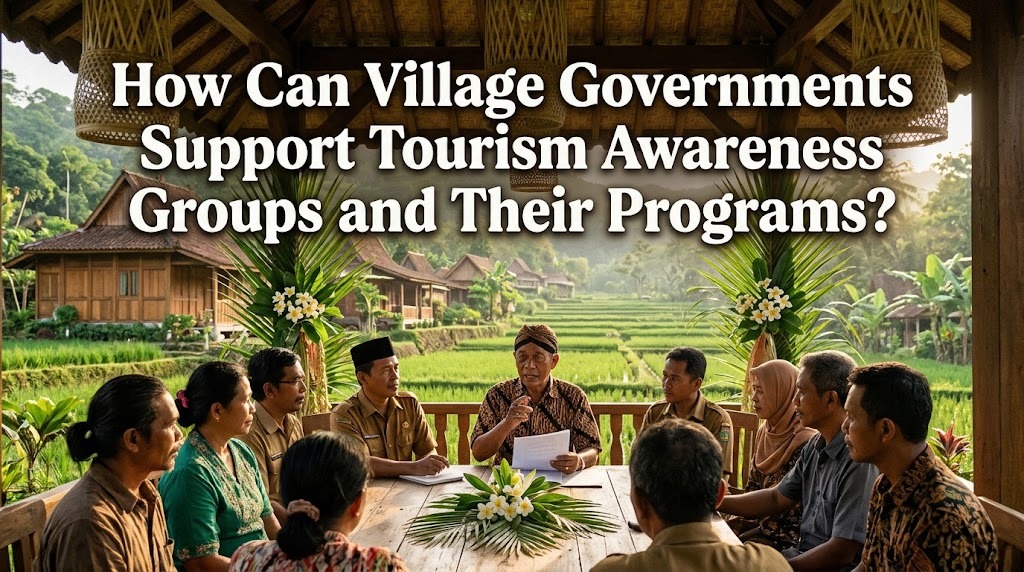
Village tourism has significant potential to improve local economic development, create employment opportunities, and introduce cultural heritage to wider communities. However, developing a successful tourism destination requires more than attractive natural resources and community enthusiasm. Tourism groups also need proper facilities, financial support, effective management, and cooperation with different stakeholders. Village governments play an important role in providing the support needed by Village Tourism Awareness Groups, commonly known as Pokdarwis in Indonesia. Through appropriate policies, funding, training, and infrastructure development, village governments can help tourism groups manage their programs more effectively and create sustainable benefits for local communities.
PROVIDING FINANCIAL SUPPORT FOR TOURISM PROGRAMS
One of the most important forms of support village governments can provide is financial assistance. Tourism groups often need funding to organize activities, improve facilities, promote destinations, and maintain existing tourism attractions. However, limited financial resources can prevent them from implementing development programs effectively. Village governments can help by allocating appropriate funding through village development planning and budgeting processes. Financial assistance should be based on clear priorities and realistic community needs.
In addition, financial support should be managed transparently and accountably. Tourism groups need to prepare activity proposals, detailed budgets, and financial reports to explain how funds will be used. Village governments can monitor expenditures and evaluate whether funded programs achieve their intended objectives. They can also help tourism groups identify other funding opportunities through government programs, partnerships, and community-based initiatives. With proper financial management, available resources can support tourism development more effectively.
DEVELOPING TOURISM FACILITIES AND INFRASTRUCTURE
Adequate infrastructure is essential for creating comfortable and accessible tourism destinations. Village governments can support tourism groups by improving roads, parking areas, public toilets, waste disposal facilities, drainage systems, and public spaces. These facilities make it easier for visitors to explore local attractions and enjoy their trips. Good infrastructure also supports the daily activities of residents and improves the overall appearance of the village. Therefore, infrastructure development should become an important part of village tourism planning.
Village governments should coordinate with tourism groups to determine which facilities need the most attention. Development priorities should consider visitor needs, environmental conditions, available budgets, and community expectations. Simple improvements, such as installing direction signs, providing seating areas, and maintaining public facilities, can also produce positive results. Regular maintenance is equally important because damaged or poorly maintained infrastructure can reduce visitor satisfaction. Through cooperation, village governments and tourism groups can create more attractive and accessible destinations.
PROVIDING TRAINING AND DEVELOPING HUMAN RESOURCES
The quality of tourism management depends greatly on the knowledge and skills of the people involved. Village governments can support tourism groups by organizing training programs related to hospitality, communication, destination management, financial administration, and digital marketing. These skills help members manage tourism activities professionally and provide better services to visitors. Training can also improve their ability to solve problems and respond to changing tourism trends. As a result, tourism groups become better prepared to manage their destinations independently.
Furthermore, village governments can cooperate with regional tourism offices, universities, and professional organizations to provide specialized training. Members may participate in workshops, mentoring programs, and practical tourism activities. Young residents can receive opportunities to develop skills in photography, video production, and social media promotion. Meanwhile, other community members can learn about local product development and business management. Continuous human resource development helps strengthen tourism organizations and improves the long-term quality of village tourism services.
ESTABLISHING SUPPORTIVE POLICIES AND REGULATIONS
Village governments can strengthen tourism development by establishing clear policies and regulations that support tourism groups. These policies can define organizational responsibilities, management procedures, tourism development priorities, and cooperation mechanisms. Clear regulations help prevent confusion about the roles of tourism groups, village officials, and other stakeholders. They also provide a stronger foundation for implementing tourism programs consistently. Supportive policies can make tourism development more organized and sustainable.
In addition, village governments should involve tourism groups and local residents when preparing tourism-related regulations. Community participation helps ensure that policies reflect local needs, cultural values, and environmental conditions. Regulations may also address visitor safety, destination cleanliness, cultural preservation, and the responsible use of tourism facilities. Village governments should review these policies regularly to ensure that they remain relevant. Through fair and transparent regulations, tourism groups can carry out their responsibilities with greater confidence.
STRENGTHENING PARTNERSHIPS WITH LOCAL BUSINESSES AND OTHER STAKEHOLDERS
Tourism development requires cooperation among various economic and social groups. Village governments can help tourism groups establish partnerships with local businesses, educational institutions, travel organizations, and regional tourism authorities. These partnerships can provide additional resources, knowledge, promotional opportunities, and business connections. For example, local restaurants, homestays, craft producers, and transportation providers can become part of integrated tourism services. This cooperation helps create more complete visitor experiences while increasing opportunities for local businesses.
Village governments can also facilitate meetings and networking activities to connect tourism groups with potential partners. Cooperation with universities may support research, training, and community development programs. Meanwhile, partnerships with travel agencies can help introduce village destinations through organized tour packages. Government support is important because some tourism groups may not have sufficient experience or networks to establish these relationships independently. Strong partnerships can expand tourism opportunities and distribute economic benefits more widely.
MONITORING AND EVALUATING TOURISM DEVELOPMENT PROGRAMS
Monitoring and evaluation are necessary to ensure that tourism programs achieve their objectives. Village governments can work with tourism groups to review program implementation, financial management, visitor satisfaction, and community participation. These evaluations help identify successful activities and programs that require improvement. They also provide information about whether tourism development is producing positive economic, social, and environmental impacts. Regular monitoring encourages organizations to remain responsible and focused on their objectives.
Furthermore, evaluation should involve local residents and other stakeholders who are directly affected by tourism activities. Their feedback can reveal problems that may not be visible through financial reports or visitor statistics alone. Village governments can use this information to adjust budgets, improve facilities, and establish better development priorities. The results should also be communicated transparently to maintain public trust. Through consistent monitoring and evaluation, village governments can ensure that tourism groups receive appropriate support and that development programs provide long-term benefits.
CONCLUSION
Village governments can support Tourism Awareness Groups through financial assistance, infrastructure development, human resource training, supportive regulations, stronger partnerships, and regular program evaluation. These forms of support help tourism groups improve their management capabilities and develop local attractions more effectively. However, successful tourism development requires continuous cooperation between government institutions, community organizations, local businesses, and residents. Support should also be provided transparently and according to actual village needs. With proper planning and strong collaboration, village governments can help Tourism Awareness Groups develop sustainable destinations that preserve local culture, strengthen the economy, and improve community welfare.
Recent Posts

Bagaimana Sistem SKS pada Program Kuliah... 22.11.2026/37 View

How Does Technology Make Daily Evaluation... 21.11.2026/70 View

Apa Strategi Menghadapi Kesenjangan antara Kompetensi... 21.11.2026/73 View

Mengapa Inventaris Aset Penting bagi Kelancaran... 21.11.2026/68 View

When Should Musicians Join a Record... 21.11.2026/71 View
