

How Can Village Tourism Awareness Groups Evaluate Their Tourism Development Programs?
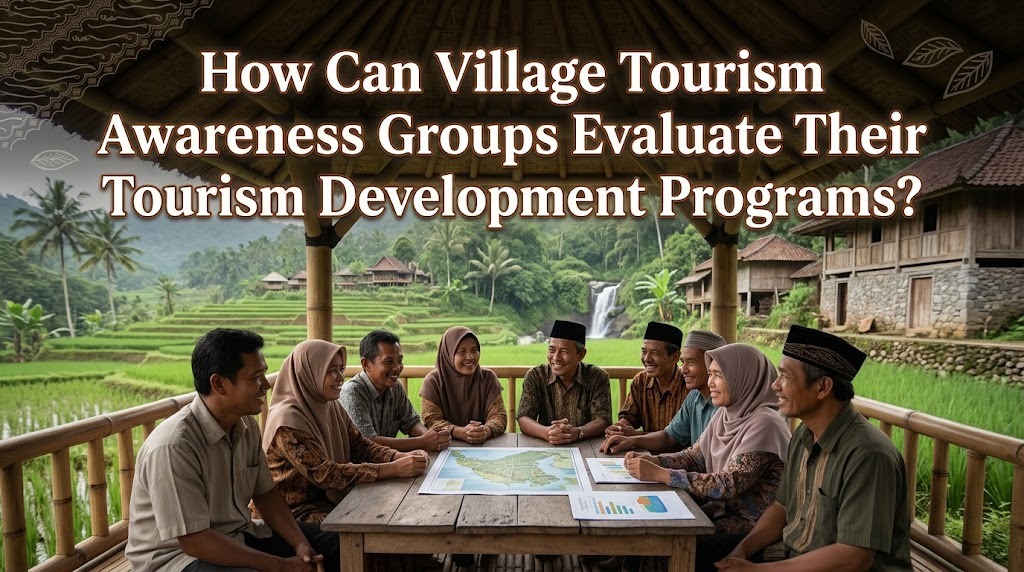
Village tourism development requires careful planning, effective management, and continuous evaluation to achieve long-term success. Village Tourism Awareness Groups, commonly known as Pokdarwis in Indonesia, play an important role in managing local attractions, organizing tourism activities, and encouraging community participation. However, implementing tourism programs is not enough to guarantee positive results. Groups need to understand whether their activities achieve their objectives, provide economic benefits, and improve the quality of tourism destinations. Program evaluation helps identify achievements, weaknesses, and opportunities for improvement so that village tourism can develop more effectively and sustainably.
ESTABLISHING CLEAR OBJECTIVES AND EVALUATION INDICATORS
The first step in evaluating tourism development programs is establishing clear objectives. Village Tourism Awareness Groups need to understand what they want to achieve through each activity, such as increasing visitor numbers, improving destination facilities, promoting local products, or strengthening community participation. Clear objectives provide direction for evaluating whether a program has produced the expected results. Without specific targets, it becomes difficult to determine whether tourism activities are successful. Therefore, every program should have realistic goals that match the village's resources and development priorities.
In addition, tourism groups should establish measurable indicators to assess program performance. These indicators may include visitor numbers, tourism income, community involvement, facility conditions, visitor satisfaction, and environmental quality. For example, a promotional program can be evaluated by examining online engagement and the number of visitors who discover the destination through digital platforms. Meanwhile, a community training program can be assessed by reviewing participants' skills and their involvement in tourism activities. Appropriate indicators help groups collect relevant information and make more objective evaluations.
MONITORING VISITOR NUMBERS AND TOURIST SATISFACTION
Visitor statistics provide important information about the performance of village tourism programs. Tourism groups can record the number of visitors who arrive daily, weekly, or monthly to understand changes in tourism demand. They can also compare visitor numbers before and after implementing promotional campaigns, events, or facility improvements. This information helps identify which activities attract public interest and which periods experience higher visitor demand. Accurate records also support better planning for tourism services and facilities.
However, visitor numbers alone cannot determine whether a destination provides a good tourism experience. Village Tourism Awareness Groups should also collect feedback about cleanliness, accessibility, facilities, hospitality, safety, and available activities. Visitor surveys, suggestion forms, online reviews, and direct conversations can provide useful information. Positive feedback can identify existing strengths, while complaints can reveal areas that require improvement. By understanding visitor satisfaction, tourism groups can improve service quality and encourage tourists to recommend the destination to others.
EVALUATING ECONOMIC BENEFITS FOR LOCAL COMMUNITIES
One important objective of village tourism development is improving the economic welfare of local residents. Therefore, tourism groups need to evaluate whether their programs create additional income and business opportunities. They can collect information about tourism revenue, local product sales, business growth, and employment opportunities. For example, an increase in visitors may create higher demand for traditional food, handicrafts, accommodation, and transportation services. These changes can indicate whether tourism activities are contributing to the local economy.
Furthermore, evaluation should examine how tourism benefits are distributed among community members. Tourism development should provide opportunities for different groups, including young people, women, farmers, craftspeople, and small business owners. If economic benefits are concentrated among only a few individuals, tourism groups may need to improve their participation and cooperation strategies. They should also examine whether tourism income is being used appropriately to maintain facilities and support community programs. This evaluation helps ensure that tourism development contributes to broader economic welfare rather than benefiting only a limited number of people.
ASSESSING COMMUNITY PARTICIPATION AND ORGANIZATIONAL PERFORMANCE
Community participation is another important indicator of successful tourism development. Village Tourism Awareness Groups should evaluate how actively residents participate in planning, implementing, and maintaining tourism programs. They can examine attendance at meetings, involvement in community activities, participation in tourism businesses, and contributions to destination maintenance. These indicators help determine whether residents feel included in tourism development. Strong participation usually reflects greater community awareness and shared responsibility.
Organizational performance should also be evaluated regularly. Tourism groups need to review the effectiveness of their leadership, communication, financial management, task distribution, and cooperation with stakeholders. Members can discuss whether responsibilities are being carried out properly and whether organizational problems are affecting program implementation. Regular meetings and internal reports can help identify difficulties before they become more serious. By improving organizational performance, tourism groups can manage their programs more professionally and maintain community trust.
MONITORING ENVIRONMENTAL AND CULTURAL IMPACTS
Tourism development should protect the natural environment and cultural heritage that make village destinations attractive. Tourism groups need to evaluate environmental conditions by observing waste management, water quality, cleanliness, vegetation, and the condition of natural attractions. They should also examine whether visitor activities create pollution, damage public facilities, or disturb local ecosystems. These observations help identify environmental risks and determine whether additional conservation measures are necessary. Maintaining environmental quality is essential for sustainable tourism development.
Cultural impacts also require careful attention. Tourism groups should evaluate whether tourism activities support traditional arts, local customs, historical preservation, and cultural education. They need to ensure that cultural performances and tourism experiences respect the original meaning of local traditions. Discussions with traditional leaders and community members can provide valuable information about potential cultural concerns. If certain activities create negative effects, tourism groups should adjust their programs accordingly. Protecting cultural authenticity helps maintain the village's identity while allowing tourism to develop responsibly.
PREPARING EVALUATION REPORTS AND IMPROVING FUTURE PROGRAMS
After collecting relevant information, Village Tourism Awareness Groups should prepare clear evaluation reports. These reports can summarize program objectives, activities, achievements, financial information, visitor feedback, and problems encountered during implementation. Including measurable results makes it easier to understand whether each program has achieved its targets. Reports should also explain the reasons behind successful activities and unsuccessful outcomes. Clear documentation provides a useful reference for future planning and organizational development.
Furthermore, evaluation results should be used to improve upcoming tourism programs. Groups can prioritize activities that produce positive results, revise programs that do not meet expectations, and develop new initiatives based on community needs. They should also communicate findings to village governments, local businesses, and residents to encourage shared responsibility. Regular follow-up is important to ensure that recommendations are actually implemented. Through consistent reporting and improvement, tourism groups can strengthen their management capabilities and develop more effective long-term strategies.
CONCLUSION
Village Tourism Awareness Groups can evaluate their tourism development programs by establishing clear objectives, monitoring visitor numbers, measuring economic benefits, assessing community participation, and examining environmental and cultural impacts. Preparing transparent reports and using evaluation results to improve future activities are equally important. These processes help groups understand their achievements, identify weaknesses, and make better development decisions. Evaluation should not be viewed merely as an administrative requirement but as an essential part of sustainable tourism management. With continuous monitoring and community cooperation, village tourism programs can become more effective, beneficial, and sustainable for future generations.
Recent Posts

Bagaimana Sistem SKS pada Program Kuliah... 22.11.2026/37 View

How Does Technology Make Daily Evaluation... 21.11.2026/70 View

Apa Strategi Menghadapi Kesenjangan antara Kompetensi... 21.11.2026/73 View

Mengapa Inventaris Aset Penting bagi Kelancaran... 21.11.2026/68 View

When Should Musicians Join a Record... 21.11.2026/71 View
