

How Can Vocational Curriculum Be Aligned With Rapid Industry Demands?
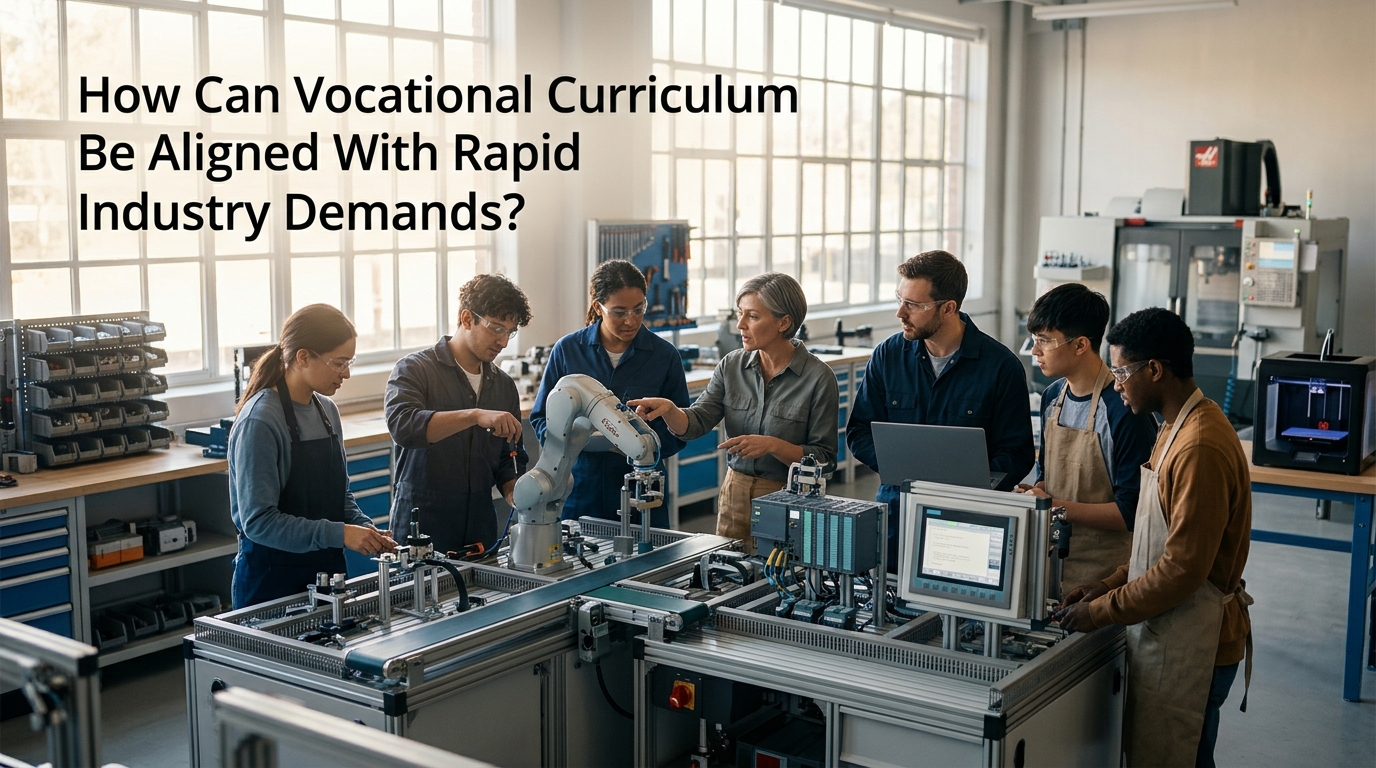
The rapid evolution of modern technology has created an urgent need for educational systems to adapt quickly. Ensuring that a vocational curriculum stays updated with changing workplace requirements is essential for long-term economic growth. Educational institutions must bridge the gap between academic theory and practical execution to support industry demands. By fostering active partnerships with leading companies, schools can continuously refine their teaching frameworks. This article explores effective strategies for aligning vocational education with modern market trends to produce highly qualified, job-ready professionals.
CONDUCTING REGULAR MARKET RESEARCH AND SKILLS GAP ANALYSIS
To keep learning materials relevant, vocational institutions must continuously conduct market research to identify emerging technical requirements. Analyzing regional and global employment trends helps educators spot shifting technological needs before curricula become outdated. Through comprehensive surveys and interviews with corporate leaders, schools gain valuable insights into necessary workplace competencies.
This systematic approach ensures that every module directly addresses current skill shortages in the market. Identifying these critical gaps allows academic directors to eliminate obsolete subjects and introduce updated coursework promptly. Consequently, students receive training that directly reflects immediate hiring priorities across various sectors.
ESTABLISHING DIRECT PARTNERSHIPS WITH INDUSTRY LEADERS
Building strong corporate collaborations is one of the most effective ways to align coursework with real-world practices. Establishing an active industry partnership allows company executives to participate directly in curriculum design and review processes. Business leaders can offer expert feedback on course materials, equipment standards, and practical assessment criteria.
Furthermore, these valuable connections often lead to guest lectures, teacher training programs, and direct equipment donations from corporate sponsors. Joint committees between educators and industry experts guarantee that training facilities match modern workplace environments. This ongoing synergy ensures that academic programs stay perfectly synchronized with technological advancements.
EMBEDDING HANDS ON INTERNSHIPS AND WORKPLACE TRAINING
Theoretical knowledge alone is insufficient without extensive practical exposure in professional environments. Integrating a mandatory industry internship into the curriculum gives students direct access to modern tools, workflows, and company culture. Experiencing daily operations firsthand accelerates the mastery of essential workplace techniques.
On-the-job training also nurtures critical soft skills such as teamwork, time management, and professional communication. Students learn how to navigate real work pressures while applying classroom theories to complex projects. This immersive experience significantly builds confidence and prepares graduates for immediate employment upon graduation.
INTEGRATING INTERNATIONAL COMPETENCY CERTIFICATION INTO COURSES
To guarantee high skill standards, educational programs should embed recognized competency certification tests into their core modules. Earning credentials from independent professional bodies proves that a student's technical abilities meet established global benchmarks. This verification process adds measurable value to a student's academic record during career searches.
Holding verified industry credentials reassures employers that job candidates possess tested, up-to-date practical abilities. It transforms standard academic degrees into actionable, industry-backed qualifications that stand out in competitive job markets. As a result, certified graduates enjoy better career mobility and higher employment rates.
FOSTERING ADAPTABILITY AND CONTINUOUS CURRICULAR UPDATES
Industry trends change rapidly, making modular curriculum structures necessary for quick academic adjustments. Educational frameworks should be flexible enough to incorporate short courses on emerging technologies without redesigning entire degree tracks. Teaching students to adopt a mindset of lifelong learning ensures they remain competitive throughout their professional journeys.
Encouraging continuous self-improvement helps workers adapt smoothly as automation and digital tools evolve. Flexible educational pathways allow professionals to upskill regularly whenever market expectations shift. This proactive adaptability protects graduates from skill obsolescence in an increasingly dynamic global economy.
CONCLUSION
Aligning a vocational curriculum with rapid industry demands requires a dynamic combination of market research, direct industry partnership programs, hands-on industry internship opportunities, and recognized competency certification. By remaining flexible and emphasizing lifelong learning, vocational education can consistently produce job-ready graduates who excel in evolving modern careers
Recent Posts

Bagaimana Sistem SKS pada Program Kuliah... 22.11.2026/54 View

How Does Technology Make Daily Evaluation... 21.11.2026/83 View

Apa Strategi Menghadapi Kesenjangan antara Kompetensi... 21.11.2026/82 View

Mengapa Inventaris Aset Penting bagi Kelancaran... 21.11.2026/78 View

When Should Musicians Join a Record... 21.11.2026/84 View
