

How Can Waste Management Help Address Climate Change?
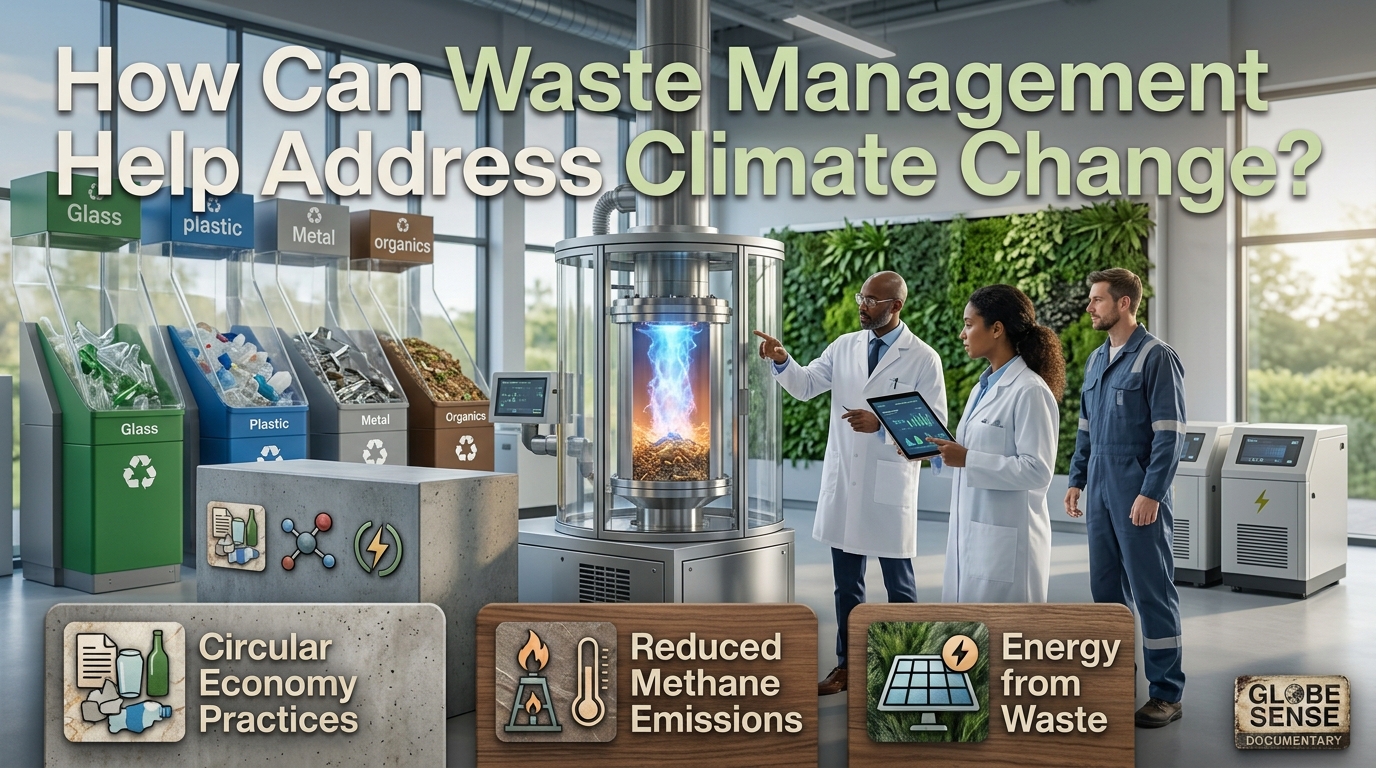
Waste management plays an important role in addressing climate change by reducing greenhouse gas emissions, conserving natural resources, and preventing pollution. Every day, households, businesses, and industries produce waste that must be collected, processed, recycled, or disposed of. When waste is handled improperly, it can release harmful gases, waste valuable materials, and damage the environment.
Effective waste management offers practical ways to reduce these impacts. Strategies such as recycling, composting, waste reduction, and methane capture can lower emissions while supporting a more sustainable economy. By improving how waste is managed, communities can reduce their environmental footprint and help limit global warming. Understanding these connections is an important step toward creating cleaner and more climate-friendly communities.
THE CONNECTION BETWEEN WASTE MANAGEMENT AND CLIMATE CHANGE
Waste management affects climate change mainly through the greenhouse gases released when waste is produced, transported, processed, and disposed of. Methane is a major concern because it forms when organic materials, such as food scraps and garden waste, decompose without enough oxygen in landfills. Methane traps significantly more heat than carbon dioxide over a 100-year period, although it remains in the atmosphere for a shorter time. Waste incineration can also release carbon dioxide, especially when materials containing fossil-based plastics are burned. These emissions make responsible waste management an important part of climate action.
Waste also contributes to emissions before it reaches a disposal facility. Manufacturing products requires energy and raw materials, while transporting and processing them can create additional greenhouse gases. When reusable or recyclable materials are discarded, new resources often need to be extracted and processed to replace them. Reducing waste at its source can therefore prevent emissions at several stages of a product's life cycle. A well-designed waste management system considers both disposal impacts and the environmental costs of producing replacement materials.
REDUCING METHANE EMISSIONS FROM LANDFILLS
Landfills are a significant source of methane when organic waste breaks down under oxygen-poor conditions. Food scraps, paper, wood, and garden waste can release methane as microorganisms decompose them. If this gas escapes into the atmosphere, it contributes to global warming. Some landfills collect methane through gas recovery systems and use it to generate electricity or heat, or they burn it in a controlled process called flaring. Capturing landfill methane can reduce climate impacts, although collection systems do not capture every emission.
Preventing organic waste from reaching landfills is another effective strategy. Communities can separate food scraps and garden waste for composting or other suitable biological treatment methods. Landfill operators can improve gas collection systems, monitor leaks, and manage waste disposal practices more carefully. These measures work best when combined with policies that reduce the amount of biodegradable waste sent to landfills. Preventing methane emissions before they occur is an important part of a comprehensive climate strategy.
HOW RECYCLING HELPS REDUCE CARBON EMISSIONS
Recycling helps address climate change by turning used materials into resources for new products. Producing goods from recycled aluminum, steel, glass, paper, and certain plastics can reduce the need for virgin raw materials. In many cases, this requires less energy than extracting, refining, and processing new resources. Lower energy demand can reduce greenhouse gas emissions, especially when the energy system relies on fossil fuels. Recycling can also reduce the volume of waste sent to landfills or incinerators.
However, recycling does not eliminate all environmental impacts. Collection, transportation, sorting, and processing require energy, and some materials cannot be recycled efficiently because they are contaminated or difficult to separate. Proper waste sorting helps improve the quality of recyclable materials and reduces contamination. Residents can support recycling by following local collection guidelines and choosing products with recyclable packaging where practical. Recycling is most effective when it forms part of a wider approach that prioritizes reducing consumption and reusing products first.
THE ROLE OF COMPOSTING IN CLIMATE ACTION
Composting is a natural process that transforms organic waste into a nutrient-rich material that can improve soil. Food scraps, leaves, grass clippings, and other suitable organic materials can be composted under managed conditions. When these materials are diverted from landfills, the amount of waste available to generate methane can be reduced. Finished compost can also improve soil structure, support water retention, and provide nutrients for plants. Composting organic waste is therefore a useful way to manage biodegradable materials while supporting healthier soils.
Good compost management is important for achieving environmental benefits. Compost piles need an appropriate balance of carbon-rich and nitrogen-rich materials, sufficient moisture, and adequate airflow. Poorly managed piles can produce methane or nitrous oxide, another powerful greenhouse gas. Communities can encourage home composting, community composting facilities, and separate collection of food waste. When compost is used appropriately, it can support soil health and reduce the need for some manufactured fertilizers, although the overall climate benefit depends on local conditions and management practices.
REDUCING WASTE THROUGH REUSE AND RESPONSIBLE CONSUMPTION
Waste prevention can reduce greenhouse gas emissions before products become waste. Manufacturing new products often requires raw materials, electricity, water, and transportation, all of which can contribute to environmental impacts. Buying only what is needed, repairing damaged items, and choosing durable products can reduce demand for new manufacturing. Reusing bags, containers, furniture, and electronics also extends product life and delays disposal. These choices can help conserve resources and reduce emissions across supply chains.
Businesses and governments can support waste prevention by promoting repair services, refill systems, reusable packaging, and responsible product design. Food waste deserves particular attention because producing, processing, transporting, and storing food requires substantial resources. Planning meals, storing food correctly, and donating safe surplus food can help prevent edible products from being discarded. Reuse and reduction should generally come before recycling because preventing unnecessary production can avoid environmental impacts at an earlier stage. A culture of responsible consumption can therefore contribute to both climate protection and more efficient resource use.
TURNING WASTE INTO ENERGY
Waste-to-energy systems can generate electricity or heat from certain waste materials that cannot be reused or recycled effectively. Some facilities burn waste under controlled conditions, while others capture gas produced by the decomposition of organic materials. When properly designed and operated, these systems can reduce the volume of waste requiring disposal and recover some useful energy. Landfill gas recovery and suitable waste-to-energy technologies may help manage emissions in specific circumstances. Their climate benefits depend on the materials used, the technology, pollution controls, and the energy sources they replace.
However, waste-to-energy should not become a reason to generate more waste or burn materials that could be reused or recycled. Incinerating fossil-based plastics releases carbon dioxide, and combustion facilities require strong pollution controls to protect public health. Some systems also have high construction and operating costs. Governments should assess the full life-cycle emissions and environmental effects before choosing a waste-to-energy solution. Waste prevention, reuse, and recycling should remain priorities, with energy recovery reserved for appropriate residual waste.
HOW COMMUNITIES AND GOVERNMENTS CAN IMPROVE WASTE MANAGEMENT
Effective waste management requires cooperation between households, businesses, local authorities, and national governments. Communities can establish separate collection systems for organic waste, recyclable materials, and residual waste. Governments can invest in recycling facilities, composting programs, landfill methane capture, and reliable waste collection services. Clear regulations and public education can encourage residents to sort waste correctly and reduce illegal dumping. Accessible waste management infrastructure is especially important because people cannot follow sustainable practices easily without suitable services.
Businesses can also reduce waste through better product design, reusable packaging, material recovery, and more efficient production processes. Local authorities can measure the amount of waste generated, recycled, composted, and sent to landfills to identify where improvements are needed. Climate policies can encourage investment in low-emission waste treatment and require appropriate monitoring of methane emissions. Cooperation among different sectors can help prevent waste from simply being transferred from one location to another. A coordinated waste management system can deliver stronger climate benefits while improving sanitation and environmental quality.
CONCLUSION
Waste management can help address climate change by reducing methane emissions, conserving resources, improving recycling, and preventing unnecessary waste. Landfill methane capture, composting, recycling, reuse, and waste prevention each play a role in lowering the environmental impact of discarded materials. However, the most effective approach depends on local infrastructure, the type of waste produced, and how each treatment system is operated. Individuals can contribute through responsible consumption and proper waste sorting, while governments and businesses can invest in better systems and policies. By prioritizing waste reduction and managing remaining waste responsibly, society can lower greenhouse gas emissions and move toward a more sustainable future.
Recent Posts

Bagaimana Sistem SKS pada Program Kuliah... 22.11.2026/50 View

How Does Technology Make Daily Evaluation... 21.11.2026/80 View

Apa Strategi Menghadapi Kesenjangan antara Kompetensi... 21.11.2026/79 View

Mengapa Inventaris Aset Penting bagi Kelancaran... 21.11.2026/75 View

When Should Musicians Join a Record... 21.11.2026/80 View
