

How Can Waste Management Reduce Urban Flooding Risks?
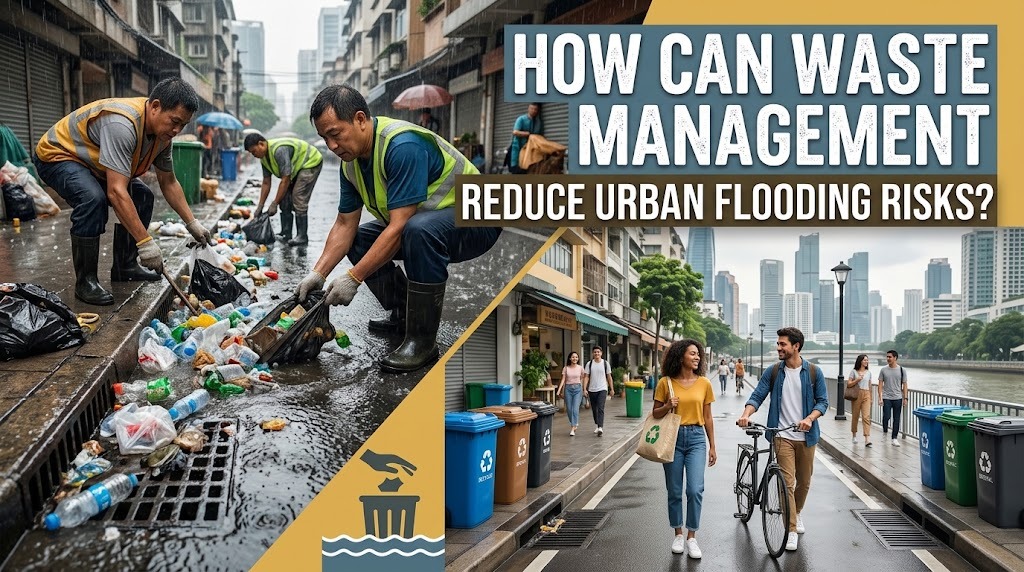
Urban flooding is a common problem in many cities, especially during periods of heavy rainfall. Poor waste management can make the situation worse when plastic bags, food packaging, and other discarded materials accumulate in streets, rivers, and drainage channels. These materials can block the flow of water and prevent rainwater from reaching drainage systems properly.
Effective waste management helps reduce this risk by keeping waterways clear, improving drainage performance, and preventing waste from entering rivers and canals. Through proper waste collection, recycling, public education, and cooperation between communities and local governments, cities can strengthen their ability to manage excess rainwater and reduce flooding.
HOW WASTE BLOCKS URBAN DRAINAGE SYSTEMS
Urban drainage systems are designed to collect and transport rainwater away from roads, residential areas, and public spaces. However, improperly discarded waste can obstruct these systems. Plastic bags, bottles, food containers, and other materials may accumulate in drains and prevent water from flowing freely.
When drainage channels become blocked, rainwater can build up on streets and enter nearby buildings. The problem becomes more serious when heavy rainfall produces more water than the drainage system can handle. Regular waste collection and proper disposal help prevent this accumulation and maintain the flow of rainwater.
THE ROLE OF PROPER WASTE COLLECTION
Reliable waste collection is an important part of flood prevention. When household and commercial waste is collected regularly, fewer discarded materials remain on sidewalks, empty land, and roadsides where rainwater can carry them into drainage channels.
Local governments can improve collection services by providing sufficient waste containers, organizing regular collection schedules, and ensuring that waste is transported to appropriate processing or disposal facilities. Accessible collection points also make it easier for residents to dispose of waste responsibly instead of leaving it in open spaces.
HOW RECYCLING HELPS PREVENT FLOODING
Recycling reduces the amount of waste that may otherwise end up in rivers, canals, and drainage systems. Materials such as plastic, paper, glass, and metal can be separated and processed so they can be used again instead of becoming environmental pollution.
Community recycling programs, waste banks, and collection centers encourage residents to sort their waste before disposal. These activities can reduce the volume of discarded materials in public spaces. Although recycling alone cannot prevent urban flooding, it supports cleaner surroundings and reduces the amount of waste that can obstruct waterways.
PREVENTING WASTE FROM ENTERING RIVERS AND CANALS
Rivers and canals play an important role in carrying water through urban areas. When people dispose of household waste directly into these waterways, the materials can accumulate and restrict water movement. Large amounts of floating waste may also collect around bridges, culverts, and other narrow sections.
Preventing this problem requires accessible waste disposal facilities, routine waterway cleaning, and enforcement of regulations against illegal dumping. Communities can also organize river-cleaning activities and report locations where waste frequently accumulates. Keeping rivers and canals free from waste helps preserve their capacity to transport water during rainfall.
COMMUNITY PARTICIPATION IN WASTE MANAGEMENT
Residents have an important role in reducing flood risks through daily waste management habits. Simple actions, such as separating waste, using designated bins, and avoiding littering, can help prevent rubbish from entering drainage channels.
Community groups can organize neighborhood cleanups, waste-sorting campaigns, and educational activities. These programs are more effective when residents work together and maintain their efforts consistently. Cooperation between households, schools, businesses, and local organizations can create a shared responsibility for keeping urban environments clean.
THE IMPORTANCE OF LOCAL GOVERNMENT POLICIES
Local governments are responsible for developing waste management systems that support public health and environmental protection. They can establish clear waste disposal regulations, improve collection infrastructure, and provide facilities for recycling and organic waste processing.
Authorities also need to coordinate waste management with urban drainage maintenance. Cleaning schedules should include drains, canals, and other areas where rubbish tends to accumulate. In addition, monitoring illegal dumping sites and applying appropriate penalties can discourage practices that contribute to blocked waterways.
ORGANIC WASTE PROCESSING AND COMPOSTING
Organic waste, including food scraps, leaves, and garden waste, can also contribute to drainage problems when it is discarded carelessly. When large amounts of organic materials enter drains, they can accumulate with plastic and other rubbish, restricting water movement.
Composting offers a way to process suitable organic waste into useful material for plants and soil improvement. Households, schools, and community groups can use composting programs to reduce the amount of organic waste sent to disposal facilities. Proper processing also helps keep public spaces and drainage channels cleaner.
USING TECHNOLOGY TO IMPROVE WASTE MANAGEMENT
Technology can help cities identify waste-related problems and improve waste collection services. Digital reporting platforms allow residents to report illegal dumping, overflowing bins, and blocked drainage channels. Local authorities can use this information to prioritize locations that need immediate attention.
Geographic Information Systems (GIS) can also help map waste accumulation points and areas that frequently experience flooding. When combined with rainfall records and drainage information, these tools can support better planning and maintenance. However, technology must be supported by reliable services and regular action from responsible agencies.
COMBINING WASTE MANAGEMENT WITH FLOOD MITIGATION
Waste management is most effective when it is part of a broader urban flood mitigation strategy. Keeping drainage channels clean is important, but cities also need sufficient drainage capacity, green open spaces, rainwater storage, and appropriate land-use planning.
For example, permeable surfaces and urban green spaces can help rainwater soak into the ground rather than immediately flowing into drainage systems. Regular maintenance of waterways and responsible waste disposal can support these measures by reducing blockages. Combining these approaches helps cities manage rainfall more effectively and strengthen urban resilience.
CONCLUSION
Effective waste management can reduce urban flooding risks by preventing rubbish from blocking drains, rivers, and canals. Regular waste collection, recycling, composting, community participation, and government policies all contribute to cleaner waterways and more reliable drainage systems.
However, waste management is not a complete solution to flooding. It needs to be combined with proper drainage infrastructure, urban planning, and other flood mitigation measures. Through consistent cooperation between residents and local authorities, cities can reduce preventable flood risks and create healthier, more sustainable environments.
Recent Posts

Bagaimana Sistem SKS pada Program Kuliah... 22.11.2026/37 View

How Does Technology Make Daily Evaluation... 21.11.2026/70 View

Apa Strategi Menghadapi Kesenjangan antara Kompetensi... 21.11.2026/73 View

Mengapa Inventaris Aset Penting bagi Kelancaran... 21.11.2026/68 View

When Should Musicians Join a Record... 21.11.2026/71 View
