

How Can We Prevent Regional Languages from Disappearing in Modern Society?
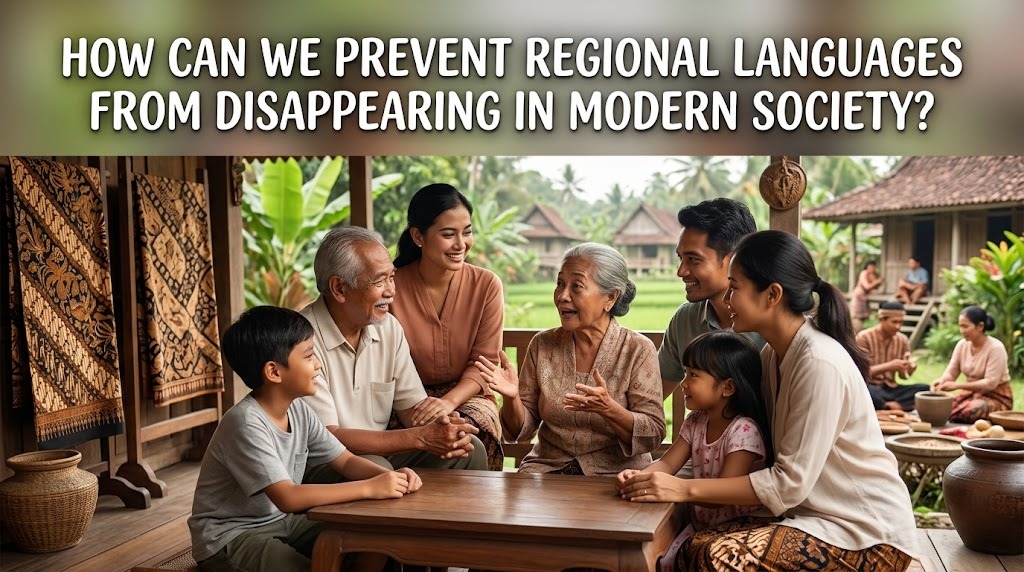
Regional languages are an important part of Indonesia’s cultural heritage because they preserve local knowledge, traditions, and community identities. Across the country, different languages reflect the history and experiences of people from various regions. However, modernization, migration, changing communication habits, and the growing use of Indonesian can reduce opportunities to speak regional languages in daily life. When children no longer learn these languages from their families, the risk of language loss can increase. Preventing regional languages from disappearing requires consistent efforts to make them useful, accessible, and meaningful in modern society.
ENCOURAGE REGIONAL LANGUAGE USE AT HOME
Families play a major role in preserving regional languages because children often learn their first words through conversations with parents and other relatives. When family members regularly use a regional language, children have natural opportunities to develop their vocabulary and speaking skills. Everyday activities such as eating together, shopping, telling stories, and visiting relatives can become opportunities to practice. These interactions also help children understand the cultural meanings behind familiar expressions.
Parents do not need to turn every conversation into a formal lesson. They can begin with greetings, simple questions, common household vocabulary, and short stories that children can understand. Grandparents and other fluent speakers can also share traditional expressions and explain when they are appropriate. Regular communication at home helps pass regional languages from one generation to the next. When children feel comfortable using their regional language with family members, they are more likely to continue practicing it as they grow older.
INCLUDE REGIONAL LANGUAGES IN EDUCATION
Schools can help preserve regional languages by providing structured opportunities for students to learn about local vocabulary, pronunciation, literature, and cultural traditions. Lessons can introduce traditional stories, songs, proverbs, and everyday expressions that students can use outside the classroom. Teachers can also explain how regional languages reflect the histories and identities of local communities. This approach makes language learning relevant to students’ cultural experiences.
Effective regional-language education requires suitable learning materials and teachers who understand the language and its cultural context. Schools can cooperate with local language experts, community elders, and cultural organizations to develop useful lessons. Students can participate in storytelling competitions, local-language performances, and projects that document words used by older generations. Education can strengthen language preservation when students have opportunities to practice what they learn. Regional-language lessons should complement Indonesian education while encouraging respect for Indonesia’s linguistic diversity.
USE DIGITAL TECHNOLOGY TO PROMOTE REGIONAL LANGUAGES
Digital technology provides new ways to introduce regional languages to younger generations. Social media videos, podcasts, online dictionaries, digital books, and language-learning applications can make regional-language resources easier to access. People can use these platforms to share everyday expressions, pronunciation guides, traditional songs, and local stories. Digital content can also reach speakers who live far from their ancestral communities.
Creators can make regional-language content more engaging by discussing topics that interest young people, including education, music, entertainment, food, and daily life. Short videos with subtitles can help beginners understand unfamiliar vocabulary while following a conversation. Community members and researchers can also create digital archives containing recordings, oral histories, and traditional expressions. Regional languages can become more visible when they are used naturally on modern digital platforms. However, online content should support real conversations and community learning rather than become the only way people encounter their language.
DOCUMENT TRADITIONAL STORIES AND LOCAL KNOWLEDGE
Regional languages often contain traditional stories, proverbs, songs, and specialized vocabulary that have been passed down over generations. These materials can preserve information about community history, customary practices, local environments, and cultural values. If fewer people speak a language, some of this knowledge may become difficult to recover when experienced speakers are no longer available. Documentation can help protect valuable linguistic and cultural information.
Communities can record conversations with older speakers, collect folktales, and create dictionaries that explain local expressions. Researchers and cultural organizations can help ensure that recordings are stored safely and that the information is presented accurately. When possible, materials should include explanations of pronunciation, context, and cultural meaning rather than isolated words alone. Documenting a regional language helps preserve knowledge that may otherwise become harder to pass down. These records can also support school lessons and provide resources for people who want to relearn their ancestral language.
BUILD COMMUNITY PARTICIPATION AND POSITIVE ATTITUDES
Regional languages are more likely to remain active when communities use them in social activities and consider them valuable. Cultural festivals, traditional performances, storytelling events, and local-language workshops can create opportunities for people to speak and hear their languages. Community organizations can invite fluent speakers to teach common expressions and share personal experiences. These activities help connect language learning with social relationships and cultural pride.
Positive attitudes are equally important because some young people may believe that regional languages are less useful than Indonesian or international languages. Parents, teachers, public figures, and content creators can challenge this idea by demonstrating that regional languages have cultural and social value. People can use regional languages alongside Indonesian without giving up opportunities for education, employment, or wider communication. Preserving a regional language becomes easier when speakers feel proud and have practical reasons to use it. Community support can make language learning a shared responsibility rather than an obligation placed only on older generations.
SUPPORT REGIONAL LANGUAGES THROUGH POLICIES AND COLLABORATION
Long-term language preservation benefits from cooperation among government institutions, schools, universities, cultural organizations, and local communities. Public programs can support language documentation, teacher training, learning materials, cultural activities, and research into languages that have fewer speakers. These efforts are especially important for communities where children have limited opportunities to learn their regional language. Support should reflect the needs of each language community rather than assume that one approach works everywhere.
Local authorities and educational institutions can work with fluent speakers to identify which languages need additional support and what resources would be most useful. Funding can help produce dictionaries, children's books, recordings, and digital learning platforms. Preservation programs should also involve community members in decisions about how their languages are represented and taught. Effective language policies combine institutional support with the active participation of the people who speak the language. By working together, communities and institutions can create more sustainable opportunities for regional languages to survive and develop.
CONCLUSION
Preventing regional languages from disappearing in modern society requires action at home, in schools, within communities, and through digital platforms. Families can encourage daily conversations, educators can provide meaningful lessons, and communities can document traditional knowledge and create opportunities for language use. Digital technology can increase visibility, while government and institutional support can provide resources for long-term preservation. These efforts should make regional languages part of everyday life rather than limiting them to special ceremonies or occasional lessons. Protecting regional languages helps preserve Indonesia’s cultural diversity and ensures that future generations can remain connected to their linguistic heritage.
Recent Posts

Bagaimana Sistem SKS pada Program Kuliah... 22.11.2026/49 View

How Does Technology Make Daily Evaluation... 21.11.2026/77 View

Apa Strategi Menghadapi Kesenjangan antara Kompetensi... 21.11.2026/78 View

Mengapa Inventaris Aset Penting bagi Kelancaran... 21.11.2026/74 View

When Should Musicians Join a Record... 21.11.2026/79 View
