

How Can We Reduce Carbon Emissions to Prevent Global Warming?
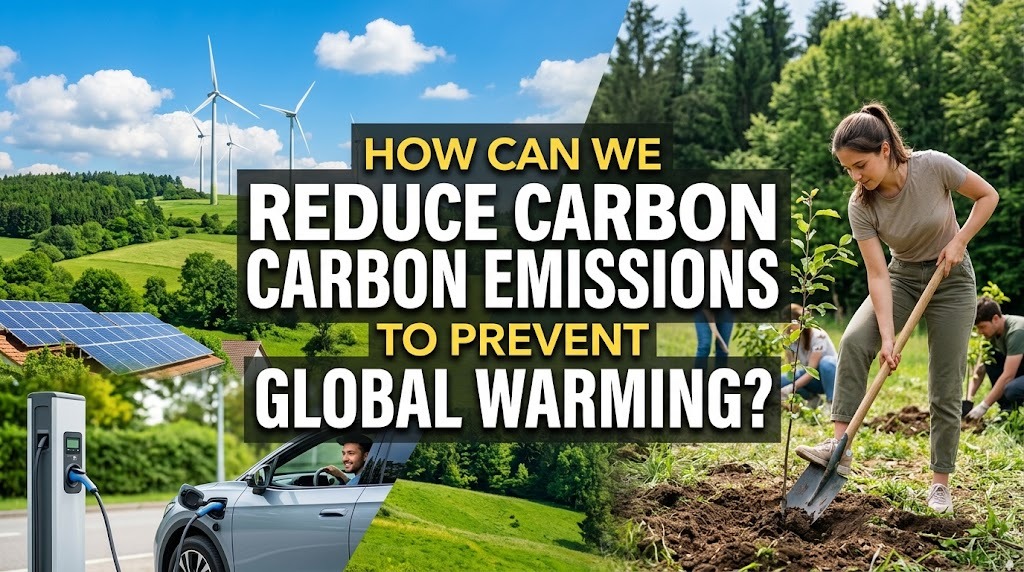
Carbon emissions are a major contributor to global warming because carbon dioxide released by human activities strengthens the greenhouse effect. Burning fossil fuels for electricity, transportation, and industrial production adds carbon dioxide to the atmosphere, where it can influence Earth's temperature for a long time. Reducing these emissions is essential for limiting future warming and lowering the risks associated with climate change.
Understanding how to reduce carbon emissions to prevent global warming can help individuals, businesses, and governments identify practical solutions. Actions such as expanding renewable energy, improving energy efficiency, protecting forests, and reducing waste can contribute to lower emissions. Although no single action can solve global warming, coordinated efforts across different sectors can make a meaningful difference.
SHIFT FROM FOSSIL FUELS TO RENEWABLE ENERGY
One of the most effective ways to reduce carbon emissions is to decrease dependence on fossil fuels. Coal, oil, and natural gas release carbon dioxide when burned, particularly in electricity generation and industrial activities. Replacing fossil fuel-based electricity with renewable sources can reduce emissions from energy production.
Renewable energy includes sources such as solar, wind, and hydropower. These technologies generate electricity without directly burning fossil fuels during operation, although their construction, manufacturing, and maintenance still have environmental impacts. Governments and businesses can support the transition by investing in renewable energy infrastructure and improving electricity systems. Expanding cleaner energy sources can help meet energy demand while reducing the amount of carbon dioxide released into the atmosphere.
IMPROVE ENERGY EFFICIENCY IN HOMES AND INDUSTRIES
Using energy efficiently can reduce the amount of fuel needed to provide electricity, heating, cooling, and industrial services. At home, people can switch off unused lights, choose energy-efficient appliances, and manage air-conditioning use carefully. These habits can lower electricity consumption, especially in areas where power generation depends heavily on fossil fuels.
Industries can also reduce emissions by improving equipment, maintaining machinery, optimizing production processes, and recovering waste heat where practical. Buildings can be designed or upgraded to improve insulation, natural lighting, and ventilation. Although energy efficiency alone cannot eliminate emissions, it can reduce energy demand and make the transition to cleaner energy easier. Combining efficiency improvements with renewable electricity can provide additional benefits for climate change mitigation.
CHOOSE LOW-EMISSION TRANSPORTATION
Transportation is another important source of carbon dioxide emissions, particularly when vehicles use gasoline or diesel. Walking, cycling, and using public transportation can reduce fuel consumption compared with traveling alone in a private vehicle. Carpooling and combining several errands into one trip can also reduce unnecessary travel.
Governments can help by improving public transportation networks, building safe walking and cycling routes, and supporting infrastructure for lower-emission vehicles. Electric vehicles can reduce direct emissions from driving, although their overall environmental impact depends partly on how the electricity is generated and how the vehicles and batteries are manufactured. Choosing suitable transportation options can help lower emissions while also reducing traffic congestion and improving air quality in some areas.
PROTECT FORESTS AND RESTORE DEGRADED LAND
Forest protection is important because trees absorb carbon dioxide through photosynthesis and store carbon in their trunks, branches, roots, and surrounding soil. When forests are cleared or burned, stored carbon may be released into the atmosphere, while the land loses some of its capacity to absorb carbon dioxide in the future. Preventing deforestation can therefore help avoid emissions and preserve natural carbon storage.
Restoring degraded forests and planting suitable native trees can increase carbon storage over time. However, planting new trees is not an immediate substitute for protecting mature forests, which often contain complex habitats and substantial carbon reserves. Responsible land management, sustainable agriculture, and efforts to prevent illegal forest clearing can help reduce emissions while protecting biodiversity. These measures support both carbon reduction and broader environmental conservation.
REDUCE WASTE AND SUPPORT SUSTAINABLE CONSUMPTION
The production and disposal of goods require energy and raw materials, which can generate carbon emissions throughout a product's life cycle. Buying only what is needed, repairing usable items, reusing products, and recycling suitable materials can reduce demand for new resources. These practices can help limit emissions associated with manufacturing, transportation, and waste disposal.
Food waste is another area where emissions can be reduced. Food production uses land, water, energy, and other resources, while organic waste in landfills can release methane as it decomposes. Planning meals, storing food properly, and using leftovers safely can help prevent avoidable waste. Businesses and communities can also improve waste collection, recycling, and composting systems where appropriate. Sustainable consumption works best when supported by product design, accessible waste services, and policies that encourage efficient resource use.
CONCLUSION
Reducing carbon emissions to prevent global warming requires changes in how energy is produced, how people travel, how industries operate, and how natural resources are managed. Renewable energy, energy efficiency, lower-emission transportation, forest protection, and waste reduction can all contribute to lowering greenhouse gas emissions. The effectiveness of each measure depends on local conditions, available technology, and the scale of implementation.
Individual actions are useful, but substantial emissions reductions also require coordinated efforts from governments, businesses, and communities. Investments in cleaner energy, sustainable infrastructure, responsible land management, and efficient production can support long-term progress. By combining everyday changes with broader structural improvements, society can limit future warming and help protect the environment for generations to come.
Recent Posts

Bagaimana Sistem SKS pada Program Kuliah... 22.11.2026/48 View

How Does Technology Make Daily Evaluation... 21.11.2026/76 View

Apa Strategi Menghadapi Kesenjangan antara Kompetensi... 21.11.2026/78 View

Mengapa Inventaris Aset Penting bagi Kelancaran... 21.11.2026/73 View

When Should Musicians Join a Record... 21.11.2026/78 View
