

How Can We Reduce Global Warming in Our Daily Lives?
Global warming is a major environmental issue caused primarily by the accumulation of greenhouse gases in the atmosphere. These gases trap heat and contribute to rising global temperatures, affecting weather patterns, ecosystems, and human life. Although governments and industries have important responsibilities in addressing this problem, individuals can also contribute through everyday choices.
Learning how to reduce global warming in daily life can help people develop more environmentally responsible habits. Actions such as saving electricity, choosing sustainable transportation, reducing waste, and consuming resources wisely can lower personal greenhouse gas emissions. While individual efforts alone cannot solve global warming, they can support broader environmental changes when practiced consistently and combined with action from businesses and governments.
SAVE ELECTRICITY AND USE ENERGY EFFICIENTLY
One practical way to help reduce global warming is to use electricity more efficiently. Electricity generated from fossil fuels produces greenhouse gas emissions, although the amount depends on the energy source used. Turning off lights and appliances when they are not needed can reduce unnecessary electricity consumption.
Households can also choose energy-efficient appliances and make better use of natural lighting. Air conditioners can be set to a comfortable temperature rather than an unnecessarily low one, and doors or windows should be managed to prevent cooled air from escaping. Unplugging devices that continue to consume standby power may also help reduce electricity use. When many households adopt these habits, the combined reduction in energy demand can support lower emissions.
CHOOSE ENVIRONMENTALLY FRIENDLY TRANSPORTATION
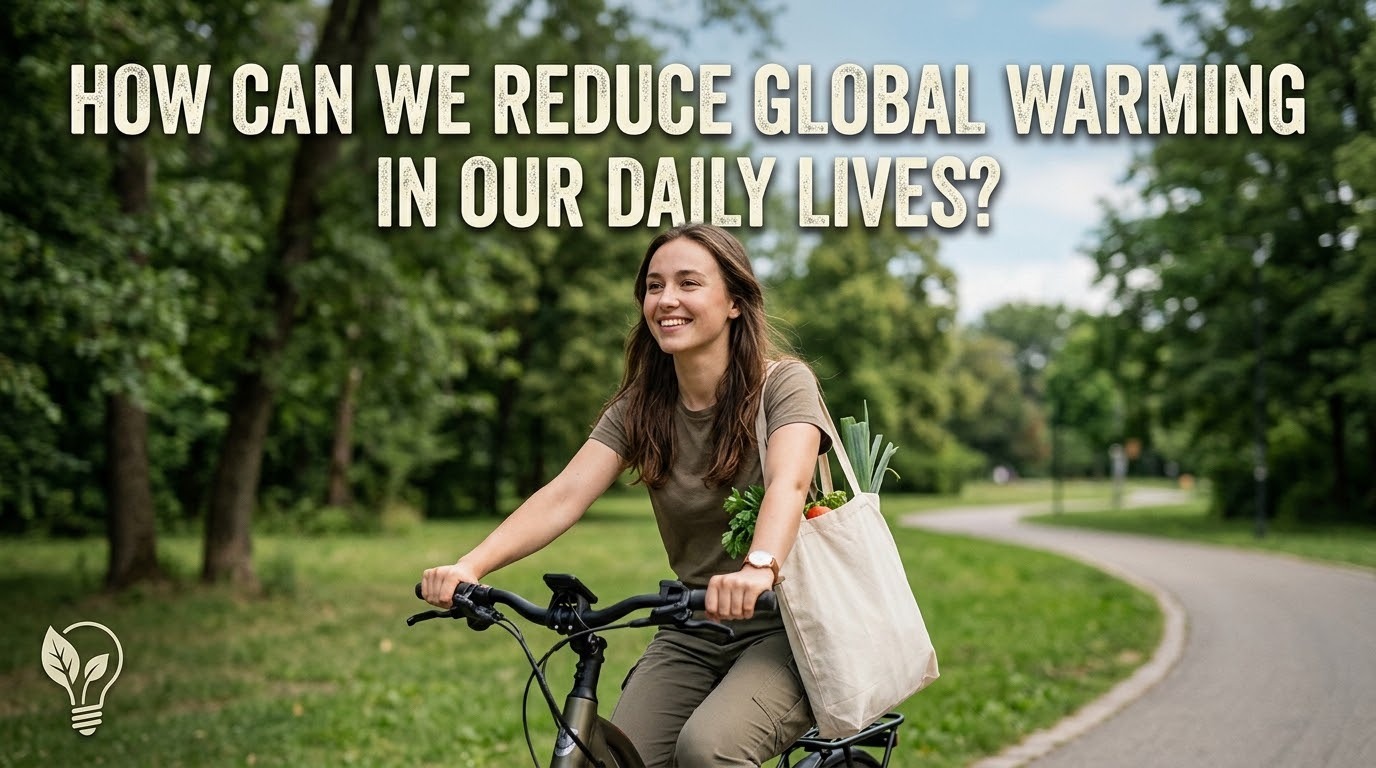
Transportation is another source of greenhouse gas emissions, particularly when vehicles burn gasoline or diesel. Choosing to walk or cycle for short trips can reduce fuel consumption while also supporting physical activity. For longer journeys, public transportation can often produce fewer emissions per passenger than traveling alone in a private car.
People can also consider carpooling when traveling along similar routes. Combining several errands into one trip can reduce the distance traveled and limit unnecessary fuel use. Where practical, choosing an electric vehicle can lower direct emissions from driving, especially when the electricity used to charge it comes from cleaner sources. The most suitable transportation choice depends on distance, accessibility, safety, and local infrastructure.
REDUCE WASTE AND USE RESOURCES RESPONSIBLY
Reducing waste can contribute to efforts to fight global warming because producing, transporting, and disposing of goods requires energy and resources. Some waste, especially organic material sent to landfills, can release methane as it decomposes without enough oxygen. Methane is a powerful greenhouse gas, so preventing avoidable waste can help reduce emissions.
A useful starting point is to buy only what is needed and choose durable products that can be used for longer. Reusing containers, repairing damaged items, and recycling materials through appropriate local facilities can also reduce the demand for new resources. Food waste can be limited by planning meals, storing food properly, and using leftovers safely. These habits help conserve materials while encouraging a more sustainable lifestyle.
CHOOSE MORE SUSTAINABLE FOOD AND SHOPPING HABITS
Food production can contribute to greenhouse gas emissions through farming, livestock production, processing, transportation, and land-use changes. Individuals can help reduce their environmental impact by planning meals carefully and avoiding unnecessary food purchases. Eating a varied diet that includes more plant-based foods, where suitable and accessible, can also reduce the environmental footprint of food consumption.
Shopping habits matter as well. Choosing products that are durable, reusable, locally available, or produced with fewer resources can help reduce some environmental impacts. However, a product's environmental footprint depends on more than its distance from the consumer, so local products are not automatically the most sustainable option. Reading product information, avoiding excessive packaging when possible, and purchasing only what is needed can make everyday consumption more responsible.
SUPPORT GREEN SPACES AND ENVIRONMENTAL ACTION
Trees and other plants absorb carbon dioxide as they grow, making forests and green spaces important parts of the natural carbon cycle. Supporting tree planting and forest protection can help preserve habitats, store carbon, and maintain biodiversity. However, planting trees is most effective when the right species are planted in suitable locations and cared for over time.
Individuals can also participate in community cleanups, support habitat restoration, and help maintain green spaces. Sharing accurate environmental information and supporting practical climate initiatives can encourage wider participation. People may also choose to support businesses and policies that promote cleaner energy and more efficient resource use. These actions extend beyond personal habits and help create conditions for broader climate action.
CONCLUSION
Reducing global warming in daily life begins with practical habits such as saving electricity, choosing lower-emission transportation, reducing waste, and making thoughtful food and shopping choices. Supporting tree protection, maintaining green spaces, and participating in community environmental programs can also contribute to a healthier environment. The impact of each action varies, but consistent efforts can help lower emissions and reduce unnecessary resource use.
Individual choices are most effective when supported by wider changes in energy systems, transportation, industry, and public policy. By developing sustainable habits and encouraging environmental responsibility in their communities, people can contribute to the collective effort to limit global warming. Every practical step can support progress when it forms part of a broader, sustained response to climate change.
Recent Posts

Bagaimana Sistem SKS pada Program Kuliah... 22.11.2026/47 View

How Does Technology Make Daily Evaluation... 21.11.2026/75 View

Apa Strategi Menghadapi Kesenjangan antara Kompetensi... 21.11.2026/77 View

Mengapa Inventaris Aset Penting bagi Kelancaran... 21.11.2026/73 View

When Should Musicians Join a Record... 21.11.2026/77 View
