

How Can You Achieve a Win Win Solution in Negotiation?
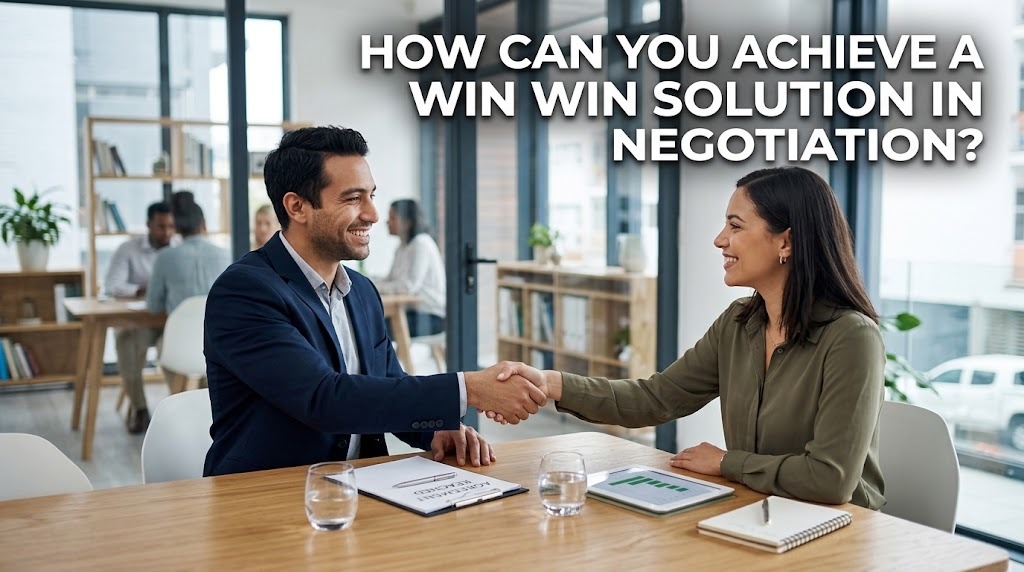
Negotiation is often viewed as a process where one party wins while the other loses. However, an effective negotiation can produce a win win solution in which both parties receive meaningful benefits from the agreement. This approach focuses on understanding interests, creating value, and finding practical solutions rather than simply competing over demands. A successful outcome should satisfy important priorities while maintaining a positive relationship between the parties. Therefore, learning how to achieve a win win negotiation can help create agreements that are fair, useful, and sustainable.
UNDERSTAND BOTH PARTIES INTERESTS
The first step toward a win win solution is understanding what each party actually needs. People often enter negotiations with specific demands, but these demands may not represent their deeper interests. A buyer may ask for a lower price because they need to control their budget, while a seller may need to maintain a certain profit margin. Identifying these underlying interests can reveal opportunities that are not visible when both sides focus only on their initial positions. Understanding these priorities creates a stronger foundation for cooperation.
Asking open and relevant questions can help reveal what matters most to the other party. At the same time, explain your own interests clearly so the discussion becomes more transparent. Both parties should understand which issues are essential and which ones can be adjusted. This makes it easier to separate positions from interests and search for solutions that address important needs. A clear understanding of both sides can significantly increase the possibility of reaching a mutually beneficial agreement.
BUILD TRUST THROUGH COMMUNICATION
Trust is an important element of a win win negotiation because both parties need to feel comfortable discussing their concerns. Communication should be honest, respectful, and clear throughout the negotiation. Avoid making misleading claims or hiding important information that could affect the agreement. When people believe that the other party is communicating in good faith, they are generally more willing to explore different options. Trust can therefore make cooperation easier and more productive.
Active listening is another essential communication skill. Pay attention to the other party's concerns instead of preparing your next argument while they are speaking. Ask questions when something is unclear and confirm your understanding before making important decisions. Active listening shows respect and can prevent misunderstandings from developing into conflict. Strong communication helps create an environment where both parties can work toward a shared solution.
CREATE VALUE FOR BOTH SIDES
A win win solution becomes easier to achieve when negotiators look for opportunities to create additional value. Instead of focusing only on dividing existing resources, consider whether new options can benefit both parties. Differences in priorities can sometimes create valuable trade offs. For example, one party may value faster delivery while the other values a larger order. These differences can be used to create a mutually beneficial exchange.
Creative problem solving can expand the number of possible solutions. Negotiators can discuss different combinations of price, quality, quantity, timing, payment terms, services, or responsibilities. The goal is to find an arrangement where both parties gain something important without sacrificing their essential interests. A broader view of the negotiation can reveal opportunities that a simple price discussion might overlook. Value creation is therefore central to achieving a genuine win win outcome.
MAKE FAIR AND STRATEGIC CONCESSIONS
Concessions are often necessary in negotiation, but they should be made strategically. Giving something up does not mean accepting every request from the other party. Before making a concession, consider whether the issue is important to you and what you might receive in return. Strategic concessions can help both sides move closer to an agreement while maintaining balance. This approach prevents one party from continuously giving more than the other.
It is also useful to prioritize issues according to their importance. You may be able to compromise on a less important issue while protecting something that is essential to your goals. Similarly, the other party may be willing to make concessions on issues that matter less to them. This creates opportunities for balanced trade offs that benefit both sides. Fair concessions can strengthen cooperation and make the final agreement more acceptable.
SOLVE PROBLEMS COLLABORATIVELY
When disagreements appear, treat them as problems that need to be solved rather than battles that must be won. A collaborative approach encourages both parties to identify the source of the disagreement and explore possible alternatives. Instead of saying that a proposal is simply unacceptable, explain the specific concern and suggest another option. Collaborative problem solving can reduce defensiveness and keep the negotiation focused on solutions. It also encourages both sides to contribute ideas.
Brainstorming several possible solutions can be especially useful when negotiations become difficult. At this stage, both parties can consider different ideas before deciding which option is most practical. Once the possibilities are clear, evaluate them according to cost, benefits, risks, and feasibility. This process can lead to a solution that neither party would have discovered independently. Cooperation during problem solving can therefore increase the chance of a sustainable agreement.
PROTECT LONG TERM RELATIONSHIPS
A win win solution should consider what happens after the negotiation ends. If the parties are expected to work together again, maintaining a positive relationship can be as important as achieving immediate benefits. Avoid tactics that may produce short term gains but damage trust and cooperation in the future. A fair agreement can strengthen the relationship and make future negotiations easier. Long term thinking helps ensure that the agreement remains valuable beyond the initial transaction.
After reaching an agreement, both parties should clearly understand their responsibilities and expectations. Follow through on promises and communicate quickly if unexpected problems occur. Reviewing the results can also help both sides identify what worked well and what could be improved in future negotiations. This commitment demonstrates professionalism and strengthens credibility. A focus on long term value can turn a single successful negotiation into a lasting professional partnership.
CONCLUSION
Achieving a win win solution requires a willingness to understand both parties and search for shared value. Clear communication, active listening, strategic concessions, creative problem solving, and trust are important elements of this approach. A successful negotiation should not simply determine who gets more but should create an agreement that addresses the most important interests of everyone involved. By focusing on cooperation rather than unnecessary competition, negotiators can build more practical and sustainable outcomes. Ultimately, a genuine win win solution benefits both the agreement and the relationship between the parties.
Recent Posts

Bagaimana Sistem SKS pada Program Kuliah... 22.11.2026/37 View

How Does Technology Make Daily Evaluation... 21.11.2026/70 View

Apa Strategi Menghadapi Kesenjangan antara Kompetensi... 21.11.2026/73 View

Mengapa Inventaris Aset Penting bagi Kelancaran... 21.11.2026/68 View

When Should Musicians Join a Record... 21.11.2026/71 View
