

How Can You Check the Indexing Status of a Scopus Journal?
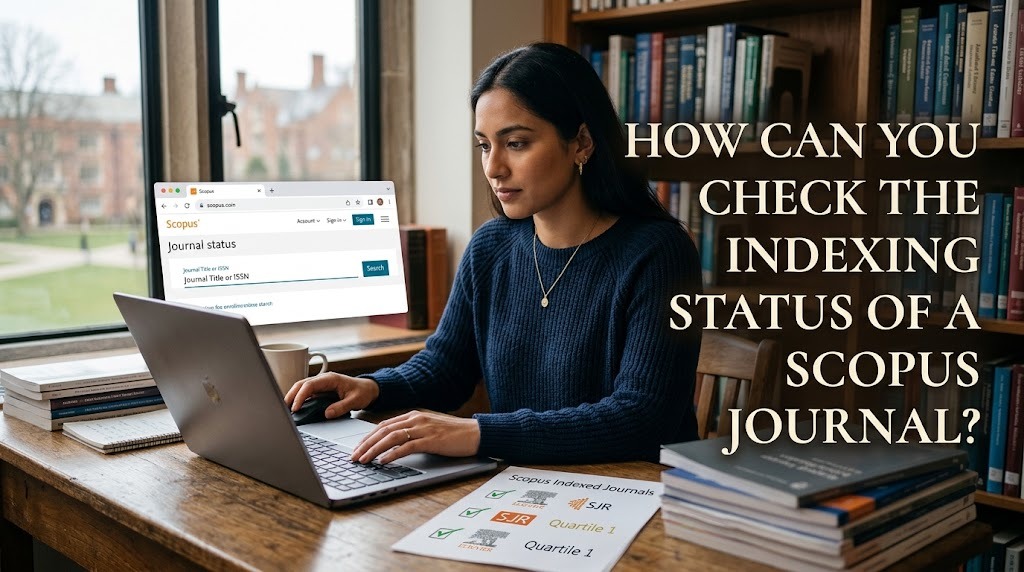
Checking whether a journal is indexed in Scopus is an important step before submitting an academic manuscript. Researchers, lecturers, and students may need to confirm a journal's status to meet publication requirements, identify suitable journals, or evaluate the visibility of scholarly research. However, journal websites and promotional materials do not always provide the most current information.
The most reliable way to check the indexing status of a Scopus journal is to use official Scopus resources and verify the journal's identifying details. Researchers should also examine coverage information because a journal that was indexed previously may no longer have active coverage. Understanding the verification process can help authors make informed publication decisions and avoid relying on outdated claims.
ACCESS THE OFFICIAL SCOPUS SOURCES LIST
The first step is to visit the official Scopus Sources page. This resource provides information about journals and other serial publications covered by Scopus. It is more reliable for verifying Scopus coverage than relying solely on statements or logos displayed on a journal's website.
Once on the official page, locate the source-search feature. Depending on the available search options, you may be able to search using a journal title, ISSN, or other identifying information. Searching the exact journal title can be a useful starting point, but additional verification is necessary when several publications have similar names.
Researchers should make sure they are using the official Scopus platform rather than a third-party website that reproduces journal information. Unofficial lists may be outdated, incomplete, or unclear about the period of coverage. Starting with the official source helps establish a more reliable basis for checking a journal's indexing status.
SEARCH USING THE JOURNAL TITLE OR ISSN
After accessing the official sources list, enter the journal's exact title or International Standard Serial Number (ISSN). The ISSN is particularly useful when a journal has a common name or when multiple publications have similar titles. If the journal has separate print and electronic ISSNs, check the identifiers listed by the publisher and compare them with the database record.
When a matching result appears, review its details carefully. Compare the journal title, publisher, ISSN, and other available information with the information on the journal's official website. This step helps reduce the risk of confusing a legitimate publication with a different journal that has a similar name.
If no matching result appears, do not immediately conclude that the journal has never been indexed. Check the spelling, search using the ISSN, and review whether the information provided by the publisher is accurate. If the journal still cannot be found, investigate the claim further before submitting a manuscript or reporting its indexing status.
REVIEW THE JOURNAL'S COVERAGE AND CURRENT STATUS
Finding a journal in Scopus does not automatically mean that it currently has active coverage. Some journals may have coverage limited to earlier publication years, while others may have been discontinued from the database. Therefore, researchers should examine the Scopus indexing status and available coverage information rather than relying only on the existence of a journal record.
Look for the coverage years or status details provided by the official source. If the information indicates that coverage ended in a previous year, do not assume that articles published afterward are covered in the same way. This distinction can be particularly important when a university requires publication in a journal with active coverage during a specific period.
Researchers should also understand that database information can change. If the displayed status is unclear, consult the official Scopus documentation or contact the relevant support channel. Avoid making assumptions based on old screenshots, previous announcements, or claims that do not identify the period of coverage.
VERIFY THE JOURNAL'S IDENTITY AND PUBLICATION DETAILS
Before relying on an indexing result, confirm that the journal record belongs to the publication being considered. Compare the title, ISSN, publisher, and other available details with the journal's official information. A difference in one of these details may indicate a data error, a title change, or a different publication that requires further investigation.
It is also useful to examine the journal's editorial policies, peer-review procedures, publication history, and author guidelines. These details do not independently prove Scopus indexing, but they help researchers evaluate whether the journal operates transparently and is appropriate for their research. A journal's presence in Scopus should not replace an independent assessment of its publishing practices.
Be cautious when a journal promises guaranteed acceptance or claims that every article will automatically receive Scopus indexing. Inclusion in a database applies according to the database's coverage and policies; it should not be interpreted as an unconditional guarantee for each article. Confirming both journal identity and publication details helps prevent misunderstandings.
DOCUMENT THE RESULTS BEFORE SUBMITTING YOUR MANUSCRIPT
After verifying a journal's record and coverage, keep a note of the information found in the official source. Researchers may record the journal title, ISSN, publisher, coverage years, and date of verification. This can be useful when preparing academic reports or demonstrating that a journal was checked against a particular publication requirement.
If the journal is intended for a thesis, promotion, research grant, or institutional assessment, confirm the applicable requirements with the relevant academic office. Some institutions have specific rules regarding database coverage, publication dates, or journal status. A journal's appearance in Scopus alone may not resolve every requirement.
Before submitting, check the official source again if a significant amount of time has passed since the initial verification. Verifying Scopus journal indexing is an important part of publication planning, but researchers should also evaluate the journal's scope, publication fees, editorial quality, and relevance to their manuscript. Combining these checks supports a more informed decision.
CONCLUSION
Checking the indexing status of a Scopus journal involves accessing the official Scopus Sources list, searching by journal title or ISSN, reviewing coverage information, and confirming the journal's identity. Researchers should pay particular attention to whether coverage is current or limited to earlier publication years, especially when institutional requirements specify an active indexing period.
Indexing status should be verified through official sources rather than accepted solely on the basis of journal websites or promotional claims. Researchers should also assess editorial practices and confirm publication requirements before submitting a manuscript. By following these steps, authors can make more reliable decisions about journal selection and academic publication.
Recent Posts

Bagaimana Sistem SKS pada Program Kuliah... 22.11.2026/44 View

How Does Technology Make Daily Evaluation... 21.11.2026/73 View

Apa Strategi Menghadapi Kesenjangan antara Kompetensi... 21.11.2026/75 View

Mengapa Inventaris Aset Penting bagi Kelancaran... 21.11.2026/70 View

When Should Musicians Join a Record... 21.11.2026/74 View
