

How Can You Choose a Safer OTP Verification Method for Digital Activities?
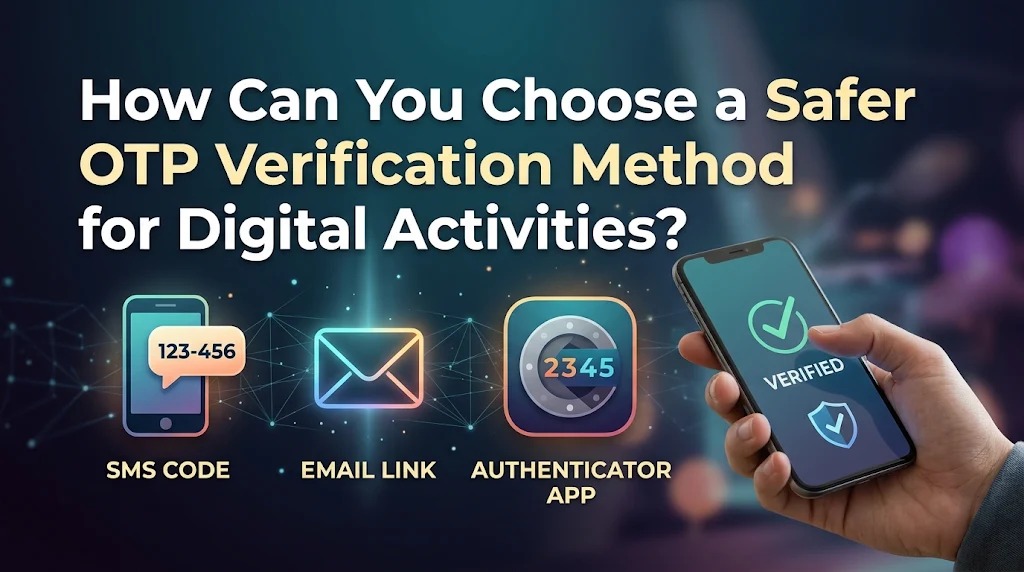
Digital activities such as online banking, shopping, social media access, and electronic payments require reliable security systems to protect personal information. As cyber threats become increasingly sophisticated, using passwords alone is no longer sufficient to secure important digital accounts. One commonly used security measure is an OTP (One-Time Password), which provides temporary verification codes to confirm a user's identity.
However, OTP verification methods are not equally secure. Some platforms deliver codes through SMS or email, while others use authenticator applications, push notifications, or more advanced authentication technologies. Each method has different advantages, limitations, and potential security risks.
Choosing the right OTP verification method is important for protecting digital accounts against unauthorized access, phishing attacks, and identity theft. By understanding how each method works and evaluating personal security needs, users can make better decisions about protecting their online activities.
UNDERSTANDING DIFFERENT OTP VERIFICATION METHODS
Before choosing a safer verification method, users should understand the main authentication options available. Each method uses a different approach to deliver or generate temporary verification codes. The most common options include SMS, email, authenticator applications, and in-app authentication.
SMS OTP is one of the most widely used methods because verification codes are delivered directly to a registered mobile phone number. This method is convenient and compatible with most mobile devices. However, it may be vulnerable to SIM-swapping attacks, message interception, and mobile network disruptions.
Email OTP delivers temporary verification codes to a registered email address. It is useful when users cannot receive SMS messages, but its security depends heavily on the protection of the email account. Meanwhile, authenticator applications generate temporary codes directly on smartphones, reducing dependence on mobile networks and SMS delivery.
Some platforms also provide push notification authentication, allowing users to approve or reject login requests through official applications. These methods offer different levels of convenience and protection, so users should evaluate their requirements before selecting one.
EVALUATE THE SECURITY LEVEL OF EACH VERIFICATION METHOD
Security should be the main consideration when choosing an OTP verification method, especially for accounts containing financial information or sensitive personal data. Users should understand how each method protects verification codes and what types of attacks may affect it.
SMS-based OTP is convenient, but criminals may exploit weaknesses in mobile number security through SIM swapping or social engineering. Email-based verification can also become risky if attackers gain access to the user's email account. Therefore, protecting the communication channel is just as important as protecting the verification code itself.
Authenticator applications generally provide stronger protection against certain attacks targeting SMS delivery because codes are generated locally using a shared secret key and time-based algorithms. Push notification systems can also provide useful security features when they display clear information about the login request. However, users must avoid approving unfamiliar notifications because attackers may attempt to manipulate them through repeated requests.
For accounts requiring stronger protection, phishing-resistant authentication methods, such as FIDO2 security keys and passkeys, are worth considering when supported. These technologies use cryptographic authentication rather than relying on manually entered OTP codes.
CONSIDER THE TYPE OF DIGITAL ACCOUNT YOU WANT TO PROTECT
The appropriate verification method depends partly on the type of digital activity being performed. Different accounts contain different levels of sensitive information and may require different security arrangements.
For example, online banking and digital wallet accounts should receive strong protection because unauthorized access can result in financial losses. Users should prioritize the authentication methods recommended by their financial institutions, including secure in-app approval, authenticator applications, or other supported verification technologies.
Email accounts also require special attention because they are frequently used to reset passwords for other digital services. If criminals gain access to an email account, they may use its recovery functions to compromise additional accounts. Social media accounts, online marketplaces, and educational platforms should also be protected according to the sensitivity of their stored information.
Users should avoid using the same password across multiple services and enable additional authentication whenever available. Prioritizing important accounts can help reduce the potential consequences of unauthorized access.
CHECK COMPATIBILITY AND ACCESSIBILITY BEFORE CHOOSING
A secure verification method should also be practical and compatible with the devices and services users regularly access. Some authentication technologies require specific applications, updated operating systems, or additional hardware. Therefore, users should check whether their preferred method is supported by the platform before depending on it.
For example, authenticator applications require users to configure the application and securely store their recovery information. If a smartphone is lost or damaged, access to the generated verification codes may become difficult without a backup method. Similarly, hardware security keys provide strong authentication but require users to keep the physical device available.
SMS and email OTP methods may be easier for beginners because they do not always require additional installations. However, their convenience should not replace proper security precautions. Users should evaluate whether they can reliably access their registered phone numbers, email accounts, or authentication devices whenever verification is required.
The best method is one that combines strong security, reliable accessibility, and compatibility with the digital services being used.
USE ADDITIONAL SECURITY FEATURES TO STRENGTHEN ACCOUNT PROTECTION
Choosing a safer OTP method is only one part of digital account protection. Users should combine authentication methods with other security practices to reduce the possibility of unauthorized access. Strong passwords, secure devices, and regular account monitoring are important parts of an effective security strategy.
Start by creating unique passwords for important accounts. Avoid using easily guessed information such as birthdays, common names, or simple number combinations. A password manager can help users generate and store strong passwords securely.
Users should also activate Multi-Factor Authentication (MFA) whenever supported. MFA combines different authentication factors, such as something the user knows, something they possess, or something they are. However, using multiple verification steps does not automatically guarantee security if those factors can be compromised through phishing or social engineering.
Additional precautions include:
- Enable Device Security: Use screen locks, biometric protection, and updated operating systems.
- Protect Recovery Codes: Store backup authentication codes in a secure location.
- Monitor Login Activity: Check account notifications and remove unfamiliar devices.
- Avoid Suspicious Links: Access digital services through official applications or verified websites.
- Keep Applications Updated: Install security updates to reduce exposure to known vulnerabilities.
These practices can improve account protection regardless of the authentication method selected.
RECOGNIZE THE LIMITATIONS AND RISKS OF OTP VERIFICATION
Although OTP technology provides an additional security layer, it is not completely immune to cyber threats. Criminals continue developing methods to steal verification codes through phishing websites, fraudulent phone calls, malware, and social engineering. Users should understand these limitations before relying entirely on OTP authentication.
One common threat is real-time phishing, in which attackers create fake login pages that capture passwords and OTP codes as users enter them. The criminals may immediately use the stolen information to access the legitimate account before the verification code expires. This demonstrates why short OTP expiration periods alone cannot eliminate every security risk.
Another threat involves SIM swapping, where criminals manipulate a mobile operator into transferring a victim's phone number to another SIM card. If successful, attackers may receive SMS-based verification messages intended for the legitimate account owner. Email accounts and smartphones can also become targets of malware designed to capture authentication information.
For stronger protection, users should consider phishing-resistant alternatives such as passkeys or hardware security keys when available. They should also remember that legitimate service providers should never ask them to disclose active OTP codes through phone calls or private messages.
CONCLUSION
Choosing a safer OTP verification method requires evaluating security, accessibility, compatibility, and the type of digital account being protected. SMS and email OTP methods remain convenient, while authenticator applications and secure in-app verification can provide additional protection against certain authentication threats. For stronger phishing resistance, passkeys and hardware security keys are valuable alternatives when supported.
However, no authentication method can guarantee complete protection without responsible user behavior. Users should create strong passwords, secure their devices, protect recovery information, and remain cautious of suspicious verification requests. By selecting appropriate authentication methods and applying consistent digital security practices, people can reduce the risk of unauthorized access and protect their personal information.
Recent Posts

Bagaimana Sistem SKS pada Program Kuliah... 22.11.2026/33 View

How Does Technology Make Daily Evaluation... 21.11.2026/67 View

Apa Strategi Menghadapi Kesenjangan antara Kompetensi... 21.11.2026/67 View

Mengapa Inventaris Aset Penting bagi Kelancaran... 21.11.2026/66 View

When Should Musicians Join a Record... 21.11.2026/66 View
