

How Can You Choose the Right Personality Test?
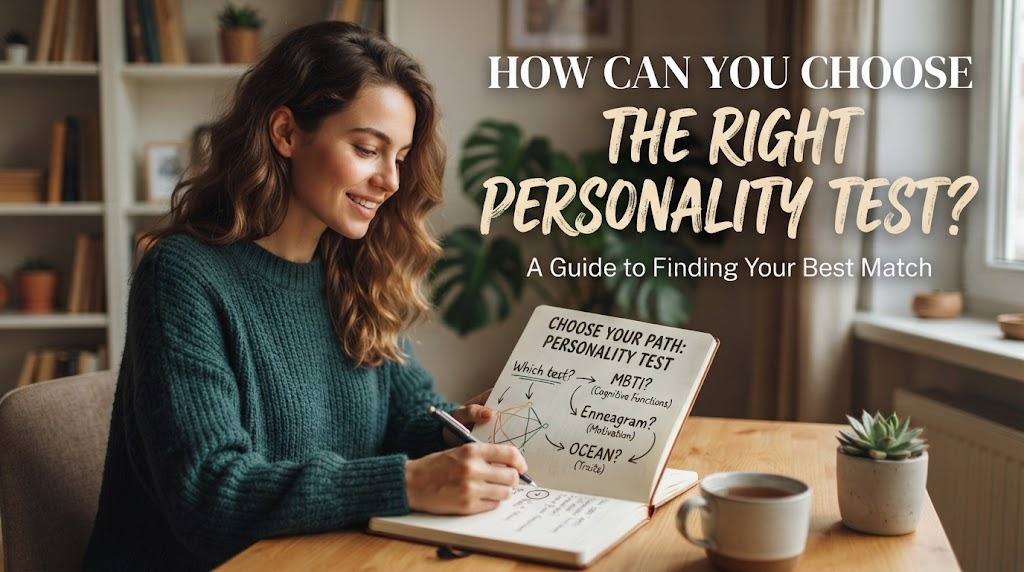
Choosing the right personality test is important because different assessments are designed for different purposes. Some tests focus on broad personality traits, while others examine specific behaviors, preferences, or characteristics. A test that is useful for personal reflection may not be suitable for research, education, or professional psychological assessment. Therefore, people should understand what they need before choosing an assessment. Selecting a suitable test can make the results more meaningful and easier to interpret.
DEFINE THE PURPOSE OF THE TEST
The first step is to determine why you want to take a personality test. Someone may want to understand their personality, explore career interests, improve communication, or support a research project. Different goals require different types of assessments. A simple self-reflection test may be enough for personal curiosity, while professional or research purposes may require a scientifically developed instrument. Knowing the purpose helps narrow down the available choices.
It is also important to avoid choosing a test simply because it is popular online. A test can be widely shared but still have limited evidence supporting its accuracy. The purpose should come before popularity when selecting an assessment. This approach helps ensure that the test is actually relevant to the question you want to explore.
CHECK THE SCIENTIFIC BASIS
A reliable personality assessment should have a clear theoretical foundation and evidence supporting how it measures personality. Look for information about reliability and validity, which are important concepts in psychological measurement. Reliability concerns the consistency of measurement, while validity concerns whether an assessment measures what it is intended to measure. These qualities are especially important when test results will be used for important decisions.
Information about the development and evaluation of an assessment may be available through research papers, technical manuals, or official documentation. Tests created for entertainment may not provide this level of evidence. Therefore, people should be cautious when treating a casual online quiz as a professional psychological assessment.
UNDERSTAND WHAT THE TEST MEASURES
Personality tests do not all measure the same characteristics. Some assessments focus on broad personality traits, while others examine specific preferences or behavioral patterns. Before taking a test, check which characteristics it is designed to assess. This information can help you determine whether the results will answer your original purpose.
Understanding the measurement model also makes the results easier to interpret. For example, a trait-based assessment may describe characteristics along a scale rather than placing someone into a single category. Knowing what is being measured prevents people from making conclusions that the test was never designed to support.
CONSIDER THE TESTING METHOD
The way a test is administered can influence the experience and potentially the quality of the responses. Check whether the assessment requires a particular setting, time limit, or standardized procedure. For important assessments, following the recommended testing conditions can help produce more consistent results. Distractions, fatigue, or unclear instructions may affect how someone answers.
Online tests can be convenient, but convenience does not automatically mean scientific quality. Before using an online assessment, check who developed it, what evidence supports it, and how the results are explained. A professional assessment may require administration or interpretation by a qualified person.
LOOK AT HOW RESULTS ARE EXPLAINED
A good personality test should provide results that are understandable and connected to what the assessment actually measures. Avoid assessments that make extreme claims or suggest that a short quiz can completely define your personality. Responsible interpretation should acknowledge that personality is complex and that test results have limitations.
Results are more useful when they provide information that can support reflection rather than simply assigning a label. A clear report may explain strengths, tendencies, or areas for consideration without claiming that a person will always behave in a particular way. This makes the assessment more useful for self-understanding.
AVOID USING ONE TEST FOR EVERY DECISION
No single personality test can provide a complete picture of an individual. Personality is influenced by many factors, including experiences, environment, skills, values, and personal choices. For important decisions, it is better to consider multiple sources of information rather than relying only on one test result.
For example, someone exploring a career can consider personality information together with interests, academic abilities, skills, work experience, and career research. This creates a broader understanding of their options. A personality test should support decision-making, not make the decision on someone's behalf.
CONCLUSION
Choosing the right personality test starts with identifying its purpose and checking whether the assessment has a strong scientific basis. It is also important to understand what the test measures, how it is administered, and how its results are interpreted. Reliability, validity, and appropriate use should be considered before trusting an assessment. Online quizzes can be useful for casual reflection, but they should not automatically be treated as professional psychological tests. By choosing an assessment carefully and considering other relevant information, people can use personality tests in a more meaningful and responsible way.
Recent Posts

Bagaimana Sistem SKS pada Program Kuliah... 22.11.2026/12 View

How Does Technology Make Daily Evaluation... 21.11.2026/63 View

Apa Strategi Menghadapi Kesenjangan antara Kompetensi... 21.11.2026/64 View

Mengapa Inventaris Aset Penting bagi Kelancaran... 21.11.2026/61 View

When Should Musicians Join a Record... 21.11.2026/59 View
