

How Can You Combine High Value Skills to Succeed in the Digital Era?
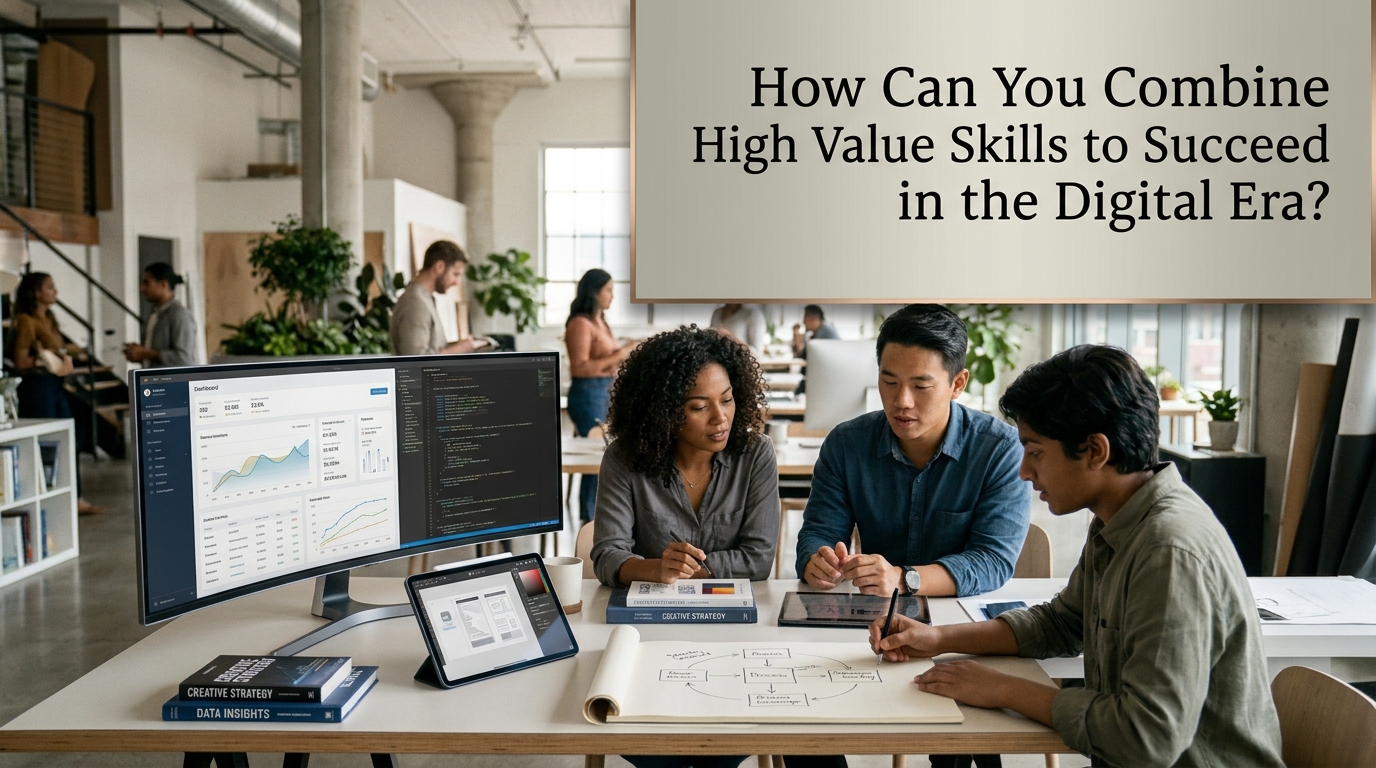
The digital era has transformed the way people work, communicate, and develop their careers. Technology continues to influence almost every industry, creatingnew opportunities as well as challenges for students, graduates, and professionals. To remain competitive, individuals need more than one specific ability. They must learn how to combine different high-value skills to handle professional responsibilities and adapt to changing workplace demands.
High-value skills are abilities that provide practical benefits in professional environments, such as digital literacy, communication, critical thinking, leadership, and problem-solving. When these skills are developed together, individuals can become more productive, creative, and flexible. Understanding how to combine them is an important step toward achieving success in the modern digital workplace.
1. UNDERSTANDING THE IMPORTANCE OF HIGH VALUE SKILLS
High-value skills help individuals perform their responsibilities effectively and respond to professional challenges. In the digital era, employers increasingly need workers who understand technology while maintaining strong interpersonal abilities. Technical knowledge is important, but it becomes more useful when supported by communication, creativity, and analytical thinking.
For example, a professional who understands data analysis can provide valuable information, while strong communication skills help explain the results to colleagues and managers. This combination makes knowledge more useful in practical situations. Combining different competencies allows individuals to contribute more effectively to their organizations.
2. COMBINING DIGITAL LITERACY WITH CRITICAL THINKING
Digital literacy helps individuals use technology, access information, and operate modern workplace tools. However, being able to use digital applications is not enough because information found online must also be evaluated carefully. Critical thinking allows professionals to identify reliable sources, recognize misleading information, and make logical decisions.
For example, employees may use artificial intelligence to collect ideas or summarize information, but they still need to check the accuracy and relevance of the results. Combining these abilities helps prevent mistakes and supports responsible technology use. Digital literacy and critical thinking create a strong foundation for working effectively in technology-driven environments.
3. DEVELOPING COMMUNICATION AND TECHNOLOGY SKILLS
Modern workplaces rely on digital communication platforms to connect employees, customers, and business partners. Professionals need to understand how to use email, video conferencing, project management applications, and collaborative documents. At the same time, they must communicate ideas clearly and maintain professional relationships through digital channels.
Combining communication and technology skills makes teamwork more efficient, especially when employees work remotely or collaborate across different locations. For example, a project coordinator may use digital platforms to organize tasks while communicating deadlines and expectations to team members. Effective digital communication helps reduce misunderstandings and supports better collaboration.
4. COMBINING DATA ANALYSIS WITH PROBLEM-SOLVING
Data analysis helps professionals understand information, recognize patterns, and identify trends. These abilities become more valuable when combined with problem-solving because analytical results can be used to develop practical solutions. Organizations need employees who can understand data and determine what actions should be taken based on the findings.
For instance, a business may analyze customer feedback to discover why sales are decreasing. Employees can then use critical thinking to evaluate possible causes and recommend improvements. Data-driven problem-solving helps organizations make more informed decisions and improve their performance.
5. STRENGTHENING LEADERSHIP AND TEAMWORK
Leadership and teamwork are important skills for achieving shared professional goals. A good leader must understand team responsibilities, communicate expectations, and encourage members to contribute their abilities. Meanwhile, teamwork requires cooperation, respect, and a willingness to consider different perspectives.
Combining these abilities helps individuals manage projects and create positive working relationships. Students can develop them by joining campus organizations, participating in group projects, and coordinating activities. Leadership and collaboration prepare individuals to handle greater responsibilities in their future careers.
6. COMBINING CREATIVITY WITH ARTIFICIAL INTELLIGENCE
Artificial intelligence provides tools that can support content creation, research, data processing, and many other professional activities. However, technology does not automatically guarantee original or meaningful results. Human creativity is still needed to develop ideas, understand audience needs, and determine whether AI-generated content is appropriate.
Professionals who combine creativity with AI knowledge can explore new ways to improve their work. For example, digital marketers can use AI to examine customer trends while applying creative thinking to develop effective campaigns. Human creativity and AI technology can work together to improve productivity and encourage innovation.
7. IMPROVING TIME MANAGEMENT AND ADAPTABILITY
The digital era provides many tools that help individuals organize their activities and complete tasks more efficiently. However, using technology without proper planning can create distractions and reduce productivity. Time management helps professionals establish priorities, organize schedules, and complete responsibilities according to deadlines.
Adaptability is equally important because digital tools and workplace requirements continue to change. Individuals must be willing to learn new applications, adjust their working methods, and improve their abilities when necessary. Combining time management and adaptability helps professionals remain productive while responding to new challenges.
8. APPLYING HIGH VALUE SKILLS THROUGH PRACTICAL EXPERIENCE
Learning different skills is more effective when individuals apply them in real situations. Students can participate in internships, research projects, competitions, volunteering, and campus organizations to gain practical experience. These activities allow them to combine technical knowledge with communication, teamwork, and problem-solving.
Professionals can also develop their abilities by managing projects, joining training programs, and working with people from different backgrounds. Creating a portfolio of completed projects can demonstrate how various skills are used in practice. Practical experience and continuous learning help transform knowledge into valuable professional capabilities.
9. BUILDING A PERSONAL DEVELOPMENT PLAN FOR THE DIGITAL ERA
Developing multiple skills requires clear goals and consistent effort. Individuals should begin by identifying their career interests and researching the competencies required in their preferred industries. After that, they can prioritize the most relevant abilities instead of trying to master everything at once.
A personal development plan can include online courses, practical projects, professional certifications, and regular skill evaluations. It is also important to request feedback from lecturers, mentors, or experienced colleagues. A structured learning plan helps individuals monitor their progress and improve their professional readiness over time.
CONCLUSION
Combining high-value skills is an effective way to prepare for success in the digital era. Digital literacy, communication, critical thinking, data analysis, leadership, creativity, and adaptability become more powerful when used together. These abilities help individuals solve problems, work efficiently, and respond to changing professional demands.
Students and professionals should focus on developing skills that match their career goals while remaining open to new knowledge and technology. Success does not depend on mastering every available skill but on knowing how to apply the right abilities in practical situations. Through continuous learning, practical experience, and effective skill combinations, individuals can strengthen their professional potential and build successful careers in the digital world.
Recent Posts

Bagaimana Sistem SKS pada Program Kuliah... 22.11.2026/40 View

How Does Technology Make Daily Evaluation... 21.11.2026/71 View

Apa Strategi Menghadapi Kesenjangan antara Kompetensi... 21.11.2026/73 View

Mengapa Inventaris Aset Penting bagi Kelancaran... 21.11.2026/69 View

When Should Musicians Join a Record... 21.11.2026/73 View
