

How Can You Deal With Difficult Negotiators Effectively?
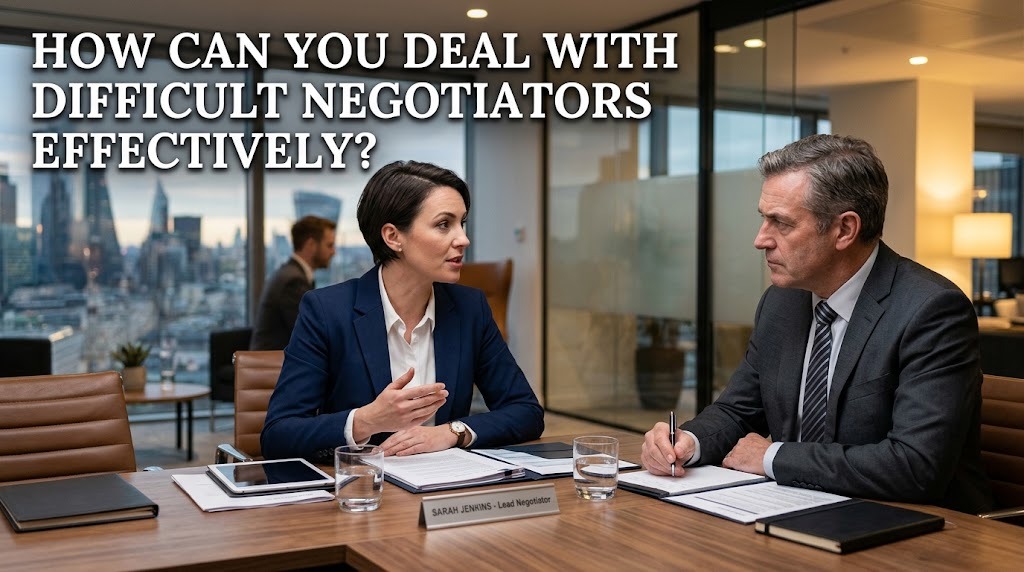
Negotiation can become challenging when the other party is aggressive, stubborn, overly demanding, or unwilling to compromise. Difficult negotiators may use pressure, emotional reactions, or strong demands to influence the outcome of a discussion. Without the right approach, these situations can create conflict and make it difficult to reach a fair agreement. Learning how to handle challenging behavior can help you remain calm while protecting your interests. Therefore, understanding effective ways to deal with difficult negotiators is an important part of developing strong negotiation skills.
UNDERSTAND THE OTHER PARTY
The first step in dealing with a difficult negotiator is to understand why they are behaving in a challenging way. Their behavior may be influenced by pressure, uncertainty, competing priorities, or concerns about the agreement. Instead of immediately reacting negatively, try to identify the underlying interests behind their position. Asking clear and relevant questions can help reveal what they actually want to achieve. This information can provide opportunities to develop a solution that addresses important concerns.
It is also important to separate the person's behavior from the actual negotiation issue. A person may communicate aggressively while still having reasonable interests that need to be considered. Focusing on the issue rather than taking the behavior personally can help you remain professional. Active listening can provide valuable information and reduce misunderstandings during difficult discussions. Understanding the other party gives you a stronger basis for choosing the right response.
STAY CALM AND PROFESSIONAL
Maintaining emotional control is essential when dealing with difficult negotiators. Responding to anger with anger can quickly make the situation worse and reduce the possibility of cooperation. Instead, use a calm and professional communication style even when the other party becomes demanding. Speak clearly, avoid unnecessary confrontation, and give yourself time to think before responding to difficult statements. This approach can help keep the negotiation focused on the actual issues.
If the conversation becomes extremely tense, taking a short break may be useful. A pause can give both parties an opportunity to reconsider their positions without making impulsive decisions. Remaining calm also demonstrates confidence and can prevent the other party from controlling the discussion through emotional pressure. Professional behavior can protect your reputation and maintain the possibility of future cooperation. Emotional control is therefore one of the most valuable skills in challenging negotiations.
SET CLEAR BOUNDARIES
Difficult negotiators may sometimes make unrealistic demands or attempt to pressure you into accepting unfavorable conditions. In these situations, it is important to establish clear boundaries before the negotiation progresses too far. Know which terms are essential, which areas are flexible, and what conditions you cannot accept. Communicate these limits firmly but respectfully so the other party understands your position. Clear boundaries can prevent the negotiation from moving toward an unacceptable outcome.
Setting boundaries does not mean refusing to compromise. You can remain flexible on less important issues while protecting your most important interests. If the other party makes an unreasonable demand, explain why the request creates a problem and offer a realistic alternative. This keeps the discussion solution-oriented rather than confrontational. Strong boundaries help you maintain bargaining power without damaging the professional relationship.
USE QUESTIONS AND FACTS
Questions can be powerful tools when dealing with difficult negotiators. Instead of immediately challenging a strong demand, ask the other party to explain the reasoning behind it. Questions such as what they need, why a particular condition is important, or what alternatives they are considering can reveal useful information. This approach encourages the other party to explain their position while giving you time to evaluate the situation. Strategic questioning can therefore shift a difficult conversation toward a more productive discussion.
Facts are equally important because objective information can reduce arguments based purely on opinions. Depending on the situation, relevant data may include market prices, performance records, deadlines, costs, or contractual terms. Presenting reliable information makes your position easier to understand and defend. It also reduces the need for personal confrontation because the discussion can focus on evidence. Combining questions with objective facts can make negotiations more rational and effective.
FIND COMMON INTERESTS
Even difficult negotiators usually have interests that can overlap with yours. Finding these shared interests can create a foundation for cooperation. For example, both parties may want to reduce costs, complete a project quickly, maintain quality, or establish a long-term relationship. Identifying common interests allows the discussion to move away from opposing demands and toward shared goals. This can make it easier to develop solutions that provide value for both sides.
A win win approach does not mean accepting every demand from the other party. Instead, it means looking for ways to satisfy important priorities while protecting your own essential interests. You can offer several alternatives and allow the other party to choose the option that best fits their priorities. Providing choices can make them feel involved in the decision-making process. Finding common ground can ultimately lead to a more balanced and sustainable agreement.
KNOW WHEN TO WALK AWAY
Sometimes a negotiation cannot produce a fair or practical agreement. If the other party continues making unacceptable demands or refuses to respect reasonable boundaries, you should be prepared to consider your alternatives. Knowing your best alternative to a negotiated agreement can prevent you from accepting harmful terms simply to reach a deal. A strong alternative gives you greater confidence and reduces the pressure to compromise excessively. Walking away can sometimes be a better decision than accepting an agreement that creates significant long-term problems.
However, ending a negotiation should usually be handled professionally. Explain your position clearly and avoid personal attacks or unnecessary threats. If circumstances change, you may be able to return to the discussion later with different conditions. Maintaining professionalism can preserve future opportunities even when the current negotiation does not succeed. Knowing when to walk away is an important part of effective negotiation strategy.
CONCLUSION
Dealing with difficult negotiators requires patience, preparation, emotional control, and clear communication. Understanding the other party's interests, setting boundaries, asking strategic questions, and using objective facts can help you manage challenging discussions more effectively. Finding common interests can also create opportunities for cooperation without sacrificing important goals. When an acceptable agreement is impossible, knowing your alternatives can help you make a responsible decision rather than accepting unfavorable terms. Ultimately, effective negotiation is about protecting your interests while maintaining professionalism and creating practical solutions.
Recent Posts

Bagaimana Sistem SKS pada Program Kuliah... 22.11.2026/37 View

How Does Technology Make Daily Evaluation... 21.11.2026/70 View

Apa Strategi Menghadapi Kesenjangan antara Kompetensi... 21.11.2026/73 View

Mengapa Inventaris Aset Penting bagi Kelancaran... 21.11.2026/68 View

When Should Musicians Join a Record... 21.11.2026/71 View
