

How Can You Develop Musical Intelligence From an Early Age?
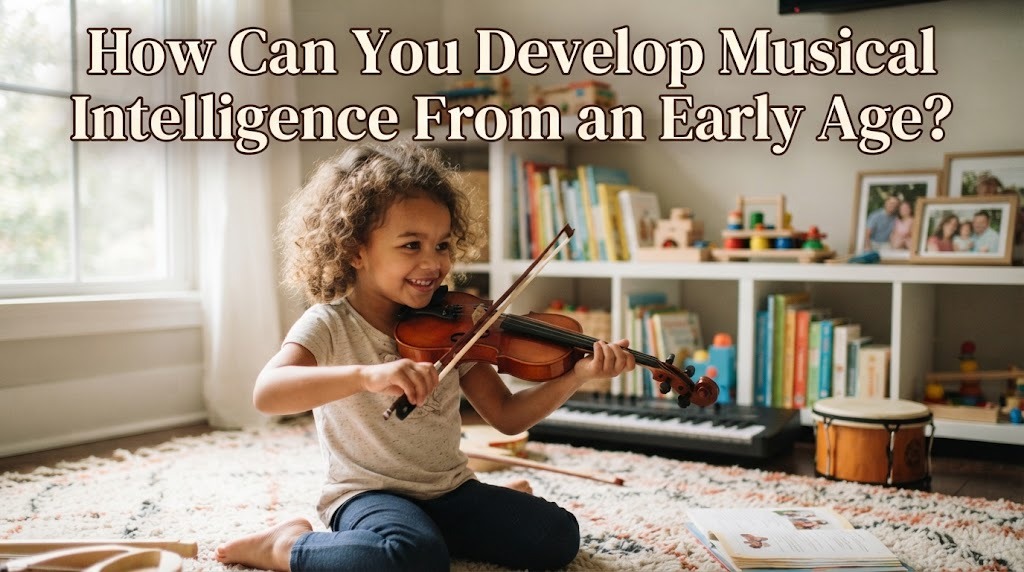
Musical intelligence is the ability to recognize, understand, remember, and respond to musical elements such as rhythm, melody, pitch, and tone. Developing musical intelligence from an early age can help children explore sounds, express emotions, and discover their interests in music. Early childhood is a useful time to introduce musical activities because children naturally learn through listening, movement, imitation, and play.
However, developing musical intelligence does not mean that every child must become a singer or professional musician. The goal is to provide enjoyable opportunities for children to explore music and build their abilities gradually. With supportive guidance, regular practice, and age-appropriate activities, parents and teachers can help children develop musical skills while encouraging creativity and confidence.
INTRODUCE CHILDREN TO DIFFERENT TYPES OF MUSIC
One simple way to develop musical intelligence is to introduce children to a variety of music. Parents can play children's songs, traditional music, classical pieces, instrumental music, and other age-appropriate genres. Different musical styles expose children to varied rhythms, melodies, instruments, and sounds.
Listening together can make this activity more meaningful. Parents can ask children whether a song sounds fast or slow, which instruments they can hear, or how the music makes them feel. These simple conversations encourage children to listen carefully and notice differences between musical sounds. The purpose is not to test them but to help them become curious and comfortable exploring music.
SING SONGS TOGETHER REGULARLY
Singing is an enjoyable way to introduce children to melody, rhythm, and language. Parents can sing familiar songs during playtime, while getting ready for bed, or during everyday activities. Repeatedly hearing and singing the same songs helps children become familiar with musical patterns and remember melodies.
Children do not need to sing perfectly to benefit from the experience. Allowing them to sing at their own pace can help them feel comfortable experimenting with their voices. Parents can also use songs with repeated words or simple movements to make the activity more engaging. Regular singing provides opportunities for children to listen, imitate sounds, and express themselves through music.
ENCOURAGE RHYTHM THROUGH CLAPPING AND MOVEMENT
Rhythm is an important element of musical intelligence, and children can begin exploring it through simple movements. Clapping hands, tapping a table gently, marching, or moving their bodies to a song can help children notice the beat. These activities are especially useful because they combine listening with physical movement.
Parents can start with a steady beat and encourage children to copy it. As children become more comfortable, they can try simple patterns, such as two quick claps followed by one slow clap. Children can also create their own rhythms and invite family members to repeat them. This playful approach helps develop rhythmic awareness without requiring formal music lessons.
PROVIDE SIMPLE MUSICAL INSTRUMENTS
Simple musical instruments give children a chance to explore how sounds are produced. Instruments such as tambourines, small drums, bells, shakers, and xylophones can introduce children to different tones and rhythmic patterns. Everyday objects, such as safe containers filled with suitable materials, may also be used for supervised sound exploration.
Let children experiment with the instruments rather than requiring them to follow strict instructions immediately. They can compare loud and soft sounds, create short rhythms, or play along with familiar songs. As they grow older, they may become interested in learning an instrument more systematically. Instruments should always be suitable for the child's age, with small parts and loud sounds avoided when they could pose a safety risk.
MAKE MUSIC PART OF DAILY ACTIVITIES
Musical learning does not need to happen only during lessons. Parents can include songs and rhythmic activities in everyday routines, such as tidying toys, getting dressed, or preparing for bedtime. A simple song can make a routine more enjoyable while giving children repeated opportunities to hear musical patterns.
Everyday activities can also encourage children to create their own songs. For example, they might make up a melody about their favorite toy or sing about what they did during the day. These activities help children connect music with familiar experiences and use their imagination. Keeping music enjoyable and varied can help maintain their interest without turning every activity into a formal lesson.
ENCOURAGE MUSICAL CREATIVITY
Musical intelligence involves more than copying songs or playing instruments correctly. Children can also develop their abilities by creating their own melodies, inventing rhythms, or combining different sounds. Creative activities allow them to experiment and discover how music can communicate ideas and feelings.
Parents can encourage creativity by asking children to make up a song about an animal, a story, or an experience. Children can also choose instruments to represent different characters or create sound effects for a story. There is no need to judge every result as good or bad. Providing freedom to experiment helps children build confidence and discover their own musical interests.
SUPPORT LEARNING THROUGH GAMES
Musical games can make learning enjoyable while helping children practice listening and memory. Activities such as guessing familiar songs, copying a rhythm, identifying instruments, or stopping and starting movements with the music can introduce important musical concepts. Games can also be adjusted to match a child's age and abilities.
For younger children, simple games with repetition are often easier to follow. Older children may enjoy more challenging activities, such as remembering longer rhythms or identifying differences between two melodies. Parents should keep the games relaxed and avoid making children feel embarrassed when they make mistakes. A positive learning environment encourages children to keep exploring and trying new activities.
CONSIDER MUSIC CLASSES WHEN CHILDREN ARE READY
Music classes can provide structured opportunities for children to develop their musical skills. Depending on their age and interests, children may join singing groups, early childhood music programs, rhythm classes, or beginner instrument lessons. A supportive teacher can introduce basic musical concepts and help children practice gradually.
Choosing an appropriate class is more important than starting as early as possible. Consider whether the activities suit the child's developmental stage, whether the teacher encourages participation, and whether the child enjoys attending. Some children may benefit from formal lessons, while others may prefer informal musical play at home. Both approaches can provide valuable opportunities to explore music.
CREATE A SUPPORTIVE MUSICAL ENVIRONMENT
Children are more likely to explore music when they feel supported rather than pressured. Parents can provide access to suitable music, encourage questions, and join musical activities when possible. Praising effort, curiosity, and improvement can help children feel confident even when they are still learning.
It is also important to respect individual differences. Some children may quickly remember melodies, while others may prefer movement, instruments, or listening. A child who does not show strong musical interest at first should not be forced to pursue it. Giving children time and different opportunities allows their interests and abilities to develop naturally.
CONCLUSION
Developing musical intelligence from an early age can begin with simple activities such as listening to different types of music, singing together, clapping rhythms, exploring instruments, and creating songs. Musical games and age-appropriate classes can provide additional opportunities to practice listening, memory, rhythm, and creativity.
Most importantly, children need a supportive environment where music is enjoyable rather than a source of pressure. Every child develops at a different pace, and musical intelligence can grow through experience and practice. By making music a positive part of daily life, parents and teachers can help children explore their abilities and build a lasting appreciation for music.
Recent Posts

Bagaimana Sistem SKS pada Program Kuliah... 22.11.2026/25 View

How Does Technology Make Daily Evaluation... 21.11.2026/64 View

Apa Strategi Menghadapi Kesenjangan antara Kompetensi... 21.11.2026/65 View

Mengapa Inventaris Aset Penting bagi Kelancaran... 21.11.2026/62 View

When Should Musicians Join a Record... 21.11.2026/61 View
