

How Can You Develop Verbal Intelligence from a Young Age?
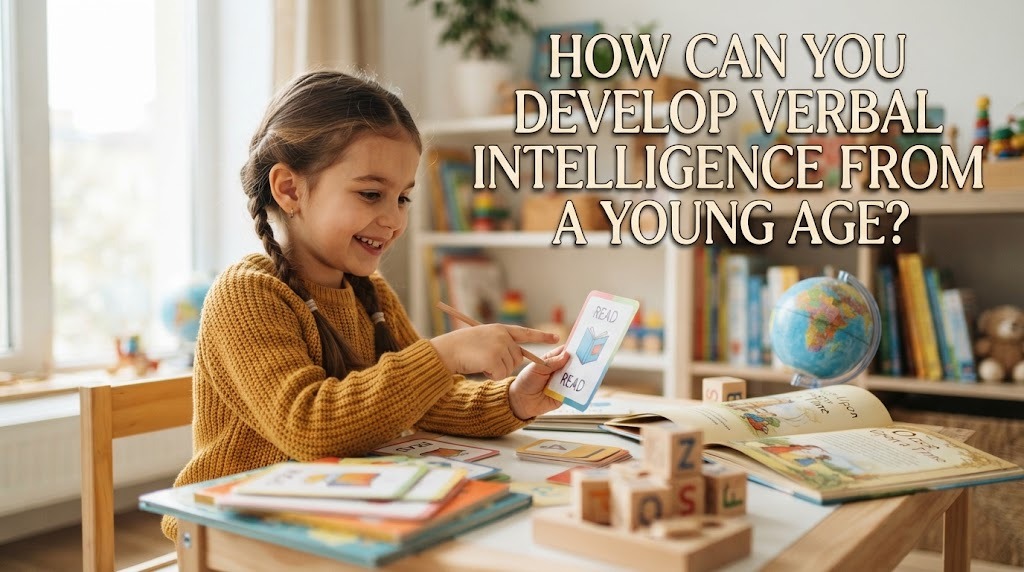
Verbal intelligence is the ability to understand, use, and communicate language effectively. Developing this ability from a young age can help children express ideas, understand information, and interact with other people. Early language experiences can also support reading, writing, listening, and speaking skills. Children can develop verbal intelligence through simple activities at home, school, and in their surroundings. With regular practice and supportive guidance, these abilities can continue to grow as they get older.
INTRODUCE LANGUAGE THROUGH DAILY CONVERSATIONS
Daily conversations are a simple way to develop verbal intelligence from an early age. Parents, teachers, and other adults can encourage children to talk about their activities, experiences, feelings, and interests. Asking open questions gives children opportunities to explain their thoughts instead of answering with only one word. These conversations can improve speaking skills and help children learn how to organize ideas. Regular interaction also gives them opportunities to hear different words and sentence patterns.
Adults can support children by listening patiently and responding to what they say. Correcting every small mistake may make children less comfortable when communicating, so guidance should be given in a supportive way. Adults can repeat incorrect expressions using the correct form without interrupting the conversation too much. This approach allows children to learn naturally while maintaining their confidence. Positive communication can make language practice more enjoyable and consistent.
ENCOURAGE CHILDREN TO READ REGULARLY
Reading is an important activity for developing verbal intelligence. Children can start with age-appropriate storybooks, picture books, educational texts, or other interesting materials. Reading introduces them to new vocabulary, sentence structures, and different ideas. It can also improve their ability to understand information and follow a story or explanation. Over time, regular reading can strengthen language comprehension.
Adults can make reading more interactive by asking children about the characters, events, or main ideas in a book. Children can also be encouraged to explain what they have read in their own words. Discussing unfamiliar words can expand vocabulary and improve understanding. The reading material should match the child's age and interests to maintain motivation. A consistent reading habit can provide valuable language exposure from an early stage.
DEVELOP WRITING AND STORYTELLING SKILLS
Writing activities can help children organize their thoughts and express them through language. Young children can begin with simple activities such as writing short sentences, describing pictures, or keeping a basic journal. As their abilities develop, they can create stories, summaries, or personal opinions. These activities can strengthen writing skills and help children understand how ideas are connected. Writing also gives them an opportunity to review their own thoughts.
Storytelling can complement writing practice because children need to arrange events in a logical order. They can create stories based on pictures, personal experiences, or their imagination. Parents and teachers can ask questions about what happened first, next, and last. This encourages children to use descriptive words and explain relationships between events. Creative storytelling can make language learning more enjoyable while strengthening communication abilities.
PRACTICE LISTENING AND SPEAKING ACTIVITIES
Listening is an important part of verbal intelligence because children need to understand language before they can respond effectively. Adults can read stories aloud, have conversations, or provide simple instructions for children to follow. Children can then explain what they heard or answer questions about the information. These activities can strengthen listening skills and improve their understanding of spoken language. Active listening can also support communication in school and social situations.
Speaking activities can include telling stories, describing objects, discussing favorite topics, or presenting simple ideas. Children should be given enough time to express themselves without being rushed. They can gradually learn how to speak clearly and choose words that match what they want to communicate. Group activities can provide additional opportunities to practice speaking with other children. Regular practice can make communication feel more natural over time.
CREATE A SUPPORTIVE LANGUAGE ENVIRONMENT
A supportive environment can make a significant difference in a child's language development. Children benefit from having opportunities to read, talk, listen, ask questions, and express opinions without unnecessary pressure. Families and schools can provide different materials and activities that encourage communication. Limiting distractions during conversations can also help children pay attention to language. The goal is to make language a natural part of everyday life.
Adults can also become positive examples by communicating clearly and showing interest in what children say. Encouraging questions can help children become curious about words and information. Mistakes should be treated as opportunities to learn rather than reasons for embarrassment. Children develop at different rates, so their progress should be supported according to their individual needs. With patience, encouragement, and consistent practice, verbal intelligence can continue to develop throughout childhood.
CONCLUSION
Verbal intelligence can be developed from a young age through daily conversations, reading, writing, storytelling, listening, and speaking activities. Children need regular opportunities to use language in meaningful and enjoyable situations. Support from parents, teachers, and other adults can help them build vocabulary and communicate their ideas more clearly. A positive language environment can also encourage curiosity and confidence. Starting early can provide a strong foundation for communication, learning, and future development.
Recent Posts

Bagaimana Sistem SKS pada Program Kuliah... 22.11.2026/21 View

How Does Technology Make Daily Evaluation... 21.11.2026/63 View

Apa Strategi Menghadapi Kesenjangan antara Kompetensi... 21.11.2026/65 View

Mengapa Inventaris Aset Penting bagi Kelancaran... 21.11.2026/62 View

When Should Musicians Join a Record... 21.11.2026/59 View
