

How Can You Identify Someone With Bodily Kinesthetic Intelligence?
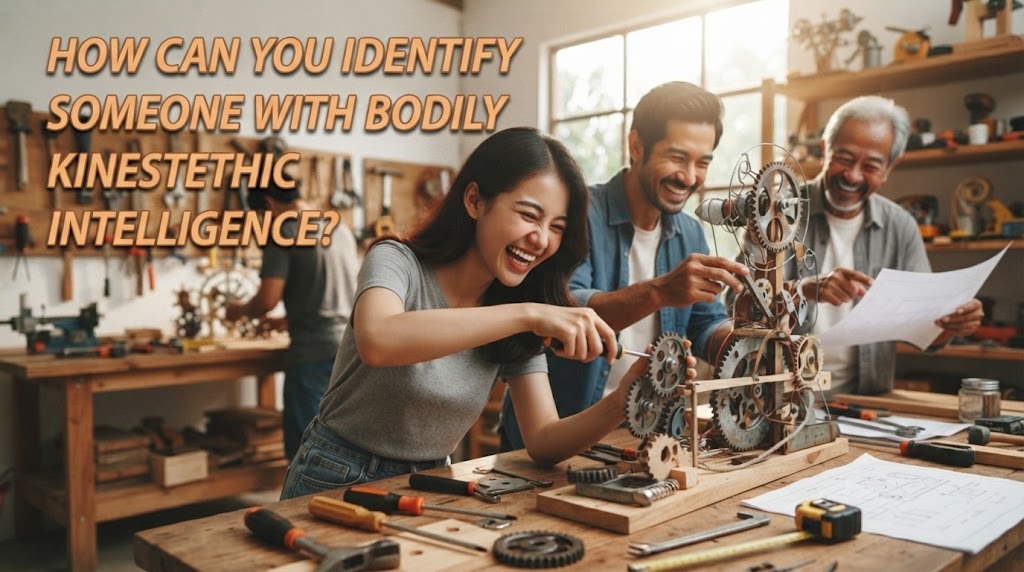
Bodily kinesthetic intelligence is the ability to use the body effectively to express ideas, solve problems, and perform physical activities. People with this intelligence often learn better through movement, practice, and direct experience rather than only through reading or listening. This ability is commonly associated with activities such as sports, dancing, crafts, acting, and hands-on work. However, having bodily kinesthetic intelligence does not mean someone must be an athlete or performer. It can also appear in everyday activities that require body control, coordination, and practical skills.
WHAT IS BODILY KINESTHETIC INTELLIGENCE?
Bodily kinesthetic intelligence refers to the ability to control body movements accurately and use physical actions purposefully. The concept is part of Howard Gardner's theory of multiple intelligences, which describes different ways people can demonstrate abilities and learn. Someone with strong bodily kinesthetic intelligence may be comfortable using their hands, body, and physical movement to complete tasks. They may also understand information more easily when they can practice or experience it directly. This intelligence can develop through practice, experience, and different physical activities.
It is important to understand that bodily kinesthetic intelligence is not simply about being physically strong. A person may show this intelligence through precise hand movements, good timing, body awareness, or the ability to learn physical procedures quickly. For example, someone may be skilled at repairing objects, playing a musical instrument, creating crafts, or performing dance movements. These abilities involve the effective connection between the brain, body, and environment.
SIGNS OF SOMEONE WITH BODILY KINESTHETIC INTELLIGENCE
One common sign is a strong preference for learning through practice and movement. Instead of only reading instructions, the person may understand a task faster after seeing a demonstration and trying it themselves. They may also remember procedures better when they physically perform them. Another sign is good coordination and body awareness, especially during activities that require controlled movements. They may naturally pay attention to how their body moves and adjusts during an activity.
People with this ability may also enjoy activities that involve building, creating, performing, or manipulating physical objects. They can sometimes become highly focused when working with their hands because the activity gives them an opportunity to solve problems directly. They may also be comfortable repeating a movement until they can perform it accurately. These signs do not automatically prove that someone has strong bodily kinesthetic intelligence, but they can provide useful clues about how the person prefers to learn and work.
HOW DO THEY LEARN AND WORK?
Someone with bodily kinesthetic intelligence may prefer hands-on learning instead of relying entirely on lectures or written explanations. For example, when learning how to use equipment, they may understand the process faster after practicing it directly. Demonstrations, simulations, experiments, role-playing, and physical projects can also help them understand new information. They may remember a lesson more effectively when they can connect the information with an actual activity. This learning preference can be useful in both education and professional environments.
In the workplace, these individuals may enjoy tasks that involve movement, tools, materials, or practical problem-solving. They can show their abilities through activities that require precision, timing, coordination, and physical control. However, bodily kinesthetic intelligence does not mean a person cannot succeed in academic or theoretical subjects. With suitable learning methods, they can combine physical experience with reading, discussion, and other forms of learning.
ACTIVITIES THAT CAN REVEAL BODILY KINESTHETIC INTELLIGENCE
Several activities can help reveal this type of intelligence. Sports and physical exercise can demonstrate body control, balance, timing, and coordination. Dancing and acting can show how effectively someone uses movement to communicate ideas and emotions. Crafting, drawing by hand, cooking, gardening, and repairing objects can also involve careful physical control. Activities such as playing musical instruments may require coordination between the eyes, hands, ears, and other parts of the body.
Practical projects can provide another way to observe this ability. For example, someone may enjoy assembling objects, creating models, conducting experiments, or learning through demonstrations. The important factor is not whether the activity looks impressive but whether the person can use physical movement effectively to achieve a goal. Different people may express this intelligence in different ways depending on their interests, experiences, and opportunities.
HOW CAN YOU IDENTIFY IT IN DAILY LIFE?
You can identify possible signs of bodily kinesthetic intelligence by observing how someone responds to everyday tasks. A person may quickly understand how to operate an unfamiliar tool after watching a short demonstration. They may also naturally adjust their movements when performing tasks that require balance, accuracy, or coordination. Another possible sign is that they prefer doing something directly rather than discussing the process for a long time. They may also remember experiences because of the physical actions involved.
However, one behavior should not be used as the only measure of intelligence. A person's skills can be influenced by training, experience, motivation, environment, and access to learning opportunities. Someone who has never practiced a particular activity may not immediately demonstrate strong performance. Therefore, identification should consider repeated patterns across different situations rather than one isolated experience.
HOW CAN THIS INTELLIGENCE BE DEVELOPED?
Bodily kinesthetic intelligence can be developed through regular practice and meaningful physical activities. People can start with activities that match their interests, such as sports, dancing, crafts, cooking, gardening, or practical projects. Repeating movements can help improve coordination, accuracy, and confidence over time. It is also useful to combine physical practice with observation and feedback. This allows a person to recognize mistakes and make better adjustments.
Learning should also be varied because physical intelligence can work together with other abilities. For example, a person learning a dance can watch a demonstration, listen to instructions, practice movements, and evaluate their performance. Someone learning a technical skill can read instructions before applying them through hands-on practice. This combination can make learning more active, meaningful, and effective.
CONCLUSION
Identifying someone with bodily kinesthetic intelligence involves looking at patterns in how they move, learn, create, and solve practical problems. They may prefer hands-on experiences, show good coordination, and learn physical procedures through practice. Their abilities can appear in sports, performing arts, crafts, technical work, cooking, and many other everyday activities. However, bodily kinesthetic intelligence should not be judged from physical strength or one particular skill alone. By observing learning preferences, body control, practical skills, and repeated behavior, we can better understand how this form of intelligence may appear in daily life.
SEO KEYWORDS
- Bodily Kinesthetic Intelligence
- Kinesthetic Intelligence
- Body Coordination
- Hands On Learning
- Physical Intelligence
- Kinesthetic Skills
META DESCRIPTION
Bodily Kinesthetic Intelligence helps identify people who learn through movement, practice, coordination, and hands on activities in daily life.
Recent Posts

Bagaimana Sistem SKS pada Program Kuliah... 22.11.2026/27 View

How Does Technology Make Daily Evaluation... 21.11.2026/65 View

Apa Strategi Menghadapi Kesenjangan antara Kompetensi... 21.11.2026/65 View

Mengapa Inventaris Aset Penting bagi Kelancaran... 21.11.2026/62 View

When Should Musicians Join a Record... 21.11.2026/63 View
