

How Can You Improve Reading Speed for Verbal Reasoning Tests?
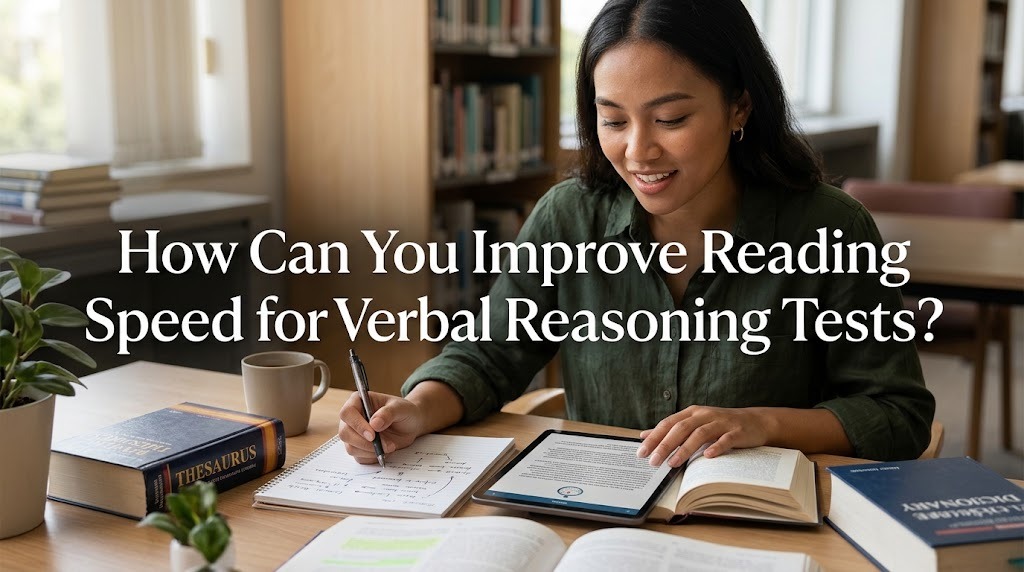
Reading speed is an important ability that can influence performance in verbal reasoning tests. These assessments are commonly used in university admissions, job recruitment, scholarship programs, and professional selection processes. Candidates are often required to read passages, understand written information, and answer questions within a limited period. Therefore, the ability to read efficiently while maintaining accuracy can provide a significant advantage.
However, reading quickly does not mean skipping important information or ignoring the meaning of sentences. Candidates must learn how to identify main ideas, recognize important keywords, and understand the overall message without spending too much time on unnecessary details. With effective reading techniques and consistent practice, individuals can improve their reading speed and achieve better results in verbal reasoning assessments.
UNDERSTAND THE IMPORTANCE OF READING SPEED IN VERBAL REASONING TESTS
Reading speed plays an important role in verbal reasoning assessments because many questions require candidates to process written information before selecting an answer. Some tests include long passages followed by several questions, making efficient reading essential for completing the examination on time.
Candidates who read too slowly may spend too much time understanding individual sentences and have insufficient time to answer other questions. On the other hand, individuals who read too quickly without understanding the content may overlook important details and make inaccurate decisions.
The main objective is to develop a balance between reading speed and comprehension accuracy. Candidates should be able to understand the main message, identify supporting information, and recognize important details without repeatedly reading the same passage.
Improving reading speed can also strengthen overall examination efficiency. When candidates become more comfortable processing written information, they can allocate more time to analyzing difficult questions and evaluating possible answers.
DEVELOP A REGULAR READING HABIT
One of the most effective ways to improve reading speed is by developing a consistent reading habit. Regular exposure to written materials helps individuals become more familiar with vocabulary, sentence structures, and different writing styles. As reading experience increases, the brain becomes more efficient at recognizing words and understanding information.
Candidates can start by reading English articles, newspapers, educational books, and informative websites. Choose materials that match current language abilities before gradually moving to more challenging texts. Reading different subjects also introduces individuals to new vocabulary and various ways of presenting information.
Set aside a specific amount of time each day for reading practice. For example, spend 15 to 20 minutes reading an article and then summarize its main ideas. This activity helps improve reading speed while strengthening the ability to recognize important information.
Consistency is more important than completing a large amount of reading in one session. Practicing regularly can gradually improve reading fluency, vocabulary recognition, and comprehension skills.
USE SKIMMING AND SCANNING TECHNIQUES
Skimming and scanning are two useful reading techniques that help candidates process written information more efficiently. Both methods are particularly valuable in verbal reasoning tests because they allow individuals to find relevant information without reading every word at the same level of detail.
Skimming involves reading a text quickly to understand its general meaning. Candidates can focus on the title, opening sentences, topic sentences, and concluding statements to identify the main idea. This technique is useful when trying to understand the overall subject of a passage.
Meanwhile, scanning involves searching for specific information within a text. Candidates may look for names, dates, numbers, keywords, or particular expressions related to a question. Instead of reading the entire passage repeatedly, they can locate the section containing the required information.
For example, if a question asks about the main reason a company introduced a new policy, candidates can first skim the passage to understand its topic and then scan for information explaining the policy's purpose.
Learning when to use each technique can save valuable examination time. However, candidates should still read carefully whenever a question requires detailed interpretation or logical conclusions.
EXPAND VOCABULARY TO RECOGNIZE WORDS MORE QUICKLY
Vocabulary knowledge has a direct influence on reading speed because individuals who understand more words can process sentences with less effort. When candidates frequently encounter unfamiliar expressions, they may need to stop reading and search for their meanings. This interrupts the reading process and reduces overall efficiency.
Expanding vocabulary helps individuals recognize common words, understand expressions, and interpret sentences more naturally. Candidates should learn new vocabulary through reading and review unfamiliar terms regularly. Recording definitions, synonyms, antonyms, and example sentences can make the learning process more effective.
Another useful method is learning words through context. Instead of immediately translating every unfamiliar word, examine the surrounding sentences to understand its possible meaning. This technique develops the ability to interpret information independently and maintain reading flow.
Candidates can also use flashcards, vocabulary applications, and short exercises to strengthen word recognition. Over time, stronger vocabulary knowledge can improve reading fluency, comprehension accuracy, and information processing speed.
REDUCE UNNECESSARY READING HABITS AND MAINTAIN CONCENTRATION
Some reading habits can slow down the process of understanding written information. For example, repeatedly reading the same sentence, translating every word individually, or focusing too much on minor details can reduce efficiency. Candidates should learn to identify which information is important and avoid unnecessary repetition.
One habit to improve is excessive rereading. Instead of immediately returning to the beginning whenever a sentence feels difficult, try understanding its meaning through the surrounding context. Reread only when important information remains unclear.
Another technique is reducing unnecessary subvocalization, which refers to mentally pronouncing every word while reading. Although this habit can support comprehension, depending on it too heavily may limit reading speed. Practice recognizing familiar word groups and phrases rather than processing every word individually.
Maintaining concentration is equally important. Choose a quiet environment, avoid unnecessary distractions, and practice reading within a specific time limit. These habits can help improve reading efficiency, focus, and information retention during verbal reasoning preparation.
PRACTICE WITH TIMED EXERCISES AND EVALUATE YOUR PROGRESS
Timed reading exercises are useful for measuring improvement and preparing for actual verbal reasoning assessments. Candidates can determine how much information they can read within a specific period while evaluating whether they understand the material correctly.
Start by selecting a short English passage and recording the time needed to read it. After finishing, answer several comprehension questions or write a brief summary to check your understanding. This makes it possible to evaluate both reading speed and accuracy.
As reading ability improves, gradually increase the length and difficulty of the passages. Practice with different topics, including education, technology, business, science, and general knowledge. Exposure to various subjects helps candidates become more comfortable with unfamiliar vocabulary and writing styles.
It is also important to review incorrect answers. If mistakes occur because of overlooked details, slow down slightly and improve attention to important information. If reading takes too long, practice skimming, scanning, and vocabulary recognition more frequently.
Monitor your progress through regular exercises rather than focusing only on speed. The ultimate goal is to achieve faster reading without sacrificing comprehension and accuracy. This balance can help candidates complete verbal reasoning tests more effectively.
CONCLUSION
Improving reading speed for verbal reasoning tests requires consistent practice, strong vocabulary knowledge, effective reading techniques, and good concentration. Candidates should develop regular reading habits, learn skimming and scanning methods, and reduce unnecessary reading behaviors that slow down information processing.
Timed exercises are also important for evaluating progress and becoming familiar with examination conditions. By maintaining a balance between reading speed and comprehension accuracy, individuals can improve their performance and become more confident when facing university admissions, job recruitment, and other verbal reasoning assessments.
Recent Posts

Bagaimana Sistem SKS pada Program Kuliah... 22.11.2026/44 View

How Does Technology Make Daily Evaluation... 21.11.2026/73 View

Apa Strategi Menghadapi Kesenjangan antara Kompetensi... 21.11.2026/75 View

Mengapa Inventaris Aset Penting bagi Kelancaran... 21.11.2026/70 View

When Should Musicians Join a Record... 21.11.2026/74 View
