

How Can You Improve Your Nonverbal Communication Skills?
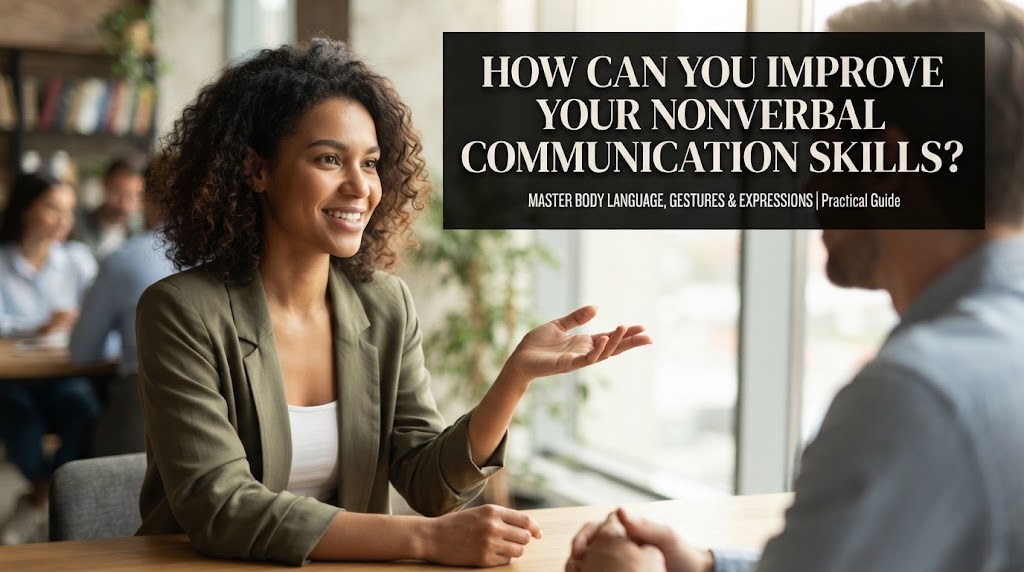
Nonverbal communication skills are important because people communicate through more than spoken words. Facial expressions, eye contact, gestures, posture, tone of voice, and physical distance can influence how a message is understood. Good nonverbal communication can help people appear confident, respectful, attentive, and approachable in different situations.
Improving these skills does not require complicated techniques. People can develop better nonverbal communication by becoming more aware of their own behavior and paying attention to how others respond. With regular practice, these skills can become more natural and useful in everyday, academic, and professional communication.
PAY ATTENTION TO YOUR BODY LANGUAGE
The first step to improving nonverbal communication is becoming aware of your body language. Pay attention to how you sit, stand, move, and position your body when speaking with others. An upright but relaxed posture can create a confident impression, while an overly stiff or closed posture may make communication feel uncomfortable.
Body language should also match the situation. For example, a relaxed posture may be suitable for a casual conversation, while a more professional posture may be appropriate during a job interview. Being aware of these differences can help you communicate more effectively without making your movements look forced.
PRACTICE NATURAL EYE CONTACT
Eye contact can show attention and interest during conversations. Looking at the person who is speaking can make them feel heard and respected. However, maintaining eye contact does not mean staring continuously because excessive eye contact may make the other person uncomfortable.
A better approach is to use natural and balanced eye contact. Look at the speaker while listening and occasionally look away when appropriate. With regular practice, this behavior can become more comfortable and help create stronger communication.
IMPROVE FACIAL EXPRESSIONS
Facial expressions can communicate emotions even when no words are spoken. A natural smile can show friendliness, while an attentive expression can demonstrate interest in a conversation. If your facial expression does not match your words, other people may receive mixed signals.
Try to become more aware of how your face reacts during different situations. You can practice in front of a mirror or record yourself while answering questions. This can help you notice whether your expressions look natural and whether they support the message you want to communicate.
USE APPROPRIATE GESTURES AND POSTURE
Gestures can make spoken communication clearer by emphasizing important ideas. Simple hand movements can help explain information, especially during presentations or discussions. However, excessive gestures may distract listeners and make the speaker appear nervous.
Posture is equally important because it can influence how people perceive confidence and attention. Keep your shoulders relaxed, face the person you are speaking with, and avoid movements that suggest distraction. Controlled and natural gestures can make communication more engaging without becoming excessive.
CONTROL YOUR TONE OF VOICE
Tone of voice is an important part of nonverbal communication because the same words can sound friendly, angry, nervous, or uninterested depending on how they are spoken. Volume, pitch, speed, and pauses can all affect the meaning of a message. Speaking too quickly, too loudly, or too quietly can make communication less effective.
Practice speaking at a comfortable speed and volume. Use pauses when you need to emphasize an important point, and adjust your tone according to the situation. A calm and clear voice can help create a more professional and comfortable interaction.
RESPECT PERSONAL SPACE
Personal space is another important part of effective nonverbal communication. Standing too close may make someone uncomfortable, while standing too far away can make the interaction feel distant. The appropriate distance depends on the relationship, environment, culture, and situation.
Pay attention to how other people respond to your physical distance. If someone moves away, for example, it may be useful to give them more space. Respecting personal boundaries shows consideration and can help create more comfortable social interactions.
PRACTICE AND OBSERVE YOURSELF
Improving nonverbal communication requires consistent practice. One useful method is to record yourself while practicing a presentation, interview, or everyday conversation. Watch the recording and pay attention to your eye contact, facial expressions, posture, gestures, and tone of voice.
You can also ask someone you trust for honest feedback. They may notice habits that you do not recognize yourself. By combining self-observation, feedback, and regular practice, you can gradually develop nonverbal communication skills that feel natural and confident.
CONCLUSION
You can improve your nonverbal communication skills by paying attention to body language, practicing eye contact, improving facial expressions, using appropriate gestures, controlling your tone, and respecting personal space. The key is to communicate naturally rather than trying to control every movement. With awareness and regular practice, better nonverbal communication can support stronger relationships and more effective conversations.
Recent Posts

Bagaimana Sistem SKS pada Program Kuliah... 22.11.2026/40 View

How Does Technology Make Daily Evaluation... 21.11.2026/71 View

Apa Strategi Menghadapi Kesenjangan antara Kompetensi... 21.11.2026/73 View

Mengapa Inventaris Aset Penting bagi Kelancaran... 21.11.2026/69 View

When Should Musicians Join a Record... 21.11.2026/73 View
