

How Can You Learn a Regional Language Quickly and Easily?
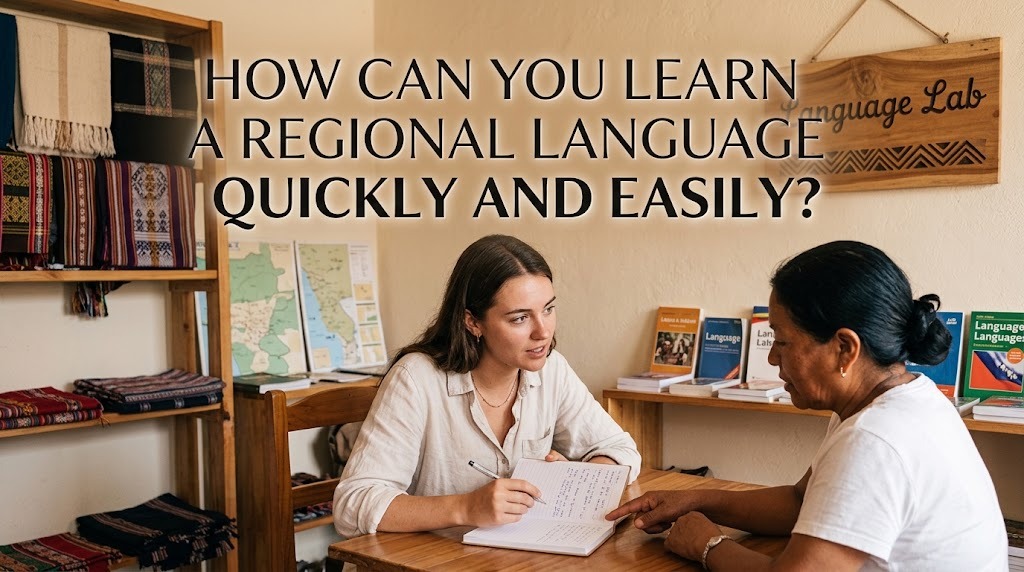
Learning a regional language can help you communicate with local communities, understand cultural traditions, and build stronger relationships with family members. In Indonesia, regional languages such as Javanese, Sundanese, Balinese, and Minangkabau have distinctive vocabulary, pronunciation, and expressions. Although learning a new language may seem difficult at first, the process becomes easier with consistent practice and suitable learning methods. You do not need to memorize hundreds of words immediately to begin communicating. By focusing on common vocabulary, daily conversations, listening practice, and cultural understanding, you can gradually improve your regional-language skills.
START BY LEARNING COMMON WORDS AND EXPRESSIONS
The easiest way to begin learning a regional language is to memorize words and expressions that people frequently use in everyday conversations. Start with greetings, introductions, numbers, family terms, and simple questions. These expressions allow you to participate in basic interactions without needing advanced grammar. For example, learners of Javanese can begin with common greetings such as sugeng enjing, meaning good morning, while learners of Sundanese can learn sampurasun, a traditional greeting used in certain social contexts.
It is also helpful to learn words related to activities you perform every day, such as eating, drinking, studying, working, and traveling. Instead of memorizing long vocabulary lists, practice five to ten useful words or expressions daily. Write each new word in a notebook and create a simple sentence using it. Learning vocabulary in context helps you understand how words function in real communication. Review previously learned expressions regularly so that they become easier to remember and use naturally.
PRACTICE SPEAKING WITH NATIVE SPEAKERS
Speaking with native speakers is one of the most effective ways to improve your regional-language skills. You can practice with parents, grandparents, relatives, neighbors, or friends who regularly use the language. Begin with short conversations about familiar topics, such as food, school, hobbies, or daily activities. Do not worry too much about making mistakes because errors are a normal part of the learning process.
Ask native speakers to correct your pronunciation and explain unfamiliar expressions when necessary. You can also request examples of how the same sentence changes depending on the situation, especially in languages with different levels of politeness. For instance, Javanese has speech levels that influence word choices when speaking to people of different ages or social relationships. Regular speaking practice builds confidence and improves fluency more effectively than studying vocabulary alone. Even a short conversation every day can help you become more comfortable using the language.
LISTEN TO REGIONAL-LANGUAGE CONTENT EVERY DAY
Listening helps you recognize pronunciation, sentence patterns, vocabulary, and natural speaking speed. You can listen to regional songs, watch local films, follow videos made by native speakers, or enjoy traditional storytelling recordings. Choose content that matches your current ability so that you can understand at least some of what you hear. Repeated exposure makes unfamiliar sounds and expressions easier to recognize over time.
You can improve your listening skills by watching a short video several times. First, listen to understand the general meaning, then identify familiar words, and finally repeat selected sentences aloud. If subtitles are available, use them to connect spoken words with their meanings. Digital platforms can provide access to regional-language materials even when you live far from the region where the language is spoken. Consistent listening practice helps learners develop better pronunciation and comprehension while introducing them to local expressions and cultural contexts.
USE DIGITAL TOOLS AND LANGUAGE-LEARNING RESOURCES
Digital technology provides convenient ways to study a regional language at your own pace. Online dictionaries, language-learning videos, educational websites, recorded conversations, and digital books can help you discover new vocabulary and understand grammar. Some regional languages also have dedicated learning applications or community-developed resources, although availability and quality vary. Before relying on a resource, check whether its vocabulary, pronunciation, and examples match the regional variety you want to learn.
You can also use your phone to record yourself speaking and compare your pronunciation with examples from fluent speakers. Create digital flashcards containing new words, meanings, and sample sentences to make review easier. Online communities may offer opportunities to ask questions and practice conversations with other learners or native speakers. Digital tools work best when combined with real communication and regular review. They can support your progress, but interacting with people who use the language naturally remains important for understanding context, politeness, and local expressions.
LEARN GRAMMAR AND CULTURAL CONTEXT GRADUALLY
Understanding basic grammar helps you combine words into meaningful sentences. Begin with simple sentence structures, pronouns, common verbs, questions, and expressions of time. Avoid trying to master every grammatical rule at once because too much information can make learning feel overwhelming. Instead, study one pattern at a time and practice it through short conversations and written examples.
Culture is equally important because regional languages often reflect local customs, social relationships, and ways of showing respect. Some words may be appropriate when speaking with friends but unsuitable when addressing elders or participating in formal situations. Learning these differences helps you communicate more naturally and avoid misunderstandings. Ask native speakers about the context in which particular expressions are used, rather than relying only on direct translations. Understanding cultural context makes language learning more accurate and meaningful because it teaches you not just what to say but also when and how to say it.
CREATE A SIMPLE AND CONSISTENT LEARNING ROUTINE
A regular study routine helps you make progress without spending too much time in a single session. Set aside approximately 15 to 30 minutes each day for vocabulary review, listening, speaking, and sentence practice. For example, spend five minutes reviewing words, ten minutes listening to regional-language content, and another ten minutes practicing a conversation. Adjust the schedule to your needs and increase the difficulty as your skills improve.
Set realistic goals that you can measure, such as learning 30 useful expressions in a week or holding a short conversation within one month. Keep a record of the words you have learned and the situations in which you can use them. Review difficult expressions regularly and celebrate small achievements to maintain motivation. If you miss a day, simply continue the next day rather than abandoning your routine. Consistency is more important than studying for long hours occasionally. With regular practice, useful vocabulary, listening comprehension, and speaking confidence can develop gradually.
CONCLUSION
Learning a regional language quickly and easily requires practical methods, consistent effort, and opportunities to communicate with native speakers. Start with common words, practice short conversations, listen to regional-language content, and use digital resources to support your studies. Learn basic grammar gradually and pay attention to cultural expressions and levels of politeness. A simple daily routine can help you remember vocabulary and improve your confidence without feeling overwhelmed. The most effective approach combines regular practice, meaningful conversations, and cultural understanding. By making a regional language part of your daily life, you can develop useful communication skills while building a stronger connection with Indonesia's cultural heritage.
Recent Posts

Bagaimana Sistem SKS pada Program Kuliah... 22.11.2026/48 View

How Does Technology Make Daily Evaluation... 21.11.2026/76 View

Apa Strategi Menghadapi Kesenjangan antara Kompetensi... 21.11.2026/78 View

Mengapa Inventaris Aset Penting bagi Kelancaran... 21.11.2026/73 View

When Should Musicians Join a Record... 21.11.2026/78 View
