

How Can You Overcome Deadlocks During a Negotiation?
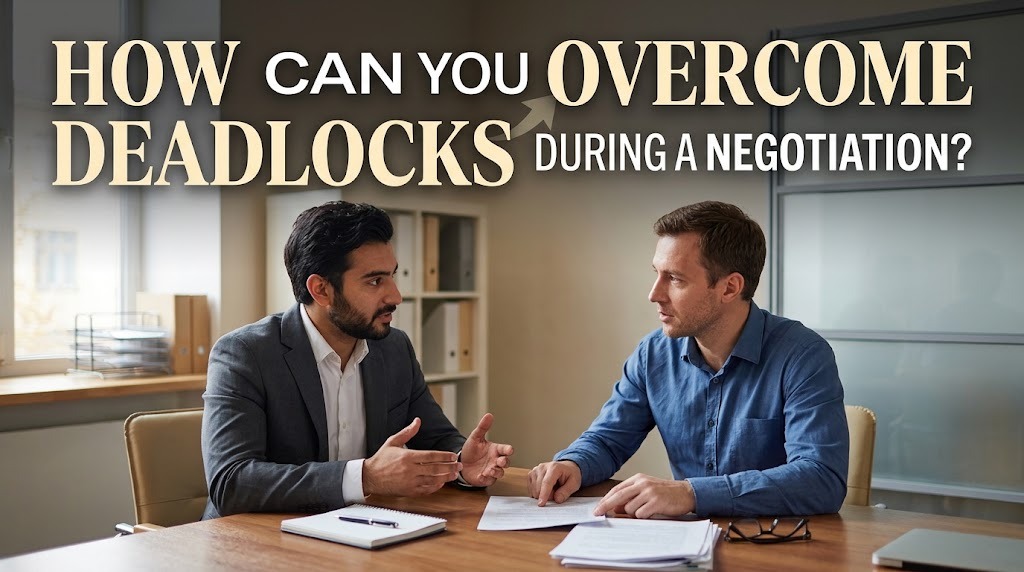
Negotiations do not always move smoothly toward an agreement. Sometimes, both parties reach a deadlock, where neither side is willing or able to make further progress. This situation can happen because of different priorities, limited resources, strong positions, or misunderstandings. If a deadlock is not handled properly, it can delay decisions and damage professional relationships. Learning how to overcome deadlocks can help negotiators find practical solutions while protecting their main interests.
IDENTIFY THE MAIN CAUSE OF THE DEADLOCK
The first step in overcoming a negotiation deadlock is to identify why the discussion has stopped progressing. The disagreement may be caused by price, deadlines, responsibilities, quality standards, or other important conditions. Sometimes, the stated disagreement is only a surface issue hiding a deeper concern. Understanding the real cause can help both parties focus on the problem rather than blaming each other. A clear understanding of the issue creates a stronger foundation for finding a solution.
Negotiators should review the points that have already been discussed and determine where the positions differ. Asking clear and neutral questions can reveal concerns that have not been openly expressed. It is also important to separate essential interests from preferences that may be flexible. Once the key obstacle is identified, both sides can consider whether there are alternative ways to address it. This approach can prevent the negotiation from becoming stuck on one specific demand.
LISTEN AND UNDERSTAND THE OTHER PARTY
Active listening is particularly important when a negotiation reaches a difficult stage. Instead of preparing an immediate response, take time to understand the other party's needs, concerns, and priorities. Careful listening can reveal information that may lead to new solutions. It can also reduce tension because people are more likely to cooperate when they feel that their concerns are being taken seriously. Good listening therefore supports both problem solving and relationship building.
Ask questions that encourage the other party to explain their position in greater detail. Avoid interrupting or dismissing their concerns, even when you strongly disagree with them. Empathy and patience can make communication more productive during tense discussions. You do not have to accept the other party's position simply because you understand it. Understanding their perspective gives you more information to develop a proposal that addresses their actual interests.
EXPLORE ALTERNATIVE SOLUTIONS
A deadlock often continues because both parties focus too narrowly on their original positions. One effective approach is to create multiple possible solutions instead of arguing over a single option. For example, a disagreement about price could be addressed through different payment terms, quantities, delivery schedules, or service arrangements. Expanding the number of options can create opportunities that were not considered at the beginning. This makes the negotiation more flexible and solution oriented.
Brainstorming can also help both parties identify creative alternatives without immediately committing to them. During this stage, negotiators should avoid rejecting ideas too quickly. Some options may initially seem unusual but could become practical after further discussion. The goal is to discover arrangements that provide value for both sides. Once several possibilities are available, the parties can compare them and determine which option is most realistic.
USE FLEXIBILITY AND STRATEGIC CONCESSIONS
Flexibility can be essential when negotiations reach a deadlock. A negotiator who refuses to consider any changes may make agreement difficult or impossible. However, flexibility does not mean giving up important interests without receiving something valuable in return. Instead, consider which points are negotiable and which are essential before making concessions. This allows you to remain flexible while protecting your most important objectives.
Strategic concessions can help restart a stalled negotiation. A concession should be carefully considered rather than offered simply to end the disagreement. If you give something valuable, you can request a reasonable adjustment from the other party. This creates a sense of balanced exchange rather than one-sided sacrifice. Small and well-planned concessions can sometimes encourage both parties to move closer to an agreement.
TAKE A BREAK OR INVOLVE A NEUTRAL PARTY
Sometimes continuing the discussion immediately can make a deadlock worse. Strong emotions, frustration, or repeated arguments may prevent both sides from thinking clearly. In such situations, taking a short and purposeful break can give everyone time to reconsider their priorities. A break should not be used as a way to avoid the issue permanently. Instead, it can provide an opportunity to return to the negotiation with a calmer and more constructive mindset.
If the deadlock continues, involving a neutral third party may be helpful. A mediator or other neutral professional can help clarify issues and encourage both parties to explore possible solutions. The neutral party should support communication rather than force an unfair outcome. This approach can be especially useful when the disagreement is complex or emotionally difficult. External assistance can provide a fresh perspective when direct negotiation is no longer producing progress.
CONCLUSION
Overcoming a negotiation deadlock requires patience, active listening, flexibility, creativity, and strategic thinking. The first priority is to understand the real cause of the disagreement rather than focusing only on opposing positions. Negotiators can then explore alternative solutions that address the interests of both parties. Carefully planned concessions and open communication can also help restart a stalled discussion. When necessary, taking a break or involving a neutral party can provide additional support.
A deadlock does not always mean that an agreement is impossible. In many situations, it simply shows that the current approach is no longer effective. By remaining calm, solution focused, and willing to consider alternatives, negotiators can discover new opportunities for agreement. The goal is not simply to overcome the other party but to find a practical outcome that both sides can accept. These skills can make future negotiations more productive and strengthen professional relationships.
Recent Posts

Bagaimana Sistem SKS pada Program Kuliah... 22.11.2026/37 View

How Does Technology Make Daily Evaluation... 21.11.2026/70 View

Apa Strategi Menghadapi Kesenjangan antara Kompetensi... 21.11.2026/73 View

Mengapa Inventaris Aset Penting bagi Kelancaran... 21.11.2026/68 View

When Should Musicians Join a Record... 21.11.2026/71 View
