

How Can You Overcome Nervousness During a Presentation?
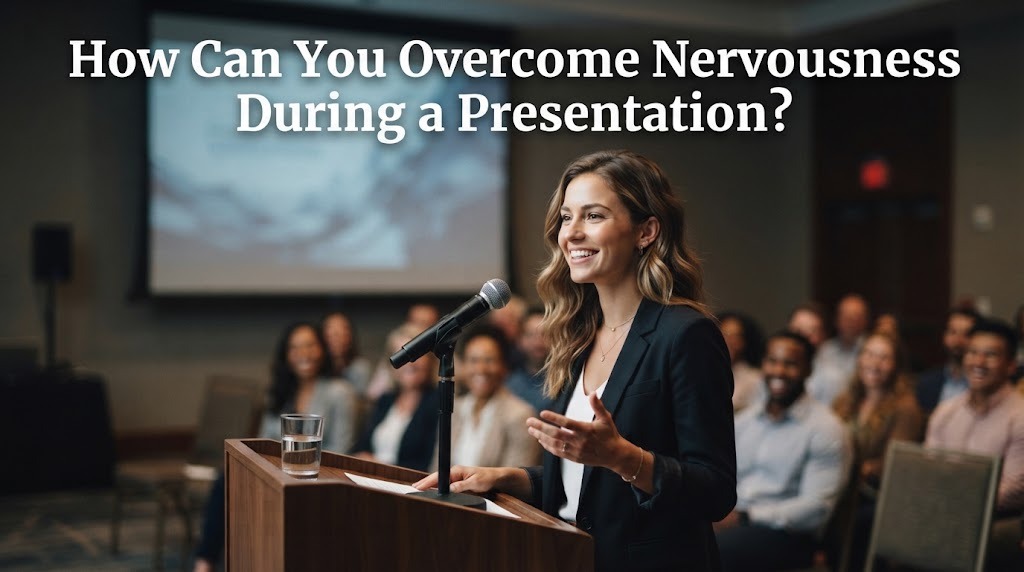
Feeling nervous before or during a presentation is a common experience. Even students and professionals who have presented many times can still feel anxious when speaking in front of an audience. Nervousness may cause a person to forget important information, speak too quickly, or lose confidence. However, proper preparation and regular practice can help reduce these feelings and make presentations more comfortable.
Learning how to manage presentation anxiety is an important communication skill. Instead of trying to eliminate nervousness completely, presenters can learn how to control it and use their energy positively. With the right strategies, anyone can become more confident and deliver information clearly.
PREPARE THE PRESENTATION CAREFULLY
Good preparation is one of the most effective ways to reduce nervousness. Before presenting, understand the topic thoroughly and organize the information into a clear structure. Make sure the introduction, main points, examples, and conclusion are connected logically. When you know what you want to explain, you are less likely to feel confused while speaking.
Preparation also involves checking presentation materials in advance. Review your slides, notes, images, videos, or other supporting materials before the presentation begins. Make sure everything works properly and that the information is accurate. Being prepared can create a stronger sense of control and reduce unnecessary worry.
PRACTICE SPEAKING REGULARLY
Practice is another important way to overcome nervousness during a presentation. Reading the presentation silently is not enough because speaking requires different skills. Try practicing aloud several times so you can become familiar with the words and the order of your ideas. You can practice in front of a mirror, record yourself, or present to a friend.
Repeated practice also helps you identify parts of the presentation that may be difficult to explain. You can improve unclear sentences, adjust your speaking speed, and estimate how long the presentation will take. The goal is not to memorize every sentence perfectly but to understand the main ideas. This allows you to speak more naturally instead of depending completely on written notes.
USE CONTROLLED BREATHING
Nervousness can cause physical reactions such as a faster heartbeat, tense muscles, and shallow breathing. Controlled breathing can help calm the body before and during a presentation. Take a slow breath through your nose and gradually breathe out before you begin speaking. Repeating this process several times can help you feel more relaxed.
It is also useful to pause briefly when you feel overwhelmed during a presentation. A short pause can give you time to breathe and organize your thoughts. There is no need to speak continuously from beginning to end. Controlled breathing and purposeful pauses can make your delivery sound calmer and more professional.
FOCUS ON THE MESSAGE
Many people become nervous because they are too focused on how the audience will judge them. Instead of constantly thinking about possible mistakes, focus on the information you want to share. Remember that the main purpose of a presentation is to communicate a message, explain an idea, or provide useful information. This change in focus can make the presentation feel less intimidating.
It is also important to remember that the audience is not always looking for mistakes. In most educational situations, listeners want to understand the topic being presented. Focusing on helping the audience understand your message can make you feel more purposeful. This mindset can gradually reduce self-consciousness and improve confidence.
START WITH A STRONG INTRODUCTION
The beginning of a presentation can be one of the most stressful moments. Preparing the opening carefully can make the first few minutes easier. You can start with a simple greeting, introduce the topic, and explain why the topic is important. Having a familiar opening can help you begin without spending too much time thinking about what to say.
A strong introduction can also help you establish a comfortable rhythm. Once you have successfully completed the opening, it may become easier to continue with the main content. Avoid trying to make the introduction unnecessarily complicated. A clear and simple opening is often more effective than an overly ambitious one.
MAINTAIN NATURAL BODY LANGUAGE
Body language can influence both the audience's perception and the presenter's confidence. Stand comfortably, keep your shoulders relaxed, and avoid excessive movements. Natural eye contact can also help create a connection with the audience. You do not need to look at every person continuously, but occasionally looking at different parts of the room can make your presentation feel more engaging.
Small physical habits can also reveal nervousness. Constantly moving, playing with objects, looking at the floor, or repeatedly adjusting clothing may distract the audience. Try to keep your movements purposeful and related to what you are explaining. Practicing in advance can help you become more aware of your body language.
USE NOTES EFFECTIVELY
Presentation notes can provide useful support when nervousness causes you to forget information. However, notes should not contain every sentence of the presentation. Instead, use short keywords or phrases that remind you of the main ideas. This approach allows you to maintain eye contact and speak more naturally.
If you forget a point, do not panic. Look at your notes, identify the next key idea, and continue. Most audiences will not notice a short pause or minor mistake. Trying to hide every small mistake can actually increase anxiety. Staying calm and continuing the presentation is usually a better approach.
ACCEPT THAT SOME NERVOUSNESS IS NORMAL
Nervousness is not necessarily a sign that you are unprepared or incapable of presenting. A certain amount of nervous energy can help you stay alert and focused. The important thing is learning how to manage that energy instead of allowing it to control your behavior. Accepting nervousness can reduce the pressure to appear completely calm.
It is also helpful to avoid expecting perfection. Presentations are opportunities to communicate and learn, not tests of whether you can speak without making a single mistake. If you make a small error, correct it when necessary and continue. With experience, you will usually become more comfortable handling unexpected situations.
CONCLUSION
Overcoming nervousness during a presentation requires preparation, practice, and a positive approach. Understanding the topic, practicing aloud, controlling breathing, and preparing useful notes can make the presentation feel more manageable. Natural body language and a clear introduction can also help presenters build confidence from the beginning.
Most importantly, remember that feeling nervous is normal. The goal is not to eliminate nervousness completely but to manage it effectively. With regular experience, students and professionals can become more confident speakers and communicate their ideas more clearly in front of an audience.
Recent Posts

Bagaimana Sistem SKS pada Program Kuliah... 22.11.2026/37 View

How Does Technology Make Daily Evaluation... 21.11.2026/70 View

Apa Strategi Menghadapi Kesenjangan antara Kompetensi... 21.11.2026/73 View

Mengapa Inventaris Aset Penting bagi Kelancaran... 21.11.2026/68 View

When Should Musicians Join a Record... 21.11.2026/71 View
