

How Can You Overcome Nervousness During a Psychometric Test?
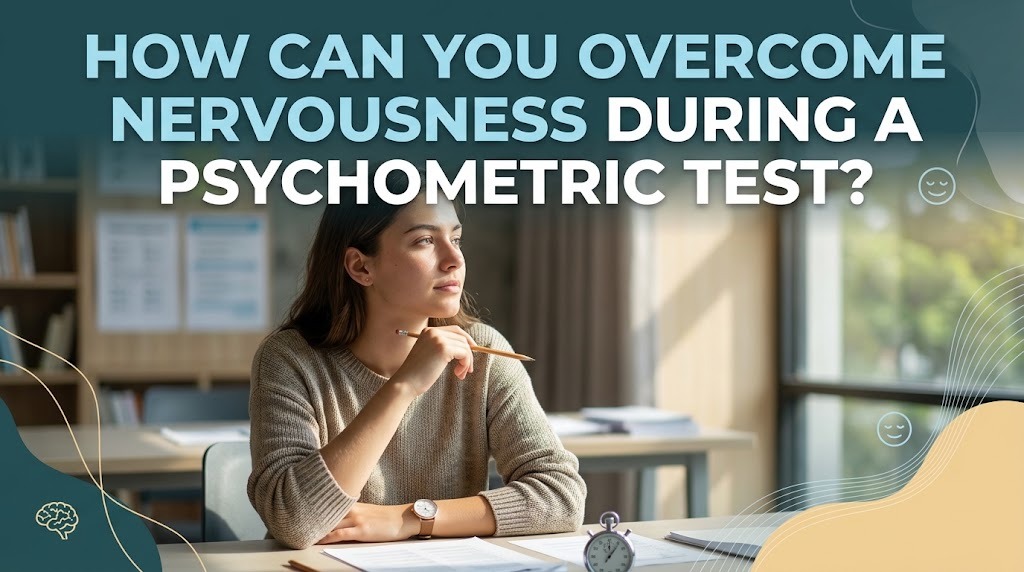
Feeling nervous before or during a psychometric test is common, especially when the assessment is part of an important job application. Candidates may worry about answering questions correctly, managing time, or meeting the employer's expectations. These concerns can make an unfamiliar assessment feel more challenging, even when the applicant has prepared beforehand.
Learning how to overcome nervousness during a psychometric test can help candidates approach the assessment with greater focus and confidence. Although some nervousness is natural, preparation, realistic expectations, and simple techniques for managing stress can make the experience more manageable. The goal is not to eliminate every feeling of anxiety but to remain focused enough to demonstrate one's abilities as accurately as possible.
PREPARE FOR THE TEST IN ADVANCE
One effective way to reduce psychometric test anxiety is to prepare before the assessment date. Uncertainty about the question format can increase nervousness, particularly for candidates who have never completed this type of test. Learning about common assessment categories, such as numerical reasoning, verbal reasoning, logical reasoning, and personality tests, can make the process feel more familiar.
Candidates can practice sample questions that match the expected assessment and review the instructions provided by the employer. It is also helpful to identify areas that need improvement instead of attempting to master every possible question type at once. A manageable preparation plan can reduce last-minute pressure and create a clearer sense of direction. However, preparation should remain balanced with sufficient rest and other daily responsibilities.
PRACTICE WITH SAMPLE QUESTIONS REGULARLY
Regular practice can help candidates become more comfortable with psychometric test questions. When applicants understand the format and have encountered similar examples, they may spend less time trying to understand how each question works. Familiarity can also help them recognize common patterns in numerical, verbal, and logical reasoning assessments.
Start with untimed questions to understand the reasoning process before gradually introducing time limits. After each session, review incorrect answers and identify the reasons behind the mistakes. This approach helps candidates learn from their practice rather than focusing only on the number of correct answers. Practicing consistently can improve familiarity with the assessment, although it cannot guarantee a specific score or remove all nervousness.
USE SIMPLE TECHNIQUES TO MANAGE STRESS
When nervousness increases during a psychometric assessment, simple relaxation techniques may help candidates regain their focus. One option is to pause briefly, relax the shoulders, and take a few slow, comfortable breaths before returning to the question. This can provide a moment to settle attention instead of reacting immediately to feelings of pressure.
Candidates can also use positive and realistic self-talk. Rather than assuming that one difficult question will ruin the entire assessment, remind yourself that challenging questions are a normal part of many tests. Focus on the information available and the next step you can take. If the assessment permits movement between questions, consider returning to a difficult item later. These techniques are not guaranteed to eliminate anxiety, but they may help make it easier to continue working calmly.
MANAGE TIME AND FOCUS ON ONE QUESTION AT A TIME
Time pressure can contribute to nervousness during psychometric tests, particularly when candidates feel they must answer every question immediately. A more effective approach is to focus on solving the current question rather than repeatedly worrying about the remaining time. Read the instructions carefully, identify what the question asks, and use a consistent method to work toward an answer.
During practice, learn to recognize when a question is taking too long. If the assessment allows it, move to another question and return later when time permits. Avoid rushing through straightforward questions because anxiety can lead to unnecessary mistakes. Candidates should also check the test rules regarding unanswered questions, navigation, and answer changes. Understanding these details beforehand can reduce uncertainty and help applicants use their available time more effectively.
MAINTAIN HEALTHY ROUTINES AND REALISTIC EXPECTATIONS
A candidate's condition before the assessment can influence concentration and comfort. Getting sufficient sleep, eating appropriately, staying hydrated, and allowing enough time to access the testing platform can help create more suitable conditions for completing a psychometric test. Trying to study intensively at the last minute may increase pressure without necessarily improving performance.
It is also important to maintain realistic expectations. A psychometric test is one part of a recruitment process, and its results do not represent every aspect of a person's abilities, experience, or potential. Candidates should focus on what they can control, such as preparation, careful reading, and following instructions. If nervousness repeatedly becomes overwhelming or interferes with daily activities, seeking support from a trusted person or qualified professional may also be helpful.
CONCLUSION
Overcoming nervousness during a psychometric test begins with preparation, regular practice, stress-management techniques, and effective time management. Maintaining healthy routines and understanding the assessment format can also reduce uncertainty and help candidates approach the test with greater confidence.
Although some anxiety may remain, applicants do not need to feel perfectly calm to perform well. Focusing on one question at a time, learning from practice, and maintaining realistic expectations can make the experience more manageable. With a balanced preparation strategy, candidates can approach psychometric testing in a more organized and constructive way.
Recent Posts

Bagaimana Sistem SKS pada Program Kuliah... 22.11.2026/61 View

How Does Technology Make Daily Evaluation... 21.11.2026/87 View

Apa Strategi Menghadapi Kesenjangan antara Kompetensi... 21.11.2026/85 View

Mengapa Inventaris Aset Penting bagi Kelancaran... 21.11.2026/83 View

When Should Musicians Join a Record... 21.11.2026/87 View
